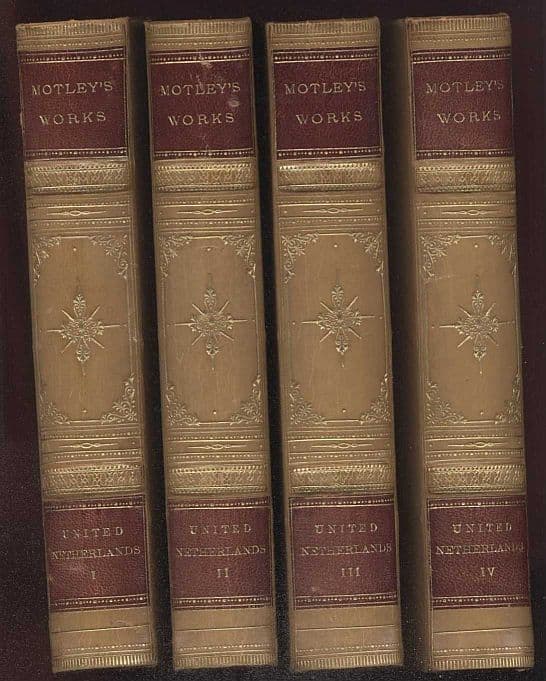
History of the United Netherlands from the Death of William the Silent to the Twelve Year's Truce — Complete (1584-86)
History of the United Netherlands from the Death of William the Silent to the Twelve Year's Truce — Complete (1584-86)
In July 1584, a assassin murdered William the Silent in his staircase at Delft. The Prince of Orange was dead, and with him, many believed, the Dutch cause. Spain's grip seemed unbreakable. The Reformation's fate in northern Europe hung in the balance. Yet from the chaos of that moment emerged something extraordinary: a republic born not of victory but of stubborn defiance. John Lothrop Motley, the American historian who reshaped how the English-speaking world understood the Dutch Revolt, picks up the narrative at this precise instant. He traces the desperate months that followed William's assassination, the fractured politics, the failed diplomatic overtures, the shadow of Philip II's Inquisition stretching across the Low Countries. This is history rendered as drama: not a chronicle of dates and battles, but an intimate account of men and women navigating catastrophe, and of a people's improbable refusal to surrender. Written in the grand Victorian tradition of narrative history, Motley's work endures because he understood that the Dutch struggle was not merely regional. It was a test case for liberty itself, a rebellion against empire and orthodoxy that would reshape the political imagination of the modern world.
Editions
Link to this book
Add a free, dofollow link to Lex on your blog, forum, syllabus, or reading list.

<a href="https://lex-books.com/book/history-of-the-united-netherlands-from-the-death-of-william-the-silent-to-the-tw-6a408cdf-7136-4123-a067-d2c7c7767412"><img src="https://lex-books.com/badges/read-on-lex.svg" alt="Read History of the United Netherlands from the Death of William the Silent to the Twelve Year's Truce — Complete (1584-86) by John Lothrop Motley free on Lex" width="160" height="40"></a>[](https://lex-books.com/book/history-of-the-united-netherlands-from-the-death-of-william-the-silent-to-the-tw-6a408cdf-7136-4123-a067-d2c7c7767412)[url=https://lex-books.com/book/history-of-the-united-netherlands-from-the-death-of-william-the-silent-to-the-tw-6a408cdf-7136-4123-a067-d2c7c7767412][img]https://lex-books.com/badges/read-on-lex.svg[/img][/url]Read History of the United Netherlands from the Death of William the Silent to the Twelve Year's Truce — Complete (1584-86) by John Lothrop Motley free on Lex: https://lex-books.com/book/history-of-the-united-netherlands-from-the-death-of-william-the-silent-to-the-tw-6a408cdf-7136-4123-a067-d2c7c7767412Cite this book
Reading this edition for a paper or guide? Copy a citation.
Motley, John Lothrop. History of the United Netherlands from the Death of William the Silent to the Twelve Year's Truce — Complete (1584-86). Lex, lex-books.com/book/history-of-the-united-netherlands-from-the-death-of-william-the-silent-to-the-tw-6a408cdf-7136-4123-a067-d2c7c7767412.Motley, J. L. (n.d.). History of the United Netherlands from the Death of William the Silent to the Twelve Year's Truce — Complete (1584-86). Lex. https://lex-books.com/book/history-of-the-united-netherlands-from-the-death-of-william-the-silent-to-the-tw-6a408cdf-7136-4123-a067-d2c7c7767412Motley, John Lothrop. History of the United Netherlands from the Death of William the Silent to the Twelve Year's Truce — Complete (1584-86). Lex. https://lex-books.com/book/history-of-the-united-netherlands-from-the-death-of-william-the-silent-to-the-tw-6a408cdf-7136-4123-a067-d2c7c7767412.