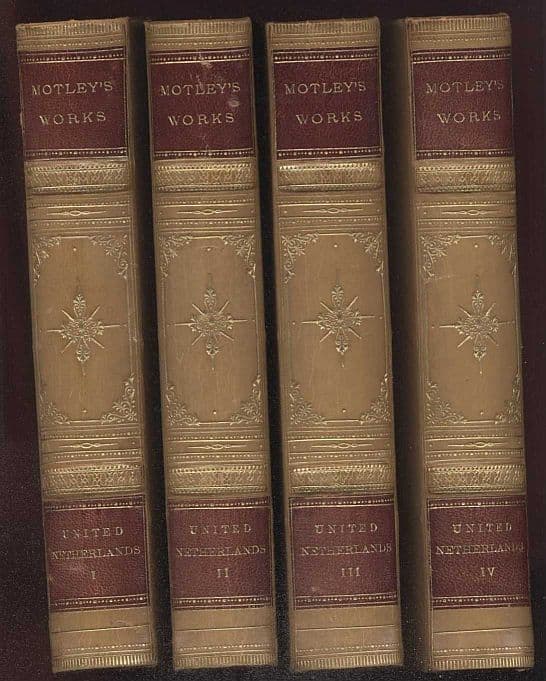
History of the United Netherlands from the Death of William the Silent to the Twelve Year's Truce, 1609
History of the United Netherlands from the Death of William the Silent to the Twelve Year's Truce, 1609
In 1584, William the Silent was assassinated. The Dutch Republic he had barely forged into existence faced extinction. Spain, the mightiest empire in Europe, was determined to reclaim these rebellious northern provinces. What followed was a quarter-century of war, diplomacy, and extraordinary resilience that would birth one of the first modern republics. John Lothrop Motley, the great American historian, brings this struggle to vivid life: the political machinations of Barneveld fighting for international recognition, the endless negotiations with the Spanish Archdukes, the existential questions of religious toleration that hung over a war fought partly in God's name. The climax is the Twelve Years' Truce of 1609, when Spain was forced, for the first time, to treat the Dutch as equals at the negotiating table. This is the origin story of a nation that would become a beacon of tolerance, commerce, and republican self-governance. Motley's prose, while Victorian in scope, captures the drama of a small people refusing to yield.
Editions
Link to this book
Add a free, dofollow link to Lex on your blog, forum, syllabus, or reading list.

<a href="https://lex-books.com/book/history-of-the-united-netherlands-from-the-death-of-william-the-silent-to-the-tw-2da49f19-3aeb-4951-bb97-34fd10f151c1"><img src="https://lex-books.com/badges/read-on-lex.svg" alt="Read History of the United Netherlands from the Death of William the Silent to the Twelve Year's Truce, 1609 by John Lothrop Motley free on Lex" width="160" height="40"></a>[](https://lex-books.com/book/history-of-the-united-netherlands-from-the-death-of-william-the-silent-to-the-tw-2da49f19-3aeb-4951-bb97-34fd10f151c1)[url=https://lex-books.com/book/history-of-the-united-netherlands-from-the-death-of-william-the-silent-to-the-tw-2da49f19-3aeb-4951-bb97-34fd10f151c1][img]https://lex-books.com/badges/read-on-lex.svg[/img][/url]Read History of the United Netherlands from the Death of William the Silent to the Twelve Year's Truce, 1609 by John Lothrop Motley free on Lex: https://lex-books.com/book/history-of-the-united-netherlands-from-the-death-of-william-the-silent-to-the-tw-2da49f19-3aeb-4951-bb97-34fd10f151c1Cite this book
Reading this edition for a paper or guide? Copy a citation.
Motley, John Lothrop. History of the United Netherlands from the Death of William the Silent to the Twelve Year's Truce, 1609. Lex, lex-books.com/book/history-of-the-united-netherlands-from-the-death-of-william-the-silent-to-the-tw-2da49f19-3aeb-4951-bb97-34fd10f151c1.Motley, J. L. (n.d.). History of the United Netherlands from the Death of William the Silent to the Twelve Year's Truce, 1609. Lex. https://lex-books.com/book/history-of-the-united-netherlands-from-the-death-of-william-the-silent-to-the-tw-2da49f19-3aeb-4951-bb97-34fd10f151c1Motley, John Lothrop. History of the United Netherlands from the Death of William the Silent to the Twelve Year's Truce, 1609. Lex. https://lex-books.com/book/history-of-the-united-netherlands-from-the-death-of-william-the-silent-to-the-tw-2da49f19-3aeb-4951-bb97-34fd10f151c1.