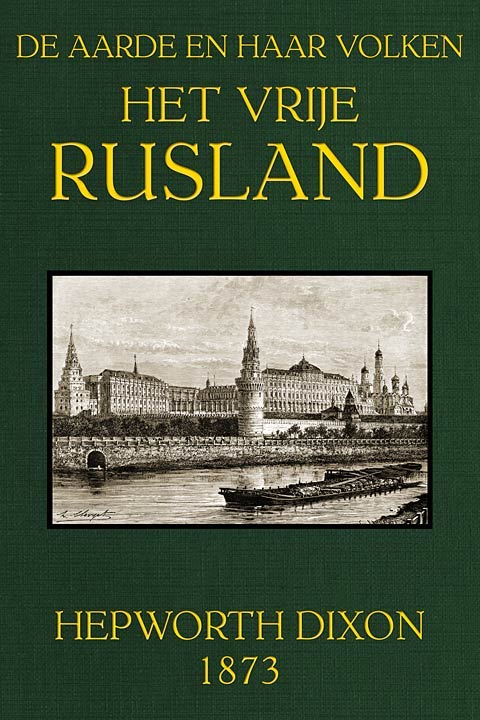
Het Vrije Rusland: De Aarde En Haar Volken, 1873
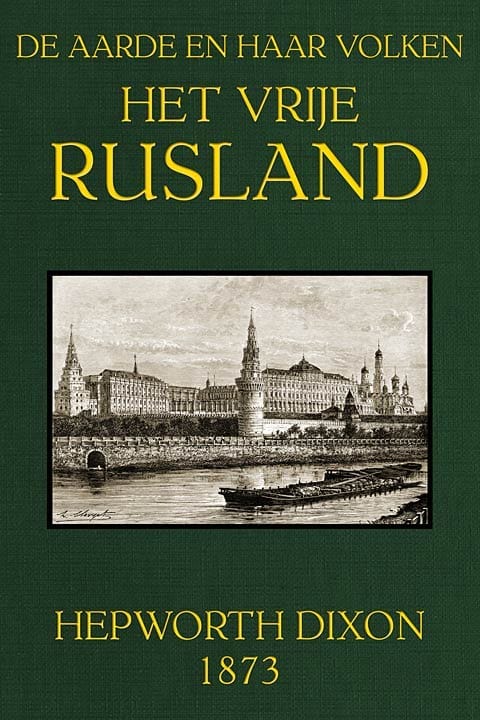
In the bitter cold of the White Sea, a Danish captain guides his vessel through waters that have claimed countless ships, cursing a coastline where 'the land itself seems hostile to human life.' So opens William Hepworth Dixon's 1873 portrait of a Russia in transformation. Written in the wake of the Crimean War's humiliation, this is Dixon's attempt to understand a vast, puzzling nation: not the Russia of tsars and serfs that Western readers expected, but something stranger and more volatile, a reborn people grappling with their own identity between ancient traditions and the promise of freedom. Dixon travels through Russia's extremes, from the treeless Arctic tundra where nomadic Samoyeds herd reindeer across a landscape so harsh it seems 'devoid of all human sympathy,' to the vibrating intellectual circles of St. Petersburg debating their nation's future. He encounters Laplanders, Pomors, and the countless peoples who inhabit Russia's incomprehensible distances. The prose carries the Victorian travel writer's dual fascination and condescension, but also genuine wonder at a civilization that has survived Tatar invasions, Napoleonic wars, and its own internal contradictions. What emerges is a document of its moment, Victorian England looking at Russia as both threat and mystery, yet one that still illuminates how the West has imagined this vast, contradictory land.
Editions
Link to this book
Add a free, dofollow link to Lex on your blog, forum, syllabus, or reading list.

<a href="https://lex-books.com/book/het-vrije-rusland-de-aarde-en-haar-volken-1873-38173c59-b76c-497a-aefd-d905c7463ac2"><img src="https://lex-books.com/badges/read-on-lex.svg" alt="Read Het Vrije Rusland: De Aarde En Haar Volken, 1873 by William Hepworth Dixon free on Lex" width="160" height="40"></a>[](https://lex-books.com/book/het-vrije-rusland-de-aarde-en-haar-volken-1873-38173c59-b76c-497a-aefd-d905c7463ac2)[url=https://lex-books.com/book/het-vrije-rusland-de-aarde-en-haar-volken-1873-38173c59-b76c-497a-aefd-d905c7463ac2][img]https://lex-books.com/badges/read-on-lex.svg[/img][/url]Read Het Vrije Rusland: De Aarde En Haar Volken, 1873 by William Hepworth Dixon free on Lex: https://lex-books.com/book/het-vrije-rusland-de-aarde-en-haar-volken-1873-38173c59-b76c-497a-aefd-d905c7463ac2Cite this book
Reading this edition for a paper or guide? Copy a citation.
Dixon, William Hepworth. Het Vrije Rusland: De Aarde En Haar Volken, 1873. Lex, lex-books.com/book/het-vrije-rusland-de-aarde-en-haar-volken-1873-38173c59-b76c-497a-aefd-d905c7463ac2.Dixon, W. H. (n.d.). Het Vrije Rusland: De Aarde En Haar Volken, 1873. Lex. https://lex-books.com/book/het-vrije-rusland-de-aarde-en-haar-volken-1873-38173c59-b76c-497a-aefd-d905c7463ac2Dixon, William Hepworth. Het Vrije Rusland: De Aarde En Haar Volken, 1873. Lex. https://lex-books.com/book/het-vrije-rusland-de-aarde-en-haar-volken-1873-38173c59-b76c-497a-aefd-d905c7463ac2.