Het Geld Van Robinson Crusoepopulaire Uiteenzetting Omtrent Den Oorsprong En Het Gebruik Van Geld Als Ruilmiddel
1719

Het Geld Van Robinson Crusoepopulaire Uiteenzetting Omtrent Den Oorsprong En Het Gebruik Van Geld Als Ruilmiddel
1719
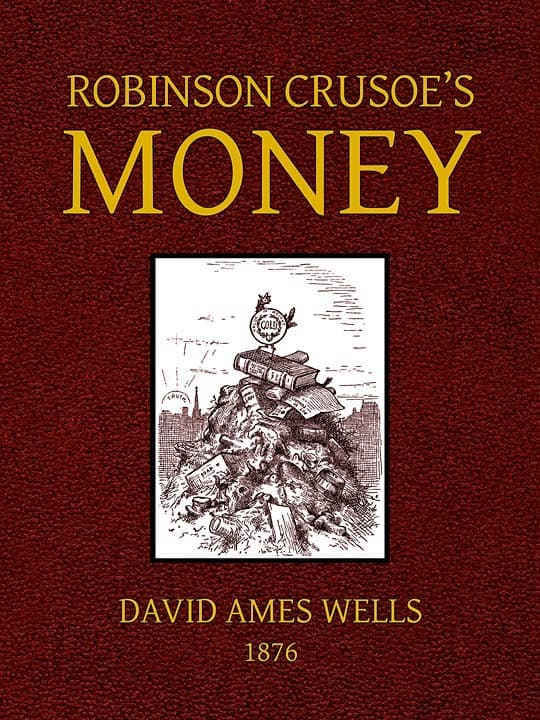
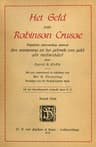
A treatise on the origins and use of money as a medium of exchange, written in the early 20th century. The work utilizes the narrative of Robinson Crusoe to explore complex economic concepts in an accessible manner. Wells employs Crusoe's fictional experience on an isolated island to illustrate the evolution of monetary systems and the functionalities of money, providing insights on wealth, value, and the history of finance. The beginning of the text sets the stage by highlighting the importance of understanding money amidst economic turmoil, as experienced in the United States following the Civil War. The narrative opens with Crusoe discovering valuable items from a shipwreck, including three bags of money, which he dismisses as worthless in his survival context. This leads into a discussion of what constitutes wealth and value, demonstrating that while material goods can aid in comfort and happiness, money lacks inherent utility when divorced from a structured society that recognizes its worth. The introduction establishes the foundation for exploring how society derives meaning and value from money as it progresses through various economic phases.
Editions
Link to this book
Add a free, dofollow link to Lex on your blog, forum, syllabus, or reading list.

<a href="https://lex-books.com/book/het-geld-van-robinson-crusoepopulaire-uiteenzetting-omtrent-den-oorsprong-en-het-b8561e56-685d-4d6f-ac43-953df526558f"><img src="https://lex-books.com/badges/read-on-lex.svg" alt="Read Het Geld Van Robinson Crusoepopulaire Uiteenzetting Omtrent Den Oorsprong En Het Gebruik Van Geld Als Ruilmiddel by David Ames Wells free on Lex" width="160" height="40"></a>[](https://lex-books.com/book/het-geld-van-robinson-crusoepopulaire-uiteenzetting-omtrent-den-oorsprong-en-het-b8561e56-685d-4d6f-ac43-953df526558f)[url=https://lex-books.com/book/het-geld-van-robinson-crusoepopulaire-uiteenzetting-omtrent-den-oorsprong-en-het-b8561e56-685d-4d6f-ac43-953df526558f][img]https://lex-books.com/badges/read-on-lex.svg[/img][/url]Read Het Geld Van Robinson Crusoepopulaire Uiteenzetting Omtrent Den Oorsprong En Het Gebruik Van Geld Als Ruilmiddel by David Ames Wells free on Lex: https://lex-books.com/book/het-geld-van-robinson-crusoepopulaire-uiteenzetting-omtrent-den-oorsprong-en-het-b8561e56-685d-4d6f-ac43-953df526558fCite this book
Reading this edition for a paper or guide? Copy a citation.
Wells, David Ames. Het Geld Van Robinson Crusoepopulaire Uiteenzetting Omtrent Den Oorsprong En Het Gebruik Van Geld Als Ruilmiddel. Lex, lex-books.com/book/het-geld-van-robinson-crusoepopulaire-uiteenzetting-omtrent-den-oorsprong-en-het-b8561e56-685d-4d6f-ac43-953df526558f.Wells, D. A. (1719). Het Geld Van Robinson Crusoepopulaire Uiteenzetting Omtrent Den Oorsprong En Het Gebruik Van Geld Als Ruilmiddel. Lex. https://lex-books.com/book/het-geld-van-robinson-crusoepopulaire-uiteenzetting-omtrent-den-oorsprong-en-het-b8561e56-685d-4d6f-ac43-953df526558fWells, David Ames. Het Geld Van Robinson Crusoepopulaire Uiteenzetting Omtrent Den Oorsprong En Het Gebruik Van Geld Als Ruilmiddel. Lex. https://lex-books.com/book/het-geld-van-robinson-crusoepopulaire-uiteenzetting-omtrent-den-oorsprong-en-het-b8561e56-685d-4d6f-ac43-953df526558f.