Haw-Ho-Noo; Or, Records of a Tourist
1850
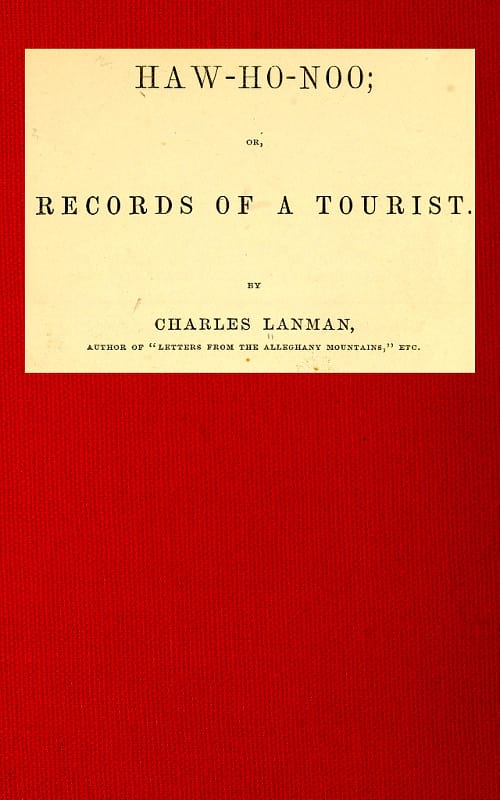
Haw-Ho-Noo is a wanderer's love letter to a America that was already vanishing in 1850. Charles Lanman tours the young nation with the keen eye of a man who understands he's witnessing something fleeting: the last years of the Ottawa making maple sugar in winter camps, the rituals of frontier communities, the forests and mountains before they were tamed by industry. The book opens with a Proustian plunge into nostalgia, Lanman recalling childhood visits to an Indian encampment, the sweetness of maple syrup, the communal joy of sugar-making, and never quite emerges from that dreamlike register. This is not journalism but reverie, a tourist's collected moments of wonder at a world rich with custom and natural beauty. Lanman writes with genuine affection for the people he encounters, Native Americans and settlers alike, and his wonder at the continent's landscapes borders on the sacred. For readers who crave the romantic American voice that preceded Mark Twain, for anyone curious about what this country looked like through enchanted 19th-century eyes, these records offer an elegiac window into a vanished time.
Editions
Link to this book
Add a free, dofollow link to Lex on your blog, forum, syllabus, or reading list.

<a href="https://lex-books.com/book/haw-ho-noo-or-records-of-a-tourist-6878cd06-6e40-416e-aabc-22bc9f86236b"><img src="https://lex-books.com/badges/read-on-lex.svg" alt="Read Haw-Ho-Noo; Or, Records of a Tourist by Charles Lanman free on Lex" width="160" height="40"></a>[](https://lex-books.com/book/haw-ho-noo-or-records-of-a-tourist-6878cd06-6e40-416e-aabc-22bc9f86236b)[url=https://lex-books.com/book/haw-ho-noo-or-records-of-a-tourist-6878cd06-6e40-416e-aabc-22bc9f86236b][img]https://lex-books.com/badges/read-on-lex.svg[/img][/url]Read Haw-Ho-Noo; Or, Records of a Tourist by Charles Lanman free on Lex: https://lex-books.com/book/haw-ho-noo-or-records-of-a-tourist-6878cd06-6e40-416e-aabc-22bc9f86236bCite this book
Reading this edition for a paper or guide? Copy a citation.
Lanman, Charles. Haw-Ho-Noo; Or, Records of a Tourist. Lex, lex-books.com/book/haw-ho-noo-or-records-of-a-tourist-6878cd06-6e40-416e-aabc-22bc9f86236b.Lanman, C. (1850). Haw-Ho-Noo; Or, Records of a Tourist. Lex. https://lex-books.com/book/haw-ho-noo-or-records-of-a-tourist-6878cd06-6e40-416e-aabc-22bc9f86236bLanman, Charles. Haw-Ho-Noo; Or, Records of a Tourist. Lex. https://lex-books.com/book/haw-ho-noo-or-records-of-a-tourist-6878cd06-6e40-416e-aabc-22bc9f86236b.