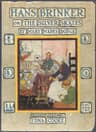
Hans Brinker; Or, the Silver Skates
1865
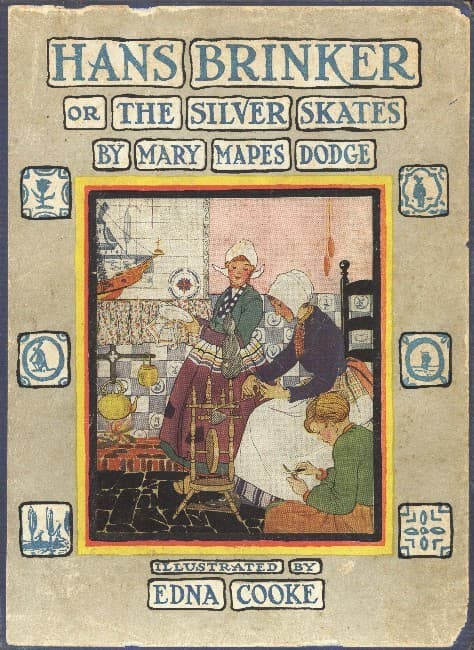
On a frozen canal in Holland, two children huddle in the bitter cold, fashioning crude skates from wood in a desperate attempt to join the great skating race. This is Hans and Gretel Brinker, fifteen and thirteen years old, poor but unbowed, dreaming of the magnificent silver skates promised to the winner. Their father lies broken in a darkened room, disabled since a terrible accident, while their mother stitches and scrubs to keep the family alive. Around them, Dodge paints a Holland of windmills and frozen waterways, of stubborn honor and quiet heroism, where a single race becomes a test of everything the children have suffered to become. But the silver skates are not merely a prize. They represent escape, vindication, the possibility that virtue might be rewarded in a world that has offered these children only hardship. Gretel carries a secret shame: she fears her injured father, preferring her mother's warmth. Hans bears the weight of his family's hopes on thin shoulders. Through the race and its preparations, Dodge traces the slow, painful, ultimately triumphant process of two children learning what they are made of. The book that introduced the little Dutch boy with his finger in the dike to the world, that made Dutch speed skating an American obsession, remains a portrait of childhood resilience that has not dimmed in 160 years.
Editions
X-Ray
“So he is my brother, and yours, too, Carl Schummel, for that matter," answered Peter, looking into Carl's eye. "We cannot say what we might have become under other circumstances. have been bolstered up from evil since the hour we were born. A happy home and good parents might have made that man a fine fellow instead of what he is. God grant that the law may cure and not crush him!””
— Mary Mapes Dodge
“There is an Angel called Charity who often would save our hearts a great deal of trouble if we would but let her in.””
— Mary Mapes Dodge
“Luxuries unfit us for returning to hardships easily endured before.””
— Mary Mapes Dodge
“Latin, Arithmetic, Grammar, all were locked up for an hour in the dingy schoolroom. The teacher might be a noun if he wished, and a proper one at that, but they meant to enjoy themselves. As long as skating was as perfect as this, it made no difference whether Holland were on the North Pole or the Equator; and, as for Philosophy, how could they bother themselves about inertia and gravitation and such things, when it was as much as they could do to keep from getting knocked over in the commotion.””
— Mary Mapes Dodge
“a half-dollar's worth will sometimes do for the poor what hundreds of dollars may fail to do for the rich; it makes them happy and grateful,””
— Mary Mapes Dodge
“...вийшов з дому із тяжким серцем, але що серце він мав молоде й билося воно в юнацьких грудях, то ледь збігло п'ять хвилин, як він уже почав висвистувати Розділ VI Сонячне проміння””
— Mary Mapes Dodge
Link to this book
Add a free, dofollow link to Lex on your blog, forum, syllabus, or reading list.

<a href="https://lex-books.com/book/hans-brinker-or-the-silver-skates-9ecc3fc5-c2a7-4c92-959b-3ddaced907d0"><img src="https://lex-books.com/badges/read-on-lex.svg" alt="Read Hans Brinker; Or, the Silver Skates by Mary Mapes Dodge free on Lex" width="160" height="40"></a>[](https://lex-books.com/book/hans-brinker-or-the-silver-skates-9ecc3fc5-c2a7-4c92-959b-3ddaced907d0)[url=https://lex-books.com/book/hans-brinker-or-the-silver-skates-9ecc3fc5-c2a7-4c92-959b-3ddaced907d0][img]https://lex-books.com/badges/read-on-lex.svg[/img][/url]Read Hans Brinker; Or, the Silver Skates by Mary Mapes Dodge free on Lex: https://lex-books.com/book/hans-brinker-or-the-silver-skates-9ecc3fc5-c2a7-4c92-959b-3ddaced907d0Cite this book
Reading this edition for a paper or guide? Copy a citation.
Dodge, Mary Mapes. Hans Brinker; Or, the Silver Skates. Lex, lex-books.com/book/hans-brinker-or-the-silver-skates-9ecc3fc5-c2a7-4c92-959b-3ddaced907d0.Dodge, M. M. (1865). Hans Brinker; Or, the Silver Skates. Lex. https://lex-books.com/book/hans-brinker-or-the-silver-skates-9ecc3fc5-c2a7-4c92-959b-3ddaced907d0Dodge, Mary Mapes. Hans Brinker; Or, the Silver Skates. Lex. https://lex-books.com/book/hans-brinker-or-the-silver-skates-9ecc3fc5-c2a7-4c92-959b-3ddaced907d0.