Germania and Agricola
1881
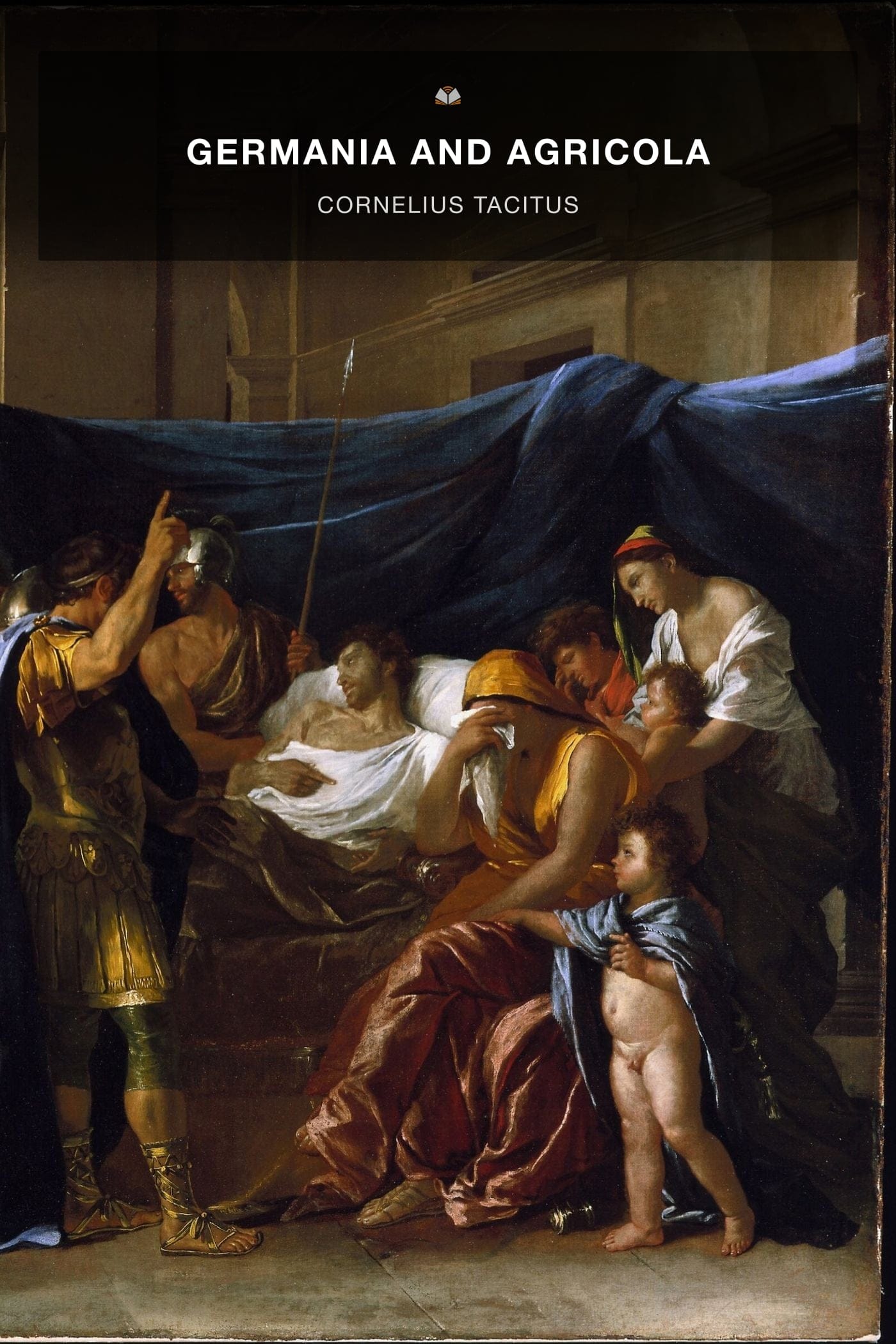
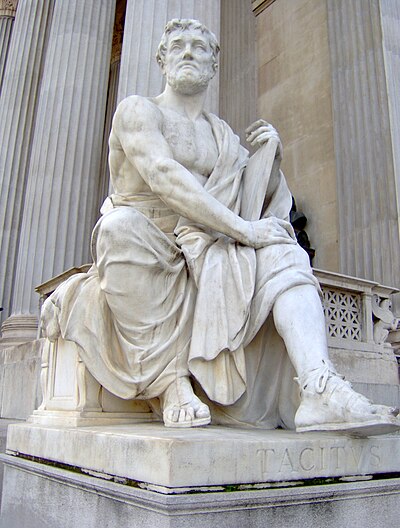
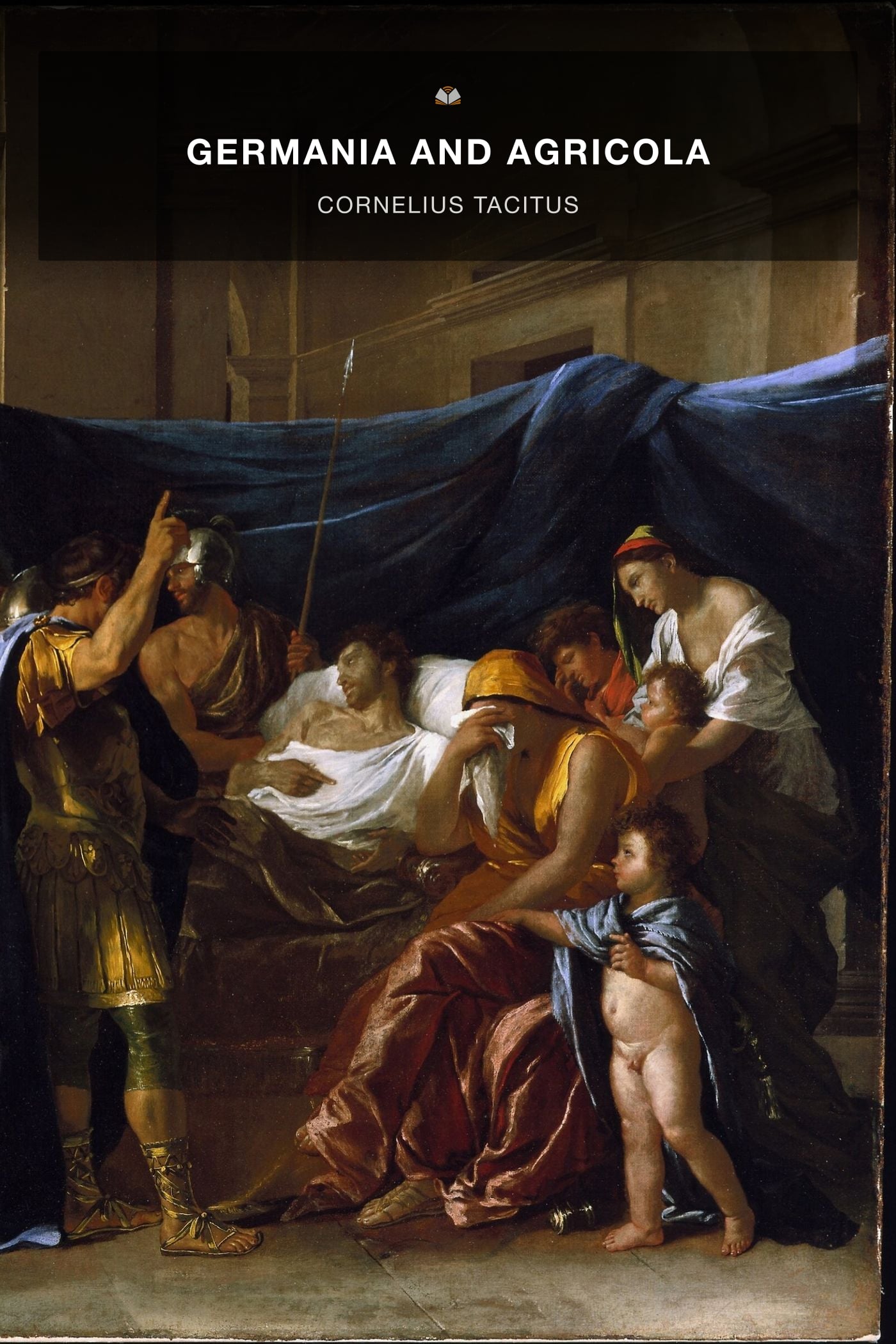
Two vanished worlds, preserved in one of antiquity's sharpest voices. The Germania is Tacitus's eye-witness account of the Germanic tribes beyond the Roman frontier, written around 98 AD. It is the earliest substantial European ethnography we possess, and its stark, almost admiring portraits of Germanic simplicity, loyalty, and freedom would echo through centuries. The Agricola is a biography of Tacitus's father-in-law, the general who conquered Britain, but it is also something more dangerous: a meditation on the price of glory under empire, and the delicate art of serving tyranny without losing one's soul. Tacitus writes in short, stabbing sentences that condense moral judgment into every clause. His Germany is partly idealization, partly reality, partly a mirror held up to Roman decay. That ambiguity is part of why this small text shaped history in ways its author never imagined.
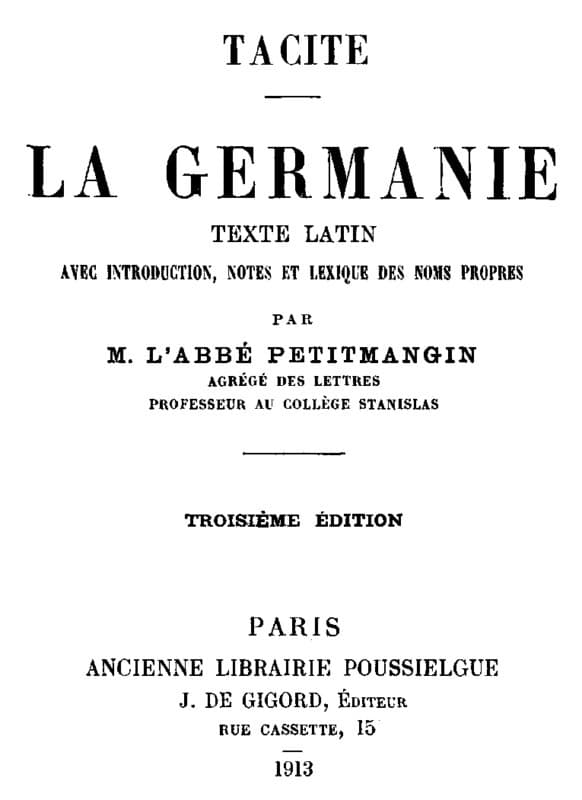
Editions
X-Ray
“They have plundered the world, stripping naked the land in their hunger… they are driven by greed, if their enemy be rich; by ambition, if poor… They ravage, they slaughter, they seize by false pretenses, and all of this they hail as the construction of empire. And when in their wake nothing remains but a desert, they call that peace.””
— Cornelius Tacitus
“Rarely will two or three tribes confer to repulse a common danger. Accordingly they fight individually and are collectively conquered.””
— Cornelius Tacitus
“Step by step they were led to things which dispose to vice, the lounge, the bath, the elegant banquet. All this in their ignorance they called civilisation, when it was but a part of their servitude.””
— Cornelius Tacitus
“Think of it. Fifteen whole years-no small part of a mans life.-taken from us-all the most energetic have fallen to the cruelty of the emperor. And the few that survive are no longer what we once were. Yet I find some small satisfaction in acknowledging the bondage we once suffered. Tacitus, The Agricola””
— Cornelius Tacitus
“At length they gradually deviated into a taste for those luxuries which stimulate to vice; porticos, and baths, and the elegancies of the table; and this, from their inexperience, they termed politeness, whilst, in reality, it constituted a part of their slavery.””
— Cornelius Tacitus
“To robbery, butchery, and rapine, they give the lying name of "government;" they create a desolation and call it peace.””
— Cornelius Tacitus
“We have indeed left an impressive example of subservience. Just as Rome of old explored the limits of freedom, so have we plumbed the depths of slavery, robbed by informers even of the interchange of speech. We would have lost our memories as well as our tongues had it been as easy to forget as to be silent.””
— Cornelius Tacitus
“They lived in rare accord, maintained by mutual affection and unselfishness; in such a partnership, however, a good wife deserves more than half the praise, just as a bad one deserves more than half the blame.””
— Cornelius Tacitus
“Pigrum quin immo et iners videtur sudore adquirere quod possis sanguine parare.(Nay, they actually think it tame and stupid to acquire by the sweat of toil what they might win by their blood.)””
— Cornelius Tacitus
About Germania and Agricola
Chapter Summaries
- Germania 1-5
- Tacitus describes Germany's boundaries, argues that Germans are indigenous peoples unmixed with other races, and details their physical characteristics and the nature of their land.
- Germania 6-10
- Description of German weapons, military tactics, leadership structure, and religious practices including their spiritual conception of gods and divination methods.
- Germania 11-15
- German assemblies, justice system, coming-of-age ceremonies, warrior bands, and the relationship between chiefs and their followers.
Key Themes
- Virtue vs. Tyranny
- The contrast between Agricola's moral excellence and Domitian's paranoid despotism illustrates how virtue can survive under tyranny but at great personal cost.
- Civilization vs. Barbarism
- Tacitus explores the complex relationship between Roman 'civilization' and Germanic/British 'barbarism,' often finding virtue among the so-called barbarians and corruption among the Romans.
- Imperial Expansion and Its Costs
- The works examine both the glory and the moral ambiguity of Roman conquest, showing how empire-building affects both conquerors and conquered.
Characters
- Cornelius Tacitus(protagonist)
- Roman historian and author of these works, writing during the reign of Trajan. He serves as narrator and commentator on both German customs and his father-in-law Agricola's life.
- Gnaeus Julius Agricola(protagonist)
- Roman general and governor of Britain, Tacitus's father-in-law. A model of virtue, military skill, and administrative excellence who conquered much of Britain.
- Domitian(antagonist)
- Tyrannical Roman emperor who grew jealous of Agricola's success and likely had him poisoned. Represents the corruption and paranoia of imperial power.
- Calgacus(major)
- Caledonian chieftain who led British resistance against Rome at the Battle of Mons Graupius. Delivers a powerful speech against Roman imperialism.
- Julius Graecinus(minor)
- Agricola's father, a senator known for eloquence and philosophy who was executed by Caligula for refusing to prosecute Marcus Silanus.
- Julia Procilla(minor)
- Agricola's mother, noted for her exceptional chastity. She raised Agricola with care and was later killed by Otho's fleet.
Link to this book
Add a free, dofollow link to Lex on your blog, forum, syllabus, or reading list.

<a href="https://lex-books.com/book/germania-and-agricola-eaae1bad-b940-4aae-871f-8882b525a51d"><img src="https://lex-books.com/badges/read-on-lex.svg" alt="Read Germania and Agricola by Cornelius Tacitus free on Lex" width="160" height="40"></a>[](https://lex-books.com/book/germania-and-agricola-eaae1bad-b940-4aae-871f-8882b525a51d)[url=https://lex-books.com/book/germania-and-agricola-eaae1bad-b940-4aae-871f-8882b525a51d][img]https://lex-books.com/badges/read-on-lex.svg[/img][/url]Read Germania and Agricola by Cornelius Tacitus free on Lex: https://lex-books.com/book/germania-and-agricola-eaae1bad-b940-4aae-871f-8882b525a51dCite this book
Reading this edition for a paper or guide? Copy a citation.
Tacitus, Cornelius. Germania and Agricola. Lex, lex-books.com/book/germania-and-agricola-eaae1bad-b940-4aae-871f-8882b525a51d.Tacitus, C. (1881). Germania and Agricola. Lex. https://lex-books.com/book/germania-and-agricola-eaae1bad-b940-4aae-871f-8882b525a51dTacitus, Cornelius. Germania and Agricola. Lex. https://lex-books.com/book/germania-and-agricola-eaae1bad-b940-4aae-871f-8882b525a51d.