Exeter
1912
Exeter
1912
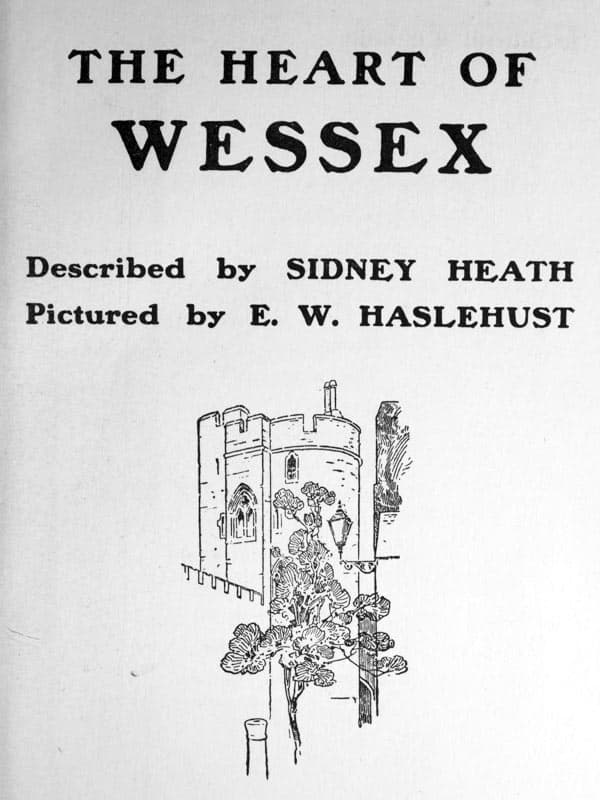
One hundred and twelve years before the Blitz devastated its medieval heart, Sidney Heath walked the ancient streets of Exeter and committed them to memory. This 1912 guide is not merely a chronicle of dates and buildings, it is a love letter to a city where Roman legions once marched, where medieval bishops built toward heaven, and where the wool trade once made merchants wealthy enough to adorn their churches with gilded screens still gleaming today. Heath describes the city as he knew it, with an Edwardian's reverence for the past, capturing streets and structures that would soon be lost forever to war and modernity. The cathedral, the ancient gates, the winding alleys all receive his devoted attention, their histories unfolded like maps of meaning. What makes this book endure is not just its meticulous detail, but its spirit: a preservation of Exeter before the twentieth century's convulsions reshaped it entirely. For history enthusiasts, for travelers who love to walk in the footsteps of those who came before, this is a time capsule of stone and story.
Editions
X-Ray
The author and narrator who guides readers through Exeter's history and architecture. He serves as an informed guide, presenting historical facts and architectural details with scholarly authority.
The illustrator who created the pictorial content for the book. His artistic work complements Heath's descriptive text.
Saxon king who was one of Exeter's greatest benefactors. He drove out the Britons in 926, built fortifications and a castle, and established a mint where the first coins naming him 'King of England' were struck.
Norman king who besieged Exeter for eighteen days after the Battle of Hastings. Despite the city's resistance, he showed unusual mercy in the terms of surrender.
About Exeter
Chapter Summaries
- 1
- Heath introduces Exeter's origins as the Roman Isca Dumnoniorum, capital of the Celtic Dumnonii tribe. He describes the city's strategic position, its Saxon transformation to Exanceaster, and its role in English history through various conquests and sieges.
- 2
- Focuses on Roman archaeological remains found in Exeter, including baths, pavements, and artifacts. Heath details the limited but significant Roman legacy and the transition to Saxon rule under Athelstan.
- 3
- Describes the historic Guildhall, one of England's oldest municipal buildings, and royal visits to Exeter. Heath recounts the city's role in the Civil War and its consistent loyalty to the crown.
Key Themes
- Historical Continuity
- Heath emphasizes how each era has left its mark on Exeter, from Roman foundations through Saxon, Norman, and medieval periods. The city represents a palimpsest of English history where past and present coexist.
- Architectural Heritage
- The book celebrates Exeter's built environment, particularly the Cathedral, as embodying the artistic and spiritual aspirations of past generations. Architecture serves as a tangible link to history.
- Religious Significance
- The Cathedral and numerous churches represent Exeter's role as a center of Christian faith and learning. Religious architecture and institutions shaped the city's development and character.
Characters
- Sidney Heath(protagonist)
- The author and narrator who guides readers through Exeter's history and architecture. He serves as an informed guide, presenting historical facts and architectural details with scholarly authority.
- E. W. Haslehust(minor)
- The illustrator who created the pictorial content for the book. His artistic work complements Heath's descriptive text.
- Athelstan(major)
- Saxon king who was one of Exeter's greatest benefactors. He drove out the Britons in 926, built fortifications and a castle, and established a mint where the first coins naming him 'King of England' were struck.
- William the Conqueror(major)
- Norman king who besieged Exeter for eighteen days after the Battle of Hastings. Despite the city's resistance, he showed unusual mercy in the terms of surrender.
- Bishop Leofric(major)
- First Bishop of Exeter who moved the episcopal see from Crediton to Exeter in 1046. He transformed the Benedictine minster into the cathedral church of the diocese.
- Isabella de Fortibus, Countess of Devon(major)
- Powerful noblewoman who obstructed the River Exe around 1284, preventing ships from reaching Exeter directly. Her actions led to a centuries-long dispute and eventually the construction of the Exeter Canal.
Link to this book
Add a free, dofollow link to Lex on your blog, forum, syllabus, or reading list.

<a href="https://lex-books.com/book/exeter-67a1f008-43f3-4c94-a2c6-3ce3d34e58e7"><img src="https://lex-books.com/badges/read-on-lex.svg" alt="Read Exeter by Sidney Heath free on Lex" width="160" height="40"></a>[](https://lex-books.com/book/exeter-67a1f008-43f3-4c94-a2c6-3ce3d34e58e7)[url=https://lex-books.com/book/exeter-67a1f008-43f3-4c94-a2c6-3ce3d34e58e7][img]https://lex-books.com/badges/read-on-lex.svg[/img][/url]Read Exeter by Sidney Heath free on Lex: https://lex-books.com/book/exeter-67a1f008-43f3-4c94-a2c6-3ce3d34e58e7Cite this book
Reading this edition for a paper or guide? Copy a citation.
Heath, Sidney. Exeter. Lex, lex-books.com/book/exeter-67a1f008-43f3-4c94-a2c6-3ce3d34e58e7.Heath, S. (1912). Exeter. Lex. https://lex-books.com/book/exeter-67a1f008-43f3-4c94-a2c6-3ce3d34e58e7Heath, Sidney. Exeter. Lex. https://lex-books.com/book/exeter-67a1f008-43f3-4c94-a2c6-3ce3d34e58e7.