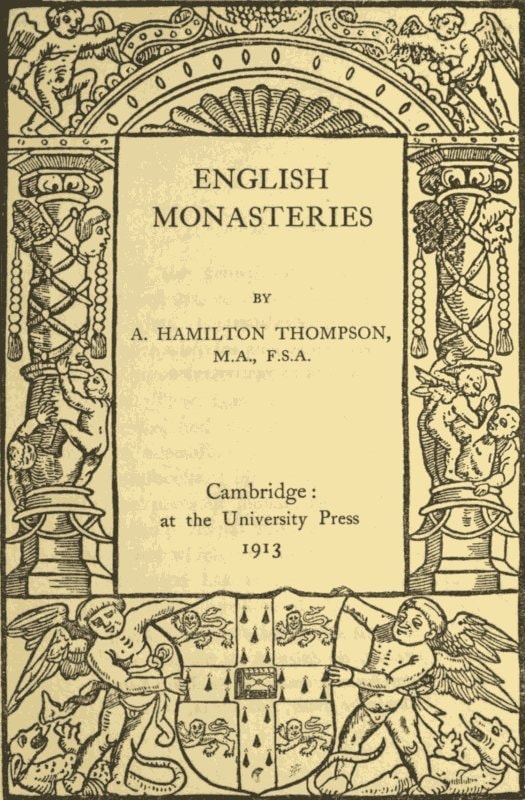
English Monasteries
1913
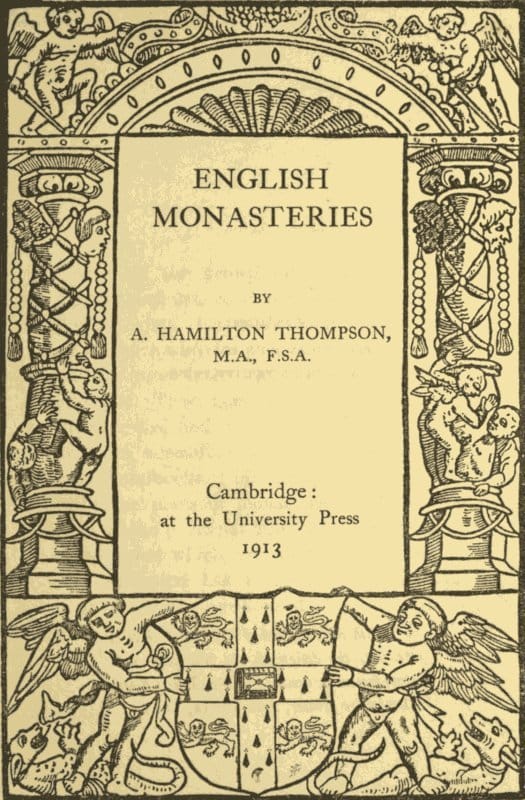
English Monasteries
1913
Few institutions have shaped England's landscape and then vanished so completely as its monasteries. In this 1913 study, A. Hamilton Thompson reconstructs a lost world: the great Benedictine houses where monks chanting in vaulted chapels shaped medieval spirituality, the austere Cistercian abbeys carved into remote valleys, the wandering friars who brought preaching to town squares. Thompson traces monasticism from its earliest eremitic roots through the flowering of the cloistered orders to the catastrophic Dissolution under Henry VIII, when over 800 religious houses were suppressed in a single decade. The book is particularly rich on architecture, explaining how the layout of chapter houses, dormitories, and refectories expressed spiritual purpose, and why a monk could read the symbolic meaning of a window's placement. Written with the confident erudition of early twentieth-century scholarship, this remains an essential introduction to understanding the buildings, beliefs, and daily rhythms that once made England the most thoroughly monastic country in Europe. For anyone who has stood in the ruins of Fountains or Tintern and wondered who lived there and what they believed, this book provides answers rooted in deep learning.
Editions
X-Ray
6th century founder of western monasticism whose rule became the foundation of monastic life in Europe. Created the balanced rule that emphasized work, prayer, and community life.
Prior who brought the Benedictine rule from Rome to England in 597 AD. Established Canterbury as the center of English Christianity.
Archbishop of Canterbury (942-59) who led the monastic revival in 10th century England. Reformed Glastonbury and supported the restoration of monasteries.
English king who supported the 10th century monastic revival. Provided royal backing for the restoration of destroyed monasteries.
About English Monasteries
Chapter Summaries
- 1
- Traces the development of monasticism from early Christian hermits in Egypt through the establishment of various religious orders in England. Covers the rise and decline of different monastic communities up to their dissolution by Henry VIII.
- 2
- Examines the architectural plans and liturgical arrangements of monastic churches. Details how different orders adapted church design to serve their specific needs for worship, processions, and daily offices.
- 3
- Describes the standard Benedictine cloister plan with its chapter house, dormitory, refectory, and other essential buildings. Explains how these structures supported the daily life and governance of monastic communities.
Key Themes
- Spiritual vs Material Wealth
- The fundamental contradiction between monastic vows of poverty and the accumulation of vast landed wealth by monasteries. This tension corrupted the original spiritual mission and made monasteries targets for dissolution.
- Architectural Function and Form
- How monastic buildings were designed to serve specific religious and practical functions. The architecture reflects the daily rhythm of prayer, work, and community life that defined monastic existence.
- Religious Reform and Renewal
- The cyclical pattern of monastic decline followed by reform movements. New orders like the Cistercians emerged to restore original spiritual rigor when older orders became lax.
Characters
- St Benedict(major)
- 6th century founder of western monasticism whose rule became the foundation of monastic life in Europe. Created the balanced rule that emphasized work, prayer, and community life.
- St Augustine of Canterbury(major)
- Prior who brought the Benedictine rule from Rome to England in 597 AD. Established Canterbury as the center of English Christianity.
- St Dunstan(major)
- Archbishop of Canterbury (942-59) who led the monastic revival in 10th century England. Reformed Glastonbury and supported the restoration of monasteries.
- Edgar the Peaceful(major)
- English king who supported the 10th century monastic revival. Provided royal backing for the restoration of destroyed monasteries.
- Lanfranc(major)
- Norman monk who became Archbishop of Canterbury after 1066. Former abbot of Caen who helped establish Norman monasticism in England.
- William the Conqueror(major)
- Norman king who conquered England in 1066. Founded Battle Abbey and supported the establishment of Norman monasteries throughout England.
Link to this book
Add a free, dofollow link to Lex on your blog, forum, syllabus, or reading list.

<a href="https://lex-books.com/book/english-monasteries-8b2321b2-48d8-4c03-a896-ce4e69db601c"><img src="https://lex-books.com/badges/read-on-lex.svg" alt="Read English Monasteries by A. Hamilton Thompson free on Lex" width="160" height="40"></a>[](https://lex-books.com/book/english-monasteries-8b2321b2-48d8-4c03-a896-ce4e69db601c)[url=https://lex-books.com/book/english-monasteries-8b2321b2-48d8-4c03-a896-ce4e69db601c][img]https://lex-books.com/badges/read-on-lex.svg[/img][/url]Read English Monasteries by A. Hamilton Thompson free on Lex: https://lex-books.com/book/english-monasteries-8b2321b2-48d8-4c03-a896-ce4e69db601cCite this book
Reading this edition for a paper or guide? Copy a citation.
Thompson, A. Hamilton. English Monasteries. Lex, lex-books.com/book/english-monasteries-8b2321b2-48d8-4c03-a896-ce4e69db601c.Thompson, A. H. (1913). English Monasteries. Lex. https://lex-books.com/book/english-monasteries-8b2321b2-48d8-4c03-a896-ce4e69db601cThompson, A. Hamilton. English Monasteries. Lex. https://lex-books.com/book/english-monasteries-8b2321b2-48d8-4c03-a896-ce4e69db601c.