Economics
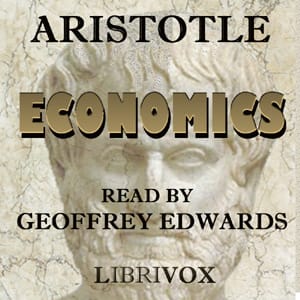
One of the oldest surviving works on how humans manage money, property, and households. Written in the tradition of Aristotelian philosophy (and possibly by the master himself, though scholars still debate this), the Economics treats wealth not as an end but as a tool for living well. The author examines acquisition, agriculture, the management of slaves, the roles of husband and wife, and what constitutes honorable versus corrupt profit. A later section, likely added by another hand, analyzes state finances with striking frankness: taxation, currency manipulation, tariffs, even institutionalized robbery. What emerges is a vision of economic life inseparable from ethics and politics. For modern readers, the text is strange and familiar in equal measure - many observations about human behavior and money still resonate, even as its assumptions about slavery and gender feel sharply of another era. This is where Western economic thinking begins, for better and worse.
Editions

Link to this book
Add a free, dofollow link to Lex on your blog, forum, syllabus, or reading list.

<a href="https://lex-books.com/book/economics-1e216c7a-b114-4e9a-ab14-7232d95d32b6"><img src="https://lex-books.com/badges/read-on-lex.svg" alt="Read Economics by Aristotle free on Lex" width="160" height="40"></a>[](https://lex-books.com/book/economics-1e216c7a-b114-4e9a-ab14-7232d95d32b6)[url=https://lex-books.com/book/economics-1e216c7a-b114-4e9a-ab14-7232d95d32b6][img]https://lex-books.com/badges/read-on-lex.svg[/img][/url]Read Economics by Aristotle free on Lex: https://lex-books.com/book/economics-1e216c7a-b114-4e9a-ab14-7232d95d32b6Cite this book
Reading this edition for a paper or guide? Copy a citation.
Aristotle. Economics. Lex, lex-books.com/book/economics-1e216c7a-b114-4e9a-ab14-7232d95d32b6.Aristotle (n.d.). Economics. Lex. https://lex-books.com/book/economics-1e216c7a-b114-4e9a-ab14-7232d95d32b6Aristotle. Economics. Lex. https://lex-books.com/book/economics-1e216c7a-b114-4e9a-ab14-7232d95d32b6.