Doing Their Bit: War Work at Home
1916
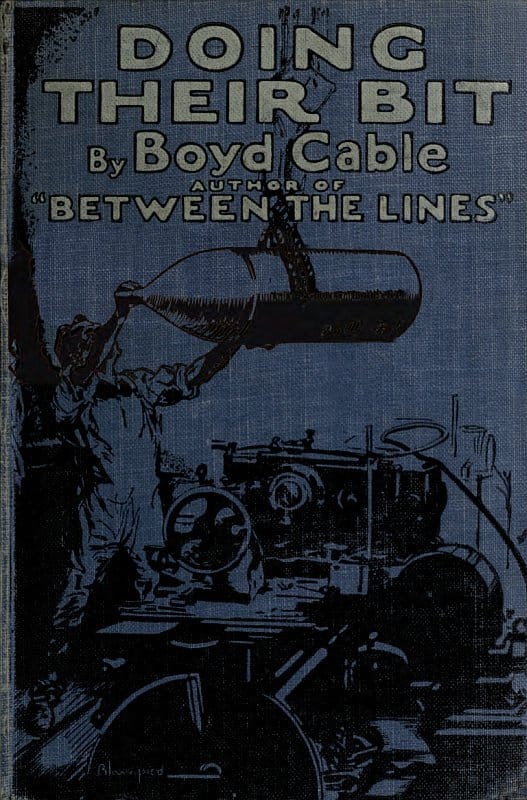
The opening scene imagine this: a soldier, still carrying the mud of the trenches, stepping into a British factory floor. He's not there for ceremony. He's there to deliver an urgent message from the front. Boyd Cable's 1916 account captures something World War I literature rarely examines: the industrial battlefield far from the fighting. This is the story of munition workers, from factory hands to schoolchildren rolling bandages, whose labor made the Western Front possible. The narrator, fresh from the killing fields, speaks directly to those who question whether their work matters. The answer arrives with blood on its boots: the soldiers fighting in mud and death need what these workers build. What elevates this beyond propaganda is its honest acknowledgment of past failures. Shortages haunted the early war. Promises broke. But Cable documents a nation learning to produce at unprecedented scale, and he does so with the urgent conviction of someone who has seen what happens when shells run out. This is both a tribute and a call to continued sacrifice.
Editions
Link to this book
Add a free, dofollow link to Lex on your blog, forum, syllabus, or reading list.

<a href="https://lex-books.com/book/doing-their-bit-war-work-at-home-6e4b2a4f-11cb-4bc6-9218-3edd3bb7647b"><img src="https://lex-books.com/badges/read-on-lex.svg" alt="Read Doing Their Bit: War Work at Home by Boyd Cable free on Lex" width="160" height="40"></a>[](https://lex-books.com/book/doing-their-bit-war-work-at-home-6e4b2a4f-11cb-4bc6-9218-3edd3bb7647b)[url=https://lex-books.com/book/doing-their-bit-war-work-at-home-6e4b2a4f-11cb-4bc6-9218-3edd3bb7647b][img]https://lex-books.com/badges/read-on-lex.svg[/img][/url]Read Doing Their Bit: War Work at Home by Boyd Cable free on Lex: https://lex-books.com/book/doing-their-bit-war-work-at-home-6e4b2a4f-11cb-4bc6-9218-3edd3bb7647bCite this book
Reading this edition for a paper or guide? Copy a citation.
Cable, Boyd. Doing Their Bit: War Work at Home. Lex, lex-books.com/book/doing-their-bit-war-work-at-home-6e4b2a4f-11cb-4bc6-9218-3edd3bb7647b.Cable, B. (1916). Doing Their Bit: War Work at Home. Lex. https://lex-books.com/book/doing-their-bit-war-work-at-home-6e4b2a4f-11cb-4bc6-9218-3edd3bb7647bCable, Boyd. Doing Their Bit: War Work at Home. Lex. https://lex-books.com/book/doing-their-bit-war-work-at-home-6e4b2a4f-11cb-4bc6-9218-3edd3bb7647b.