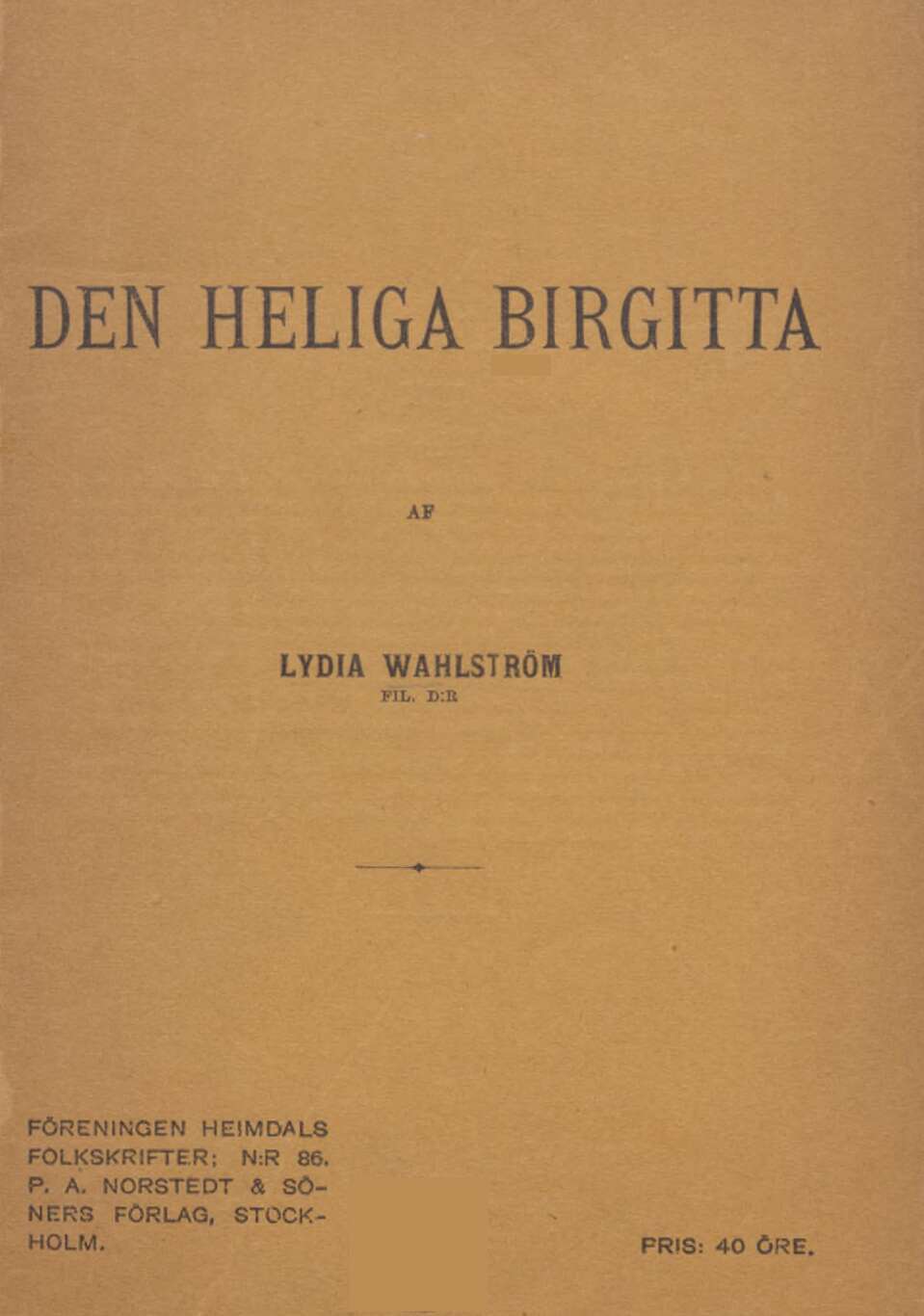
Den Heliga Birgitta
1958
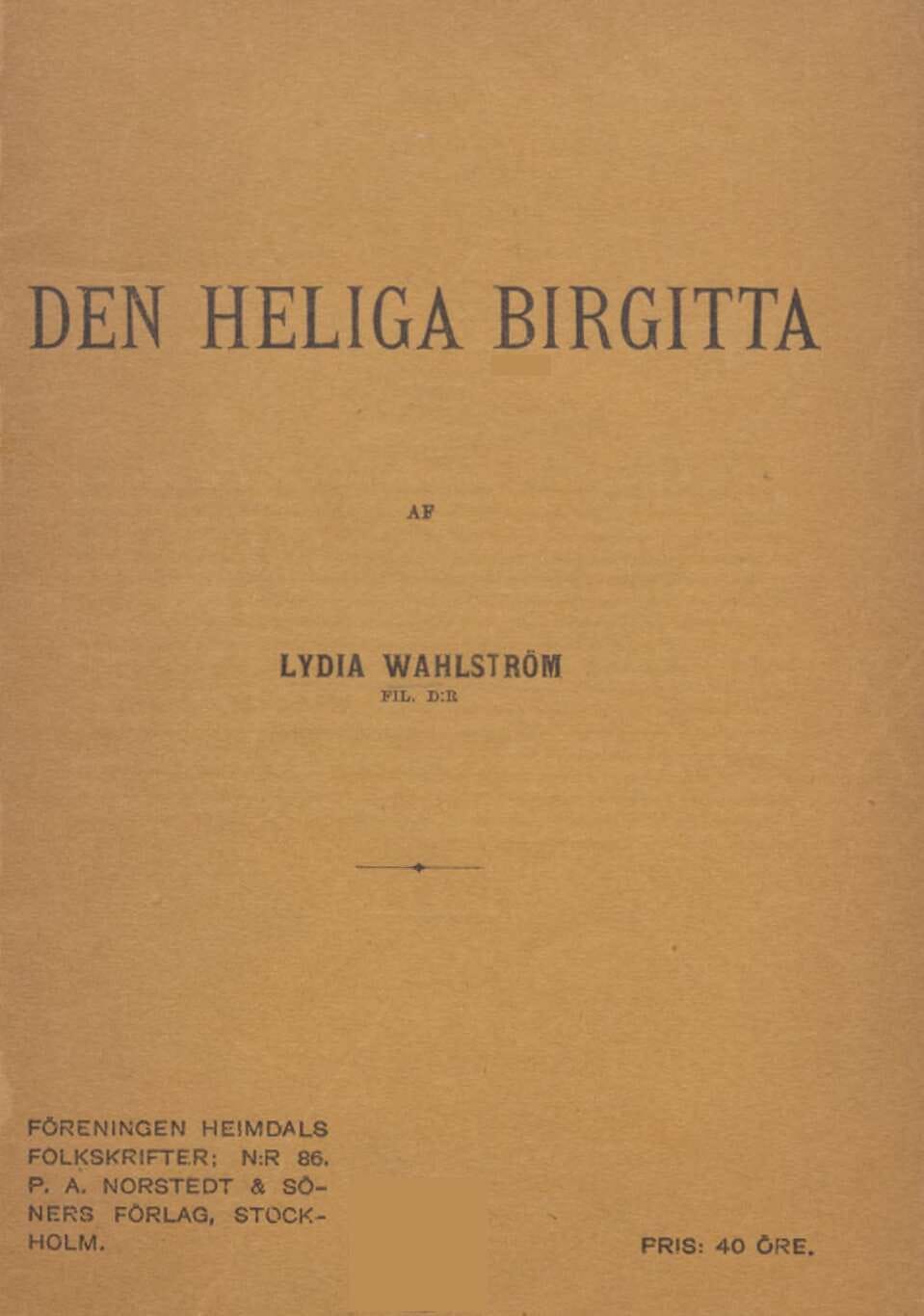
Den Heliga Birgitta
1958
''Den heliga Birgitta'' by Lydia Wahlström is a historical account written in the early 20th century. The work explores the life and impact of Saint Birgitta (Bridget) of Sweden, positioning her as a central figure in the history, religion, and culture of medieval Sweden. The book appears to focus on Birgitta’s character, her spiritual experiences, and her influence both within her homeland and the wider European religious context. The opening of the book discusses the scarcity of vividly known personalities in Swedish medieval history, contrasting this with the unique prominence of Birgitta. It then describes her aristocratic background, early religious experiences, family life, and eventual turn toward intense spiritual vocation following the death of her husband. The narrative details Birgitta’s mystical visions, her social and political involvement, her relationships with influential religious figures, and her eventual journey to Rome with the goal of church reform and establishing a new religious order. This introductory portion provides a vivid portrait of Birgitta's formative years, personal traits, religious calling, and the beginning of her legacy as both reformer and mystic.
Editions
X-Ray
The holy Birgitta, born around 1303 at Finstad in Uppland, daughter of lagman Birger Persson. A mystic, visionary, and founder of the Bridgettine Order who received divine revelations and became Sweden's most famous medieval saint.
Birgitta's husband, son of lagman Gudmar in Västergötland. Became a knight in 1328 and lagman in Närke. Died in 1344 at Alvastra monastery where he intended to become a monk.
Birgitta's father, the foremost lagman in Sweden and upplandslagman. Member of a noble family bearing two wings in their coat of arms, later took the name Brahe through marriage connections.
King of Sweden during Birgitta's time, whom she served as hofmästarinna to his queen Blanche of Namur. Frequently criticized by Birgitta in her revelations for his weak governance and unfulfilled promises.
About Den Heliga Birgitta
Chapter Summaries
- 1
- Wahlström introduces the scarcity of well-known personalities in Swedish medieval history and establishes Birgitta as the most fully documented figure of the period. She argues that Birgitta represents Swedish religiosity alongside Gustaf II Adolf and Emanuel Swedenborg.
- 2
- Details Birgitta's birth around 1303 at Finstad in Uppland to lagman Birger Persson and Ingeborg. Describes her wealthy, noble family background and early religious experiences including her first vision at age seven.
- 3
- Covers Birgitta's upbringing after her mother's death, her time with her aunt Karin at Aspenäs, and her arranged marriage at age 13 to Ulf Gudmarsson. Describes the couple's early vow of chastity.
Key Themes
- Religious Mysticism and Divine Revelation
- The book explores Birgitta's mystical experiences and divine visions, examining how her revelations shaped both her personal spiritual journey and her public mission to reform the Church.
- Medieval Women's Agency
- Wahlström presents Birgitta as a powerful example of how medieval women could exercise influence in religious, political, and social spheres despite societal constraints.
- Church Reform and Corruption
- The work details Birgitta's criticism of papal corruption and her efforts to bring the Pope back to Rome from Avignon, representing broader medieval reform movements.
Characters
- Birgitta Birgersdotter(protagonist)
- The holy Birgitta, born around 1303 at Finstad in Uppland, daughter of lagman Birger Persson. A mystic, visionary, and founder of the Bridgettine Order who received divine revelations and became Sweden's most famous medieval saint.
- Ulf Gudmarsson(major)
- Birgitta's husband, son of lagman Gudmar in Västergötland. Became a knight in 1328 and lagman in Närke. Died in 1344 at Alvastra monastery where he intended to become a monk.
- Birger Persson(major)
- Birgitta's father, the foremost lagman in Sweden and upplandslagman. Member of a noble family bearing two wings in their coat of arms, later took the name Brahe through marriage connections.
- Magnus Eriksson(major)
- King of Sweden during Birgitta's time, whom she served as hofmästarinna to his queen Blanche of Namur. Frequently criticized by Birgitta in her revelations for his weak governance and unfulfilled promises.
- Magister Mathias(major)
- Professor of holy scripture and canon in Linköping, Birgitta's first confessor and most important theological advisor. Author of biblical commentaries and helped establish the authenticity of her revelations.
- Katarina(major)
- Birgitta's daughter, born 1331-1332, who became the first abbess of Vadstena monastery and was later canonized as a saint herself. Accompanied her mother to Rome.
Link to this book
Add a free, dofollow link to Lex on your blog, forum, syllabus, or reading list.

<a href="https://lex-books.com/book/den-heliga-birgitta-4689e9f5-2e76-4e40-8d6d-439c3675d8c4"><img src="https://lex-books.com/badges/read-on-lex.svg" alt="Read Den Heliga Birgitta by Lydia Wahlström free on Lex" width="160" height="40"></a>[](https://lex-books.com/book/den-heliga-birgitta-4689e9f5-2e76-4e40-8d6d-439c3675d8c4)[url=https://lex-books.com/book/den-heliga-birgitta-4689e9f5-2e76-4e40-8d6d-439c3675d8c4][img]https://lex-books.com/badges/read-on-lex.svg[/img][/url]Read Den Heliga Birgitta by Lydia Wahlström free on Lex: https://lex-books.com/book/den-heliga-birgitta-4689e9f5-2e76-4e40-8d6d-439c3675d8c4Cite this book
Reading this edition for a paper or guide? Copy a citation.
Wahlström, Lydia. Den Heliga Birgitta. Lex, lex-books.com/book/den-heliga-birgitta-4689e9f5-2e76-4e40-8d6d-439c3675d8c4.Wahlström, L. (1958). Den Heliga Birgitta. Lex. https://lex-books.com/book/den-heliga-birgitta-4689e9f5-2e76-4e40-8d6d-439c3675d8c4Wahlström, Lydia. Den Heliga Birgitta. Lex. https://lex-books.com/book/den-heliga-birgitta-4689e9f5-2e76-4e40-8d6d-439c3675d8c4.