Degeneration
1892

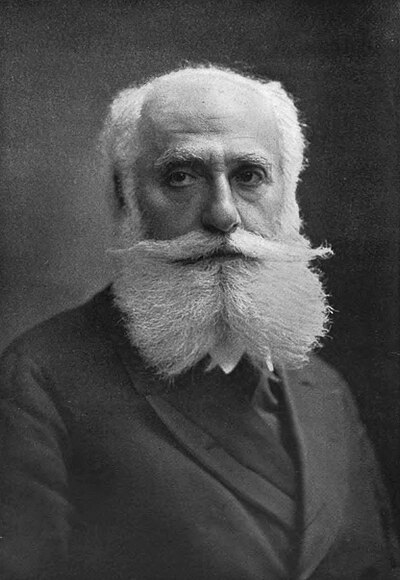
In 1892, a physician and cultural critic set out to diagnose the sickness at the heart of modern civilization. Max Nordau's ferocious, scathing treatise argued that the most celebrated artists and writers of his era, Nietzsche, Wilde, Wagner, Ibsen, Zola, Tolstoy, were not geniuses but degenerates, their work symptoms of a society rotting from within. With the confidence of a man who believed science could explain everything, Nordau mapped the era's anxiety, its decadence, its nervous exhaustion, and declared it a pathology. He coined 'fin-de-siècle' as a diagnosis, not a description: a term for the collapse of Victorian moral certainty into hysteria, egotism, and creative chaos. The book ignited a firestorm. George Bernard Shaw hotly replied; Holbrook Jackson called it 'an example of the very liveliness of a period which was equally lively in making or marring itself.' Nordau anticipated Freud in seeing art as neurosis made visible, and his book became the defining document of an era that feared its own decay. Read it not as science but as a prism: a brilliant, maddening, often hilarious portrait of the panic that accompanies the end of a world.
Editions
X-Ray
“Degenerates are not always criminals, anarchists, and pronounced lunatics; They are often authors and artists.””
— Max Simon Nordau
“These idiotic sequences of words are psychologically interesting, for they demonstrate with instructive significance the workings of a shattered brain.””
— Max Simon Nordau
Link to this book
Add a free, dofollow link to Lex on your blog, forum, syllabus, or reading list.

<a href="https://lex-books.com/book/degeneration-e3d14d51-5158-4fbd-87a8-9d500a8ae5e6"><img src="https://lex-books.com/badges/read-on-lex.svg" alt="Read Degeneration by Max Simon Nordau free on Lex" width="160" height="40"></a>[](https://lex-books.com/book/degeneration-e3d14d51-5158-4fbd-87a8-9d500a8ae5e6)[url=https://lex-books.com/book/degeneration-e3d14d51-5158-4fbd-87a8-9d500a8ae5e6][img]https://lex-books.com/badges/read-on-lex.svg[/img][/url]Read Degeneration by Max Simon Nordau free on Lex: https://lex-books.com/book/degeneration-e3d14d51-5158-4fbd-87a8-9d500a8ae5e6Cite this book
Reading this edition for a paper or guide? Copy a citation.
Nordau, Max Simon. Degeneration. Lex, lex-books.com/book/degeneration-e3d14d51-5158-4fbd-87a8-9d500a8ae5e6.Nordau, M. S. (1892). Degeneration. Lex. https://lex-books.com/book/degeneration-e3d14d51-5158-4fbd-87a8-9d500a8ae5e6Nordau, Max Simon. Degeneration. Lex. https://lex-books.com/book/degeneration-e3d14d51-5158-4fbd-87a8-9d500a8ae5e6.