Declaration of Independence of the United States of America
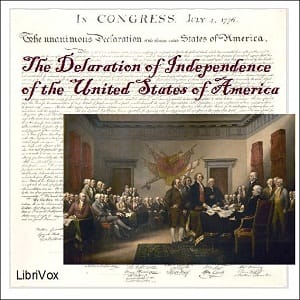
On July 4, 1776, thirteen American colonies did something unprecedented: they declared that all people are created equal, that governments exist to protect unalienable rights, and that when a government becomes destructive of those rights, the people have the right to alter or abolish it. Thomas Jefferson's declaration was not merely a legal document severing ties with Britain, it was a philosophical revolution compressed into 1,337 words. Written in soaring 18th-century prose that still resonates today, the Declaration articulated ideas about natural rights and popular sovereignty that had never been so boldly stated by a governing body. It justified armed rebellion not through desperation but through principle, arguing that independence was not a choice but an imperative. The document went on to influence revolutions from France to South Africa, becoming a touchstone for every people demanding freedom. It remains perhaps the most consequential sentence ever written in English: a promise that tyranny is not inevitable, that ordinary people can reshape their destiny, and that the measure of a government is whether it honors the rights of the governed.
Editions

Link to this book
Add a free, dofollow link to Lex on your blog, forum, syllabus, or reading list.

<a href="https://lex-books.com/book/declaration-of-independence-of-the-united-states-of-america-44a28f4b-c614-4662-8edd-d436bee8ae30"><img src="https://lex-books.com/badges/read-on-lex.svg" alt="Read Declaration of Independence of the United States of America by Thomas Jefferson free on Lex" width="160" height="40"></a>[](https://lex-books.com/book/declaration-of-independence-of-the-united-states-of-america-44a28f4b-c614-4662-8edd-d436bee8ae30)[url=https://lex-books.com/book/declaration-of-independence-of-the-united-states-of-america-44a28f4b-c614-4662-8edd-d436bee8ae30][img]https://lex-books.com/badges/read-on-lex.svg[/img][/url]Read Declaration of Independence of the United States of America by Thomas Jefferson free on Lex: https://lex-books.com/book/declaration-of-independence-of-the-united-states-of-america-44a28f4b-c614-4662-8edd-d436bee8ae30Cite this book
Reading this edition for a paper or guide? Copy a citation.
Jefferson, Thomas. Declaration of Independence of the United States of America. Lex, lex-books.com/book/declaration-of-independence-of-the-united-states-of-america-44a28f4b-c614-4662-8edd-d436bee8ae30.Jefferson, T. (n.d.). Declaration of Independence of the United States of America. Lex. https://lex-books.com/book/declaration-of-independence-of-the-united-states-of-america-44a28f4b-c614-4662-8edd-d436bee8ae30Jefferson, Thomas. Declaration of Independence of the United States of America. Lex. https://lex-books.com/book/declaration-of-independence-of-the-united-states-of-america-44a28f4b-c614-4662-8edd-d436bee8ae30.