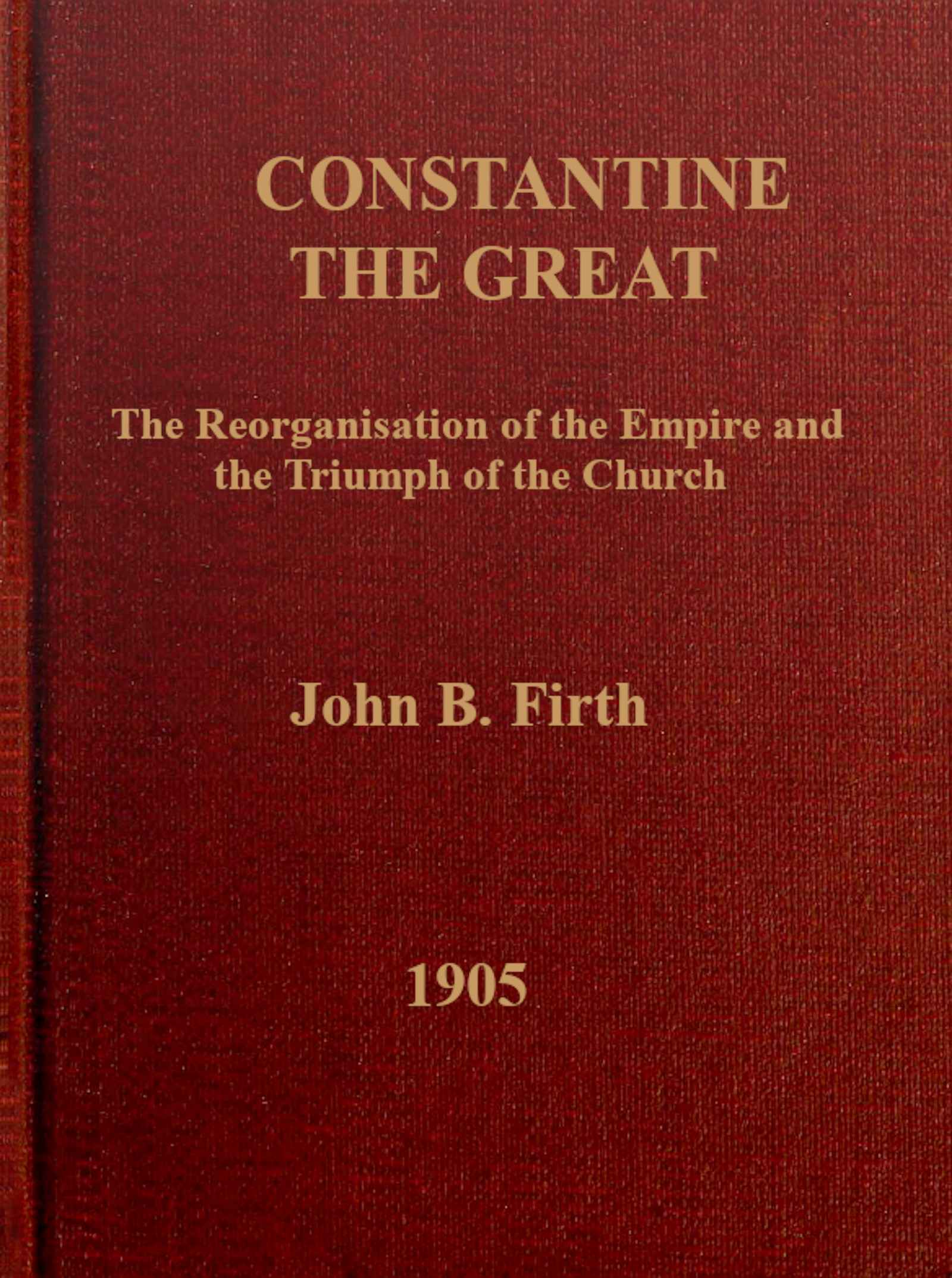
Constantine the Great: The Reorganization of the Empire and the Triumph of the Church
1905
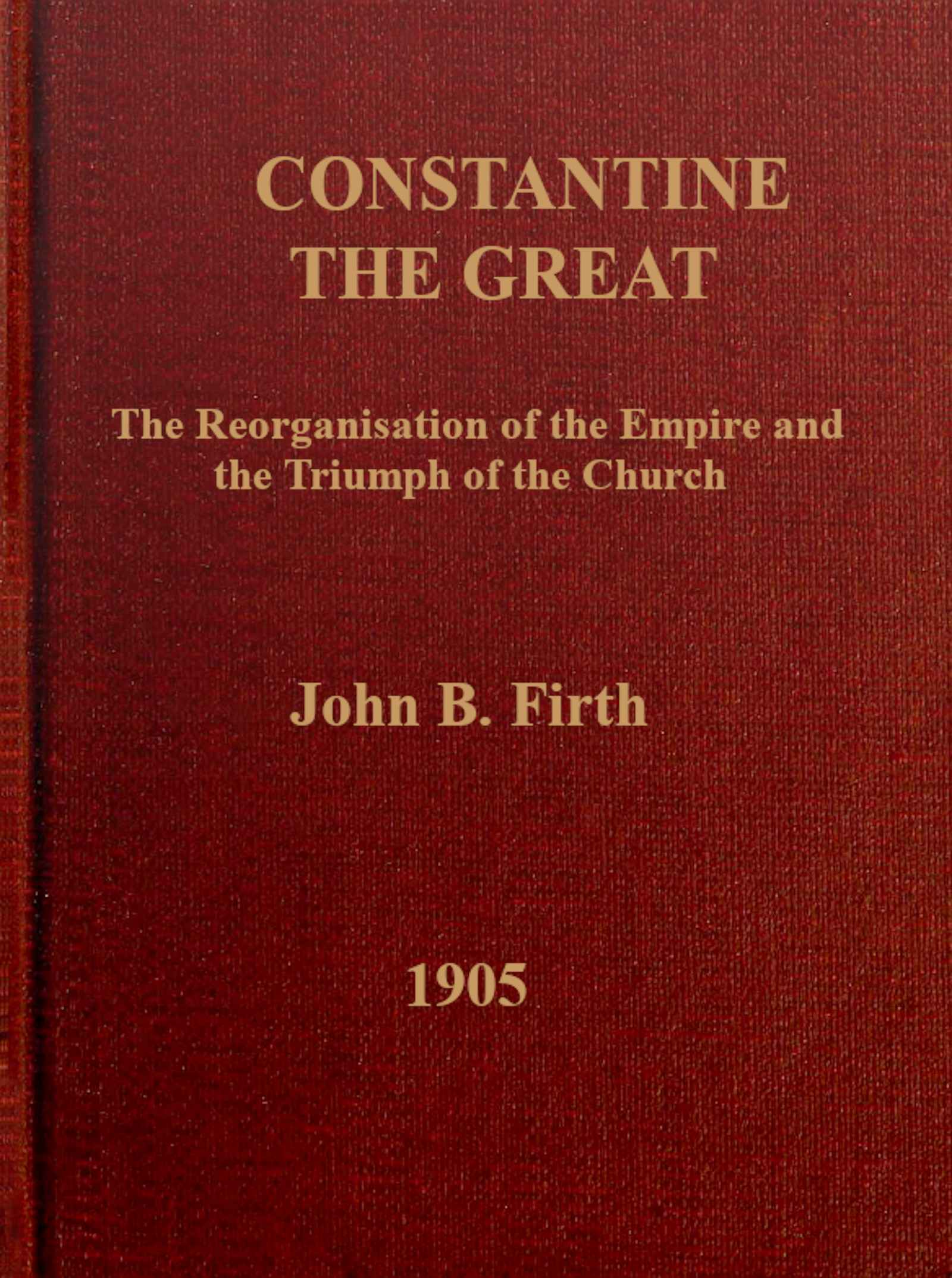
Constantine the Great: The Reorganization of the Empire and the Triumph of the Church
1905
Published in 1905, 'Constantine the Great: The Reorganization of the Empire and the Triumph of the Church' by John B. Firth is a historical examination of Constantine I's reign and his pivotal role in transforming the Roman Empire. The book details the dire state of the Empire under Diocletian, the societal upheaval following Constantine's conversion to Christianity, and the significant impact of his leadership. Firth's scholarly approach questions the legitimacy of Constantine's title 'the Great,' while providing a thorough analysis of the era's complexities and the triumph of the Christian Church.
Editions
X-Ray
“The philosophies were worn out. The gods themselves had grown grey. There was a general atmosphere of numbness and decrepitude. Men wanted consolation and hope. Christianity alone could supply it, and though Christianity itself had lost its early joyousness, freshness, and simplicity, it retained unimpaired its marvelous powers to console. To a world tired of questioning and search it returned an answer for which it claimed the sanction of absolute Truth. The old spirit was not wholly dead. One may see it revive from time to time in the various heresies which split the Church. But it was ruthlessly suppressed, and humanity had to purchase back its liberty of thought at a great price, ten or more centuries later, when the world realized that her ancient deliverer had herself become a tyrant. Nevertheless, few can seriously doubt that the triumph of the Christian Church was an unspeakable boon to mankind. The Roman Empire was doomed. Its downfall was certain and, on the whole, was even to be desired, so long as its civilization was not wholly wiped out and the genius of past generations was not wholly destroyed.””
— John B. Firth
“grown grey. There was a general atmosphere of numbness and decrepitude. Men wanted consolation and hope. Christianity alone could supply it, and though Christianity itself had lost its early joyousness, freshness, and simplicity, it retained unimpaired its marvelous powers to console. To a world tired of questioning and search it returned an answer for which it claimed the sanction of absolute Truth. The old spirit was not wholly dead. One may see it revive from time to time in the various heresies which split the Church. But it was ruthlessly suppressed, and humanity had to purchase back its liberty of thought at a great price, ten or more centuries later, when the world realized that her ancient deliverer had herself become a tyrant. Nevertheless, few can seriously doubt that the triumph of the Christian Church was an unspeakable boon to mankind. The Roman Empire was doomed. Its downfall was certain and, on the whole, was even to be desired, so long as its civilization was not wholly wiped out and the genius of past generations was not wholly destroyed.””
— John B. Firth
“destroyed.””
— John B. Firth
About Constantine the Great: The Reorganization of the Empire and the Triumph of the Church
Chapter Summaries
- 1
- Describes the crisis of the third century and Diocletian's rise to power, establishing the tetrarchy system with four rulers. The chapter outlines his administrative reforms and the temporary stability achieved through power-sharing.
- 2
- Details the last and most severe persecution of Christians under Diocletian's edicts. Examines the causes, methods, and extent of persecution across different provinces, highlighting both the cruelty of persecutors and courage of martyrs.
- 3
- Chronicles Diocletian's unprecedented abdication in 305 and Constantine's rise to power following his father's death in Britain. Describes Constantine's early years and his escape from Galerius's court.
Key Themes
- Religious Transformation
- The book chronicles the momentous shift from paganism to Christianity as the official religion of the Roman Empire. Constantine's conversion and the Edict of Milan mark the end of Christian persecution and the beginning of Christian dominance.
- Political Power and Religious Authority
- The complex relationship between imperial power and religious leadership is explored through Constantine's role in church councils and theological disputes. The emperor becomes both protector and judge of Christian doctrine.
- Unity vs. Division
- Constantine's desperate desire for religious and political unity conflicts with the natural tendency toward schism and heresy. The Donatist controversy and Arian heresy demonstrate how theological disputes threaten imperial stability.
Characters
- Constantine the Great(protagonist)
- Roman Emperor who converted to Christianity and unified the Empire. Born around 273-274, he became the first Christian Emperor and convened the Council of Nicaea.
- Diocletian(major)
- Roman Emperor who established the tetrarchy system and initiated the last great persecution of Christians. Abdicated in 305 and retired to his palace at Salona.
- Licinius(major)
- Eastern Roman Emperor and Constantine's brother-in-law who initially supported religious tolerance but later persecuted Christians. Defeated by Constantine in 324.
- Arius(major)
- Alexandrian priest who founded Arianism, teaching that Christ was subordinate to God the Father. His heresy sparked the great theological controversy addressed at Nicaea.
- Athanasius(major)
- Young deacon who became the champion of orthodox Christianity against Arianism at Nicaea. Later became Patriarch of Alexandria and defender of the Nicene Creed.
- Maxentius(major)
- Son of Maximian who usurped power in Italy and was defeated by Constantine at the Battle of Milvian Bridge in 312. Depicted as a cruel tyrant.
Link to this book
Add a free, dofollow link to Lex on your blog, forum, syllabus, or reading list.

<a href="https://lex-books.com/book/constantine-the-great-the-reorganization-of-the-empire-and-the-triumph-of-the-ch-b9492489-d5d6-4a31-832d-87f2a8523573"><img src="https://lex-books.com/badges/read-on-lex.svg" alt="Read Constantine the Great: The Reorganization of the Empire and the Triumph of the Church by John B. Firth free on Lex" width="160" height="40"></a>[](https://lex-books.com/book/constantine-the-great-the-reorganization-of-the-empire-and-the-triumph-of-the-ch-b9492489-d5d6-4a31-832d-87f2a8523573)[url=https://lex-books.com/book/constantine-the-great-the-reorganization-of-the-empire-and-the-triumph-of-the-ch-b9492489-d5d6-4a31-832d-87f2a8523573][img]https://lex-books.com/badges/read-on-lex.svg[/img][/url]Read Constantine the Great: The Reorganization of the Empire and the Triumph of the Church by John B. Firth free on Lex: https://lex-books.com/book/constantine-the-great-the-reorganization-of-the-empire-and-the-triumph-of-the-ch-b9492489-d5d6-4a31-832d-87f2a8523573Cite this book
Reading this edition for a paper or guide? Copy a citation.
Firth, John B.. Constantine the Great: The Reorganization of the Empire and the Triumph of the Church. Lex, lex-books.com/book/constantine-the-great-the-reorganization-of-the-empire-and-the-triumph-of-the-ch-b9492489-d5d6-4a31-832d-87f2a8523573.Firth, J. B. (1905). Constantine the Great: The Reorganization of the Empire and the Triumph of the Church. Lex. https://lex-books.com/book/constantine-the-great-the-reorganization-of-the-empire-and-the-triumph-of-the-ch-b9492489-d5d6-4a31-832d-87f2a8523573Firth, John B.. Constantine the Great: The Reorganization of the Empire and the Triumph of the Church. Lex. https://lex-books.com/book/constantine-the-great-the-reorganization-of-the-empire-and-the-triumph-of-the-ch-b9492489-d5d6-4a31-832d-87f2a8523573.