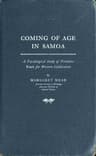
Coming of Age in Samoa: A Psychological Study of Primitive Youth for Western Civilisation
1928
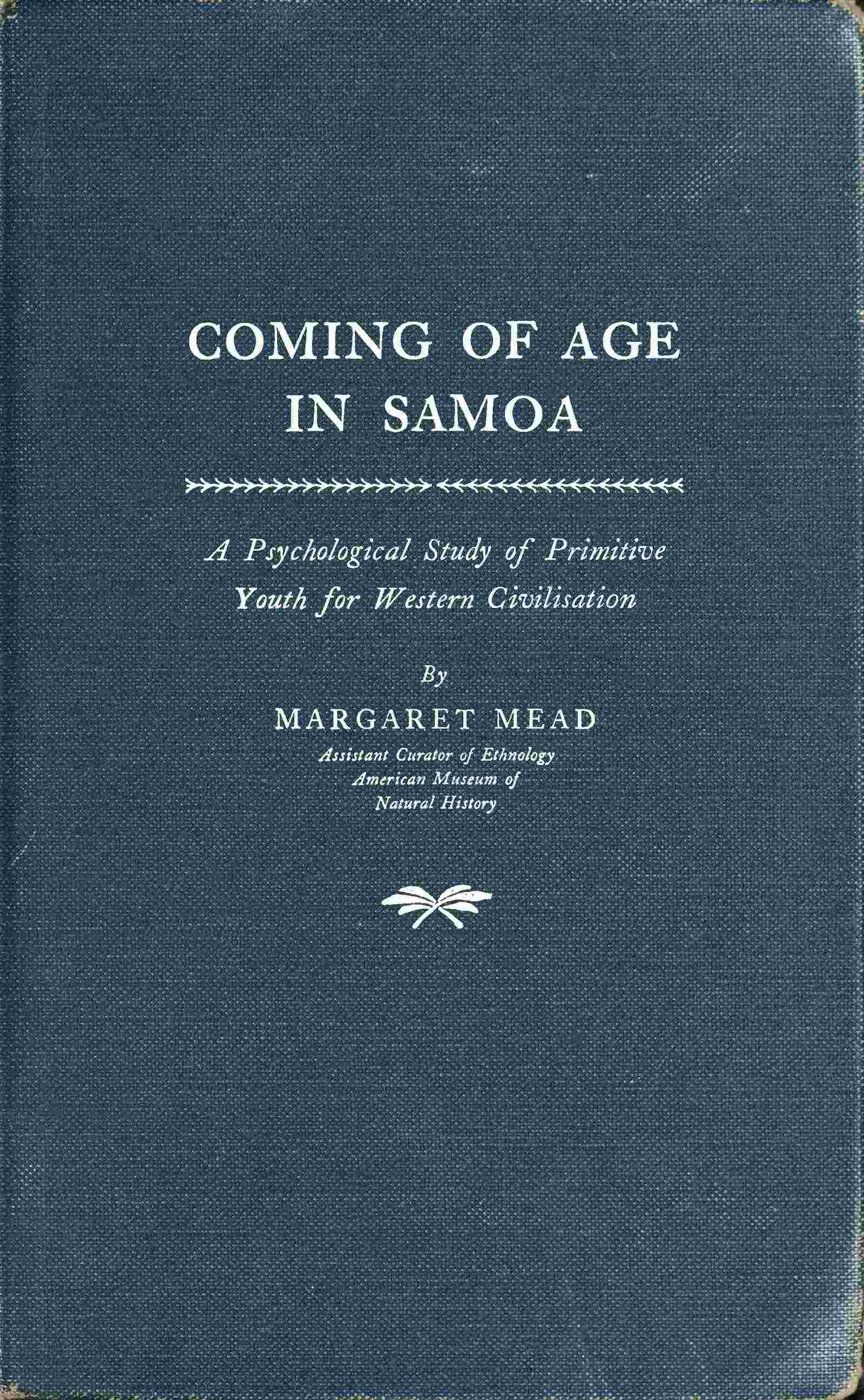
Coming of Age in Samoa: A Psychological Study of Primitive Youth for Western Civilisation
1928
In 1925, a twenty-three-year-old anthropologist named Margaret Mead sailed to the South Pacific to answer a single, explosive question: is the anguish of adolescence inevitable, or is it manufactured by the society that raises us? Living among the girls of Ta'u island in American Samoa, Mead observed a childhood radically different from anything in Western civilization one where sexuality was unburdened by shame, where identity was forged through communal belonging rather than anxious individuation, and where the transition to adulthood unfolded with startling ease. Her finding that adolescence could be peaceful, even unremarkable, sent a shockwave through American psychology and culture. Written with the precision of science and the urgency of a manifesto, this book dismantled the comfortable assumption that Western adolescence its rebellions, its angsts, its suffering was the natural template of human development. A century later, Mead's central provocation still destabilizes every parent, educator, and teenager who wonders: how much of growing up is biology, and how much is culture?
Editions
X-Ray
“We must turn all of our educational efforts to training our children for the choices which will confront them... The child who is to choose wisely must be healthy in mind and body. The children must be taught how to think, not what to think.””
— Margaret Mead
“... but as the traveller who has been once from home is wiser than he who has never left his own door step, so a knowledge of one other culture should sharpen our ability to scrutinise more steadily, to appreciate more lovingly, our own. And, because of the particular problem which we set out to answer, this tale of another way of life is mainly concerned with education, with the process by which baby, arrived cultureless upon the human scene, becomes a full-fledged adult member of his or her society. The strongest light will fall upon the ways in which Samoan education, in its broadest sense, be able to turn, made newly and vividly self-conscious and self-critical, to judge anew and perhaps fashion differently the education we give our children.””
— Margaret Mead
“The results of her painstaking investigation confirm the suspicion long held by anthropologists, that much of what we ascribe to human nature is no more than a reaction to the restraints put upon us by our civilisation.””
— Margaret Mead
“The children must be taught how to think, not what to think. And because old errors die slowly, they must be taught tolerance, just as today they are taught intolerance.””
— Margaret Mead
“The significance of the dance in the education and socialisation of Samoan children is two-fold. In the first place it effectively offsets the rigorous subordination in which children are habitually kept. Here the admonitions of the elders change from "Sit down and keep still!" to "Stand up and dance!" The children are actually the centre of the group instead of its barely tolerated fringes.””
— Margaret Mead
Link to this book
Add a free, dofollow link to Lex on your blog, forum, syllabus, or reading list.

<a href="https://lex-books.com/book/coming-of-age-in-samoa-a-psychological-study-of-primitive-youth-for-western-civi-5a367b8b-4d8b-4c20-9359-99409b66e3e8"><img src="https://lex-books.com/badges/read-on-lex.svg" alt="Read Coming of Age in Samoa: A Psychological Study of Primitive Youth for Western Civilisation by Margaret Mead free on Lex" width="160" height="40"></a>[](https://lex-books.com/book/coming-of-age-in-samoa-a-psychological-study-of-primitive-youth-for-western-civi-5a367b8b-4d8b-4c20-9359-99409b66e3e8)[url=https://lex-books.com/book/coming-of-age-in-samoa-a-psychological-study-of-primitive-youth-for-western-civi-5a367b8b-4d8b-4c20-9359-99409b66e3e8][img]https://lex-books.com/badges/read-on-lex.svg[/img][/url]Read Coming of Age in Samoa: A Psychological Study of Primitive Youth for Western Civilisation by Margaret Mead free on Lex: https://lex-books.com/book/coming-of-age-in-samoa-a-psychological-study-of-primitive-youth-for-western-civi-5a367b8b-4d8b-4c20-9359-99409b66e3e8Cite this book
Reading this edition for a paper or guide? Copy a citation.
Mead, Margaret. Coming of Age in Samoa: A Psychological Study of Primitive Youth for Western Civilisation. Lex, lex-books.com/book/coming-of-age-in-samoa-a-psychological-study-of-primitive-youth-for-western-civi-5a367b8b-4d8b-4c20-9359-99409b66e3e8.Mead, M. (1928). Coming of Age in Samoa: A Psychological Study of Primitive Youth for Western Civilisation. Lex. https://lex-books.com/book/coming-of-age-in-samoa-a-psychological-study-of-primitive-youth-for-western-civi-5a367b8b-4d8b-4c20-9359-99409b66e3e8Mead, Margaret. Coming of Age in Samoa: A Psychological Study of Primitive Youth for Western Civilisation. Lex. https://lex-books.com/book/coming-of-age-in-samoa-a-psychological-study-of-primitive-youth-for-western-civi-5a367b8b-4d8b-4c20-9359-99409b66e3e8.