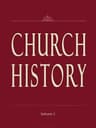
Church History, Volume 2 (of 3)
Church History, Volume 2 (of 3)
Translated by John Macpherson
This is a rigorous 19th-century ecclesiastical history from the Germanic-Romance world, spanning the 10th through 13th centuries. Kurtz examines the dramatic expansion of Christianity across Northern and Eastern Europe during this period. The narrative traces how Viking converts became missionaries to their homelands, how rulers in Scandinavia, Poland, and Hungary leveraged faith for political legitimacy, and how the church navigated its relationship with emerging feudal states. The Crusades receive substantial attention, not merely as military campaigns but as expressions of the church's growing political ambition and its complex entanglement with European powers. This is institutional history at its most ambitious: Kurtz reconstructs the machinery by which a regional Western church transformed into a continental spiritual and political force. His narrative moves fluidly between theological developments, diplomatic maneuvers, and the personal conversions that reshaped Europe's religious map.
Editions
Link to this book
Add a free, dofollow link to Lex on your blog, forum, syllabus, or reading list.

<a href="https://lex-books.com/book/church-history-volume-2-of-3-c8c482cd-2745-499e-bf08-426d73cf3acb"><img src="https://lex-books.com/badges/read-on-lex.svg" alt="Read Church History, Volume 2 (of 3) by J. H. Kurtz free on Lex" width="160" height="40"></a>[](https://lex-books.com/book/church-history-volume-2-of-3-c8c482cd-2745-499e-bf08-426d73cf3acb)[url=https://lex-books.com/book/church-history-volume-2-of-3-c8c482cd-2745-499e-bf08-426d73cf3acb][img]https://lex-books.com/badges/read-on-lex.svg[/img][/url]Read Church History, Volume 2 (of 3) by J. H. Kurtz free on Lex: https://lex-books.com/book/church-history-volume-2-of-3-c8c482cd-2745-499e-bf08-426d73cf3acbCite this book
Reading this edition for a paper or guide? Copy a citation.
Kurtz, J. H.. Church History, Volume 2 (of 3). Lex, lex-books.com/book/church-history-volume-2-of-3-c8c482cd-2745-499e-bf08-426d73cf3acb.Kurtz, J. H. (n.d.). Church History, Volume 2 (of 3). Lex. https://lex-books.com/book/church-history-volume-2-of-3-c8c482cd-2745-499e-bf08-426d73cf3acbKurtz, J. H.. Church History, Volume 2 (of 3). Lex. https://lex-books.com/book/church-history-volume-2-of-3-c8c482cd-2745-499e-bf08-426d73cf3acb.