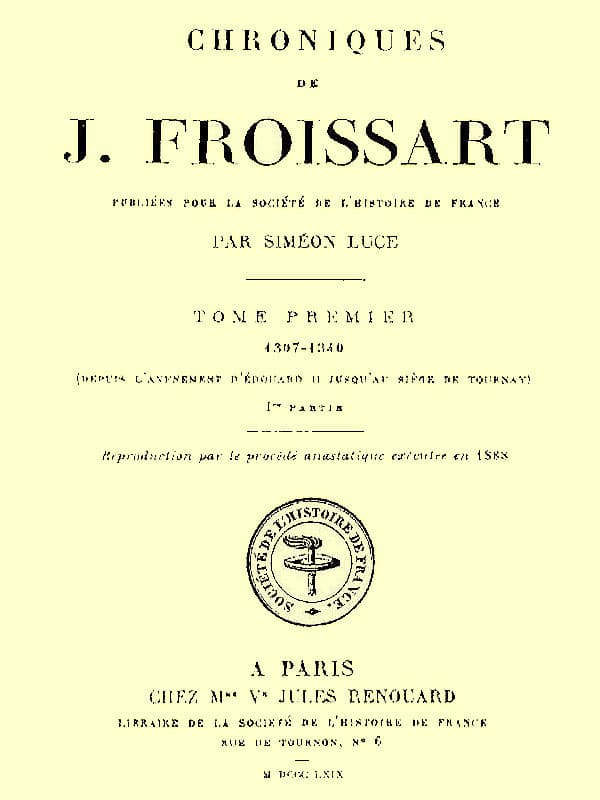
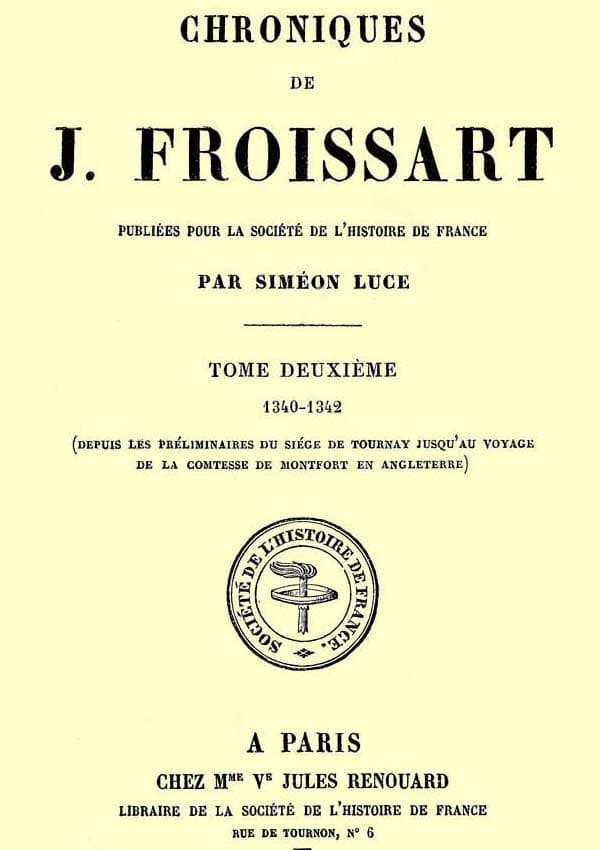
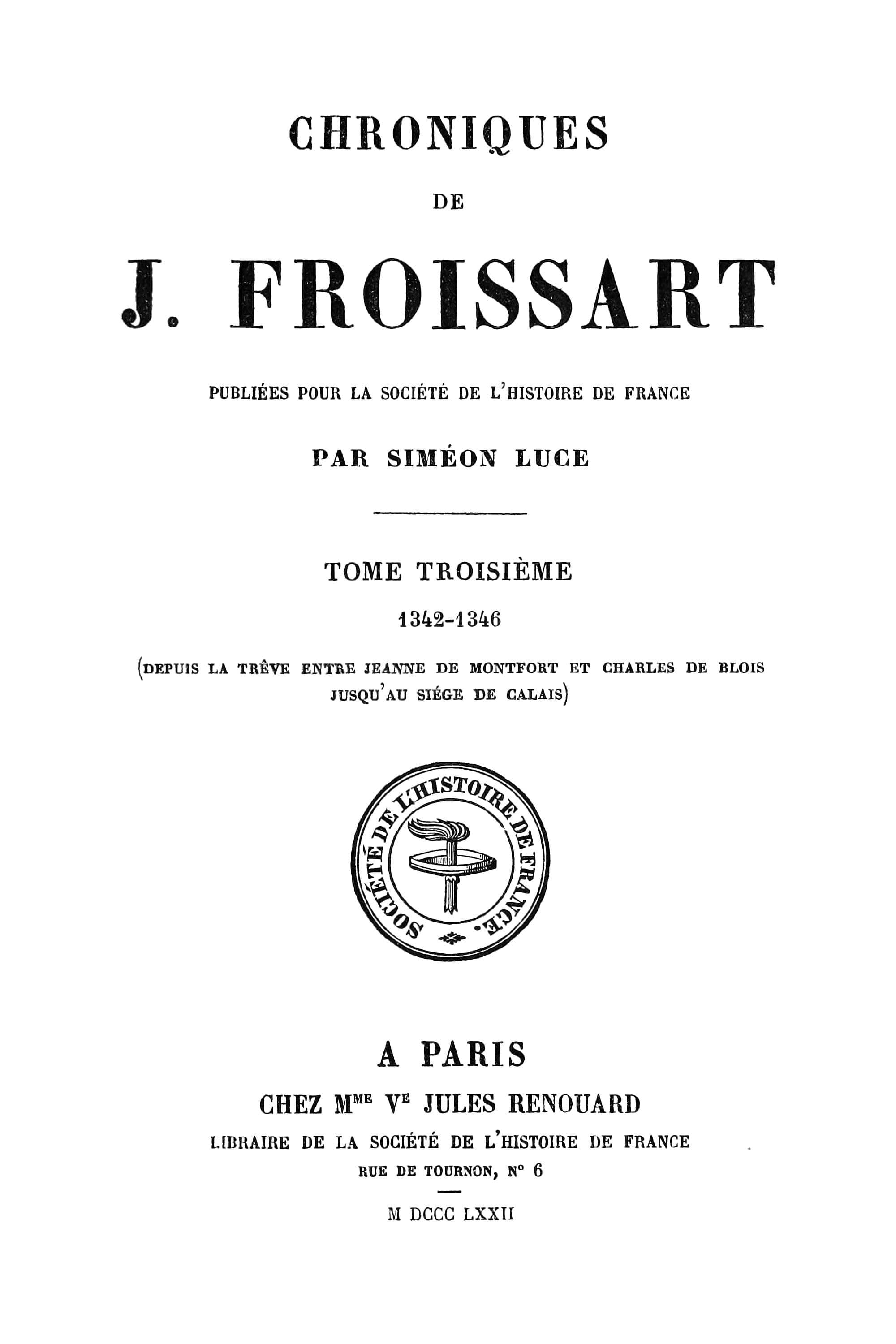
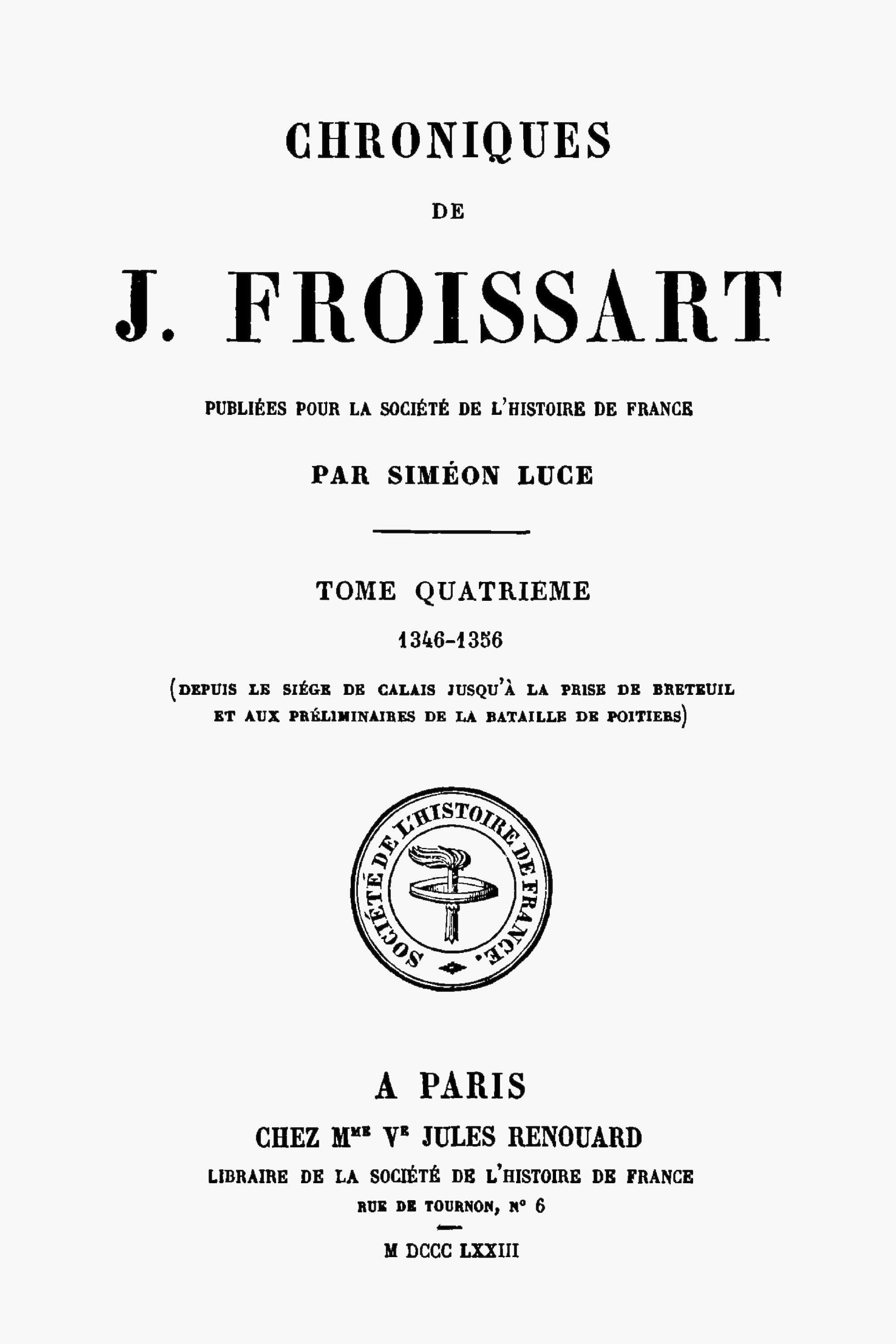
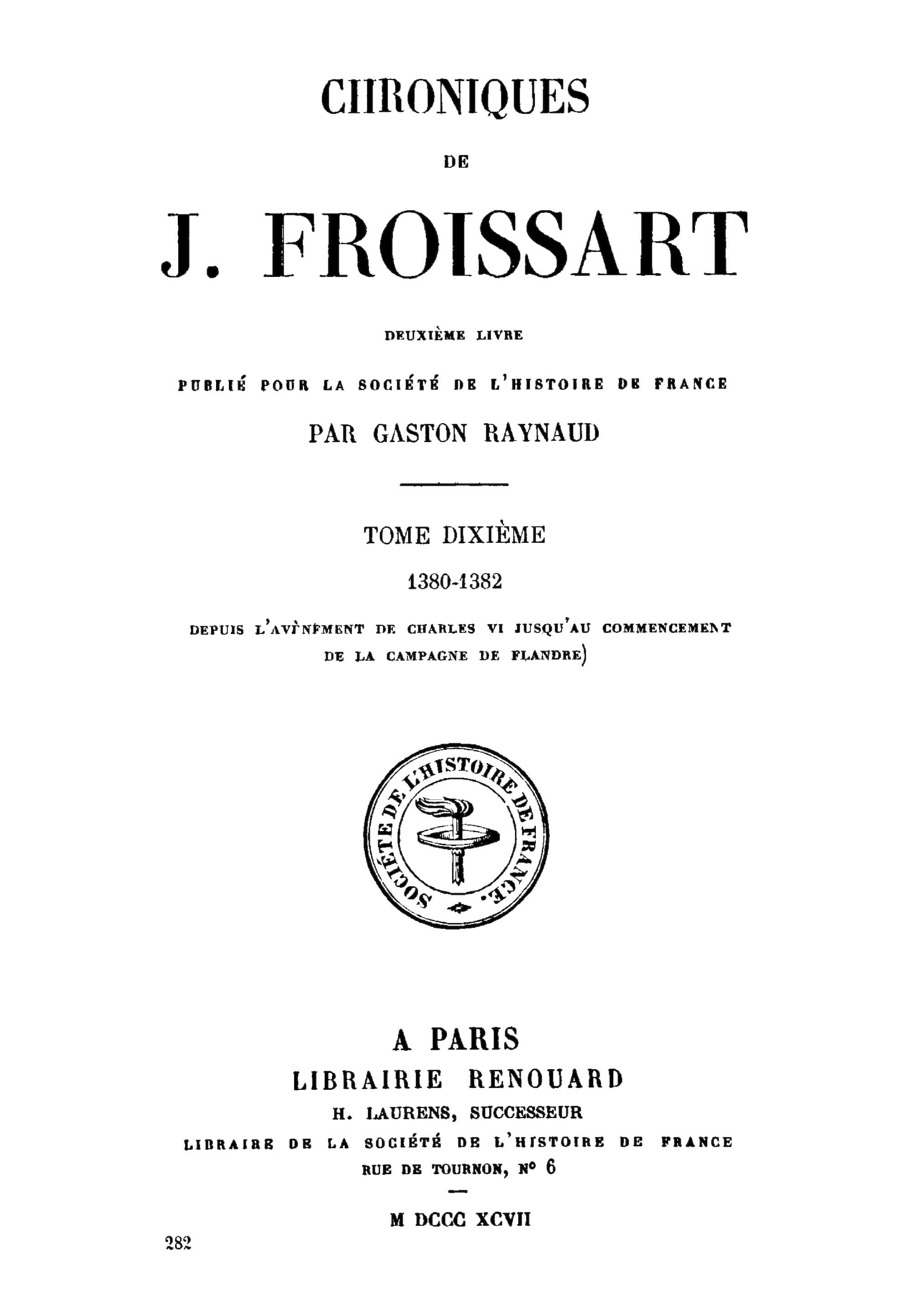
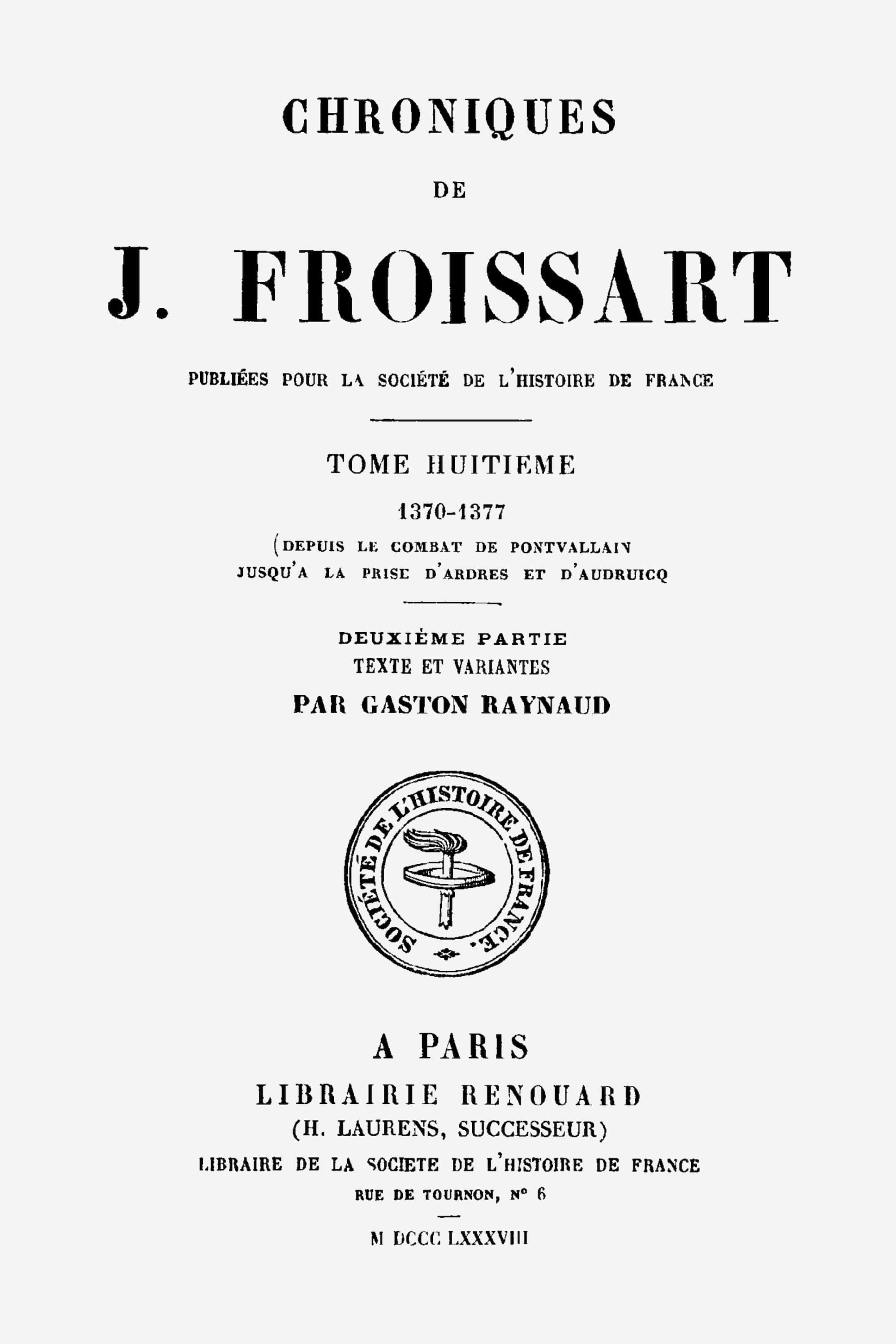
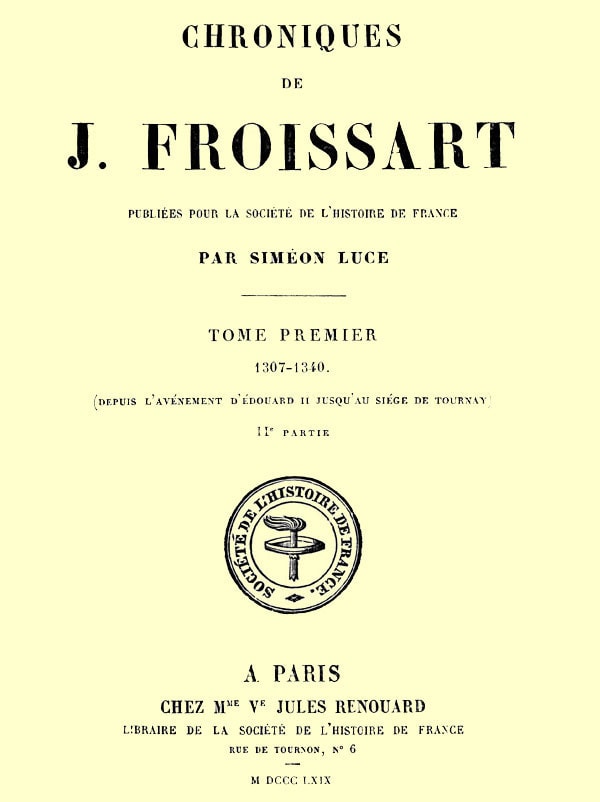
Chroniques De J. Froissart, Tome 01/13, 2ème Partie: 1307-1340 (depuis L'avénement D'édouard II Jusqu'au Siége De Tournay)
1824

Chroniques De J. Froissart, Tome 01/13, 2ème Partie: 1307-1340 (depuis L'avénement D'édouard II Jusqu'au Siége De Tournay)
1824
''Chroniques de J. Froissart, tome 01/13, 2ème partie : 1307-1340'' is a historical account written in the 19th century. The work chronicles events from the significant wars and battles of the 14th century, primarily focusing on the conflicts between France and England, providing rich narratives filled with details about chivalry, warfare, and notable individuals of the time. At the start of this volume, Froissart introduces the primary theme of record-keeping regarding the marvels of warfare and the noble deeds of knights during these tumultuous times. He stresses the value of honor and prowess in battle, encouraging young noblemen to seek glory through their actions rather than through lineage alone. The opening sets the stage for detailed stories and accounts of various knights and their adventures, highlighting the importance of courage and virtue in the midst of conflict. Froissart’s reflective and engaging style invites readers to appreciate the tales of heroism and the historical context that shaped medieval Europe.
Editions
X-Ray
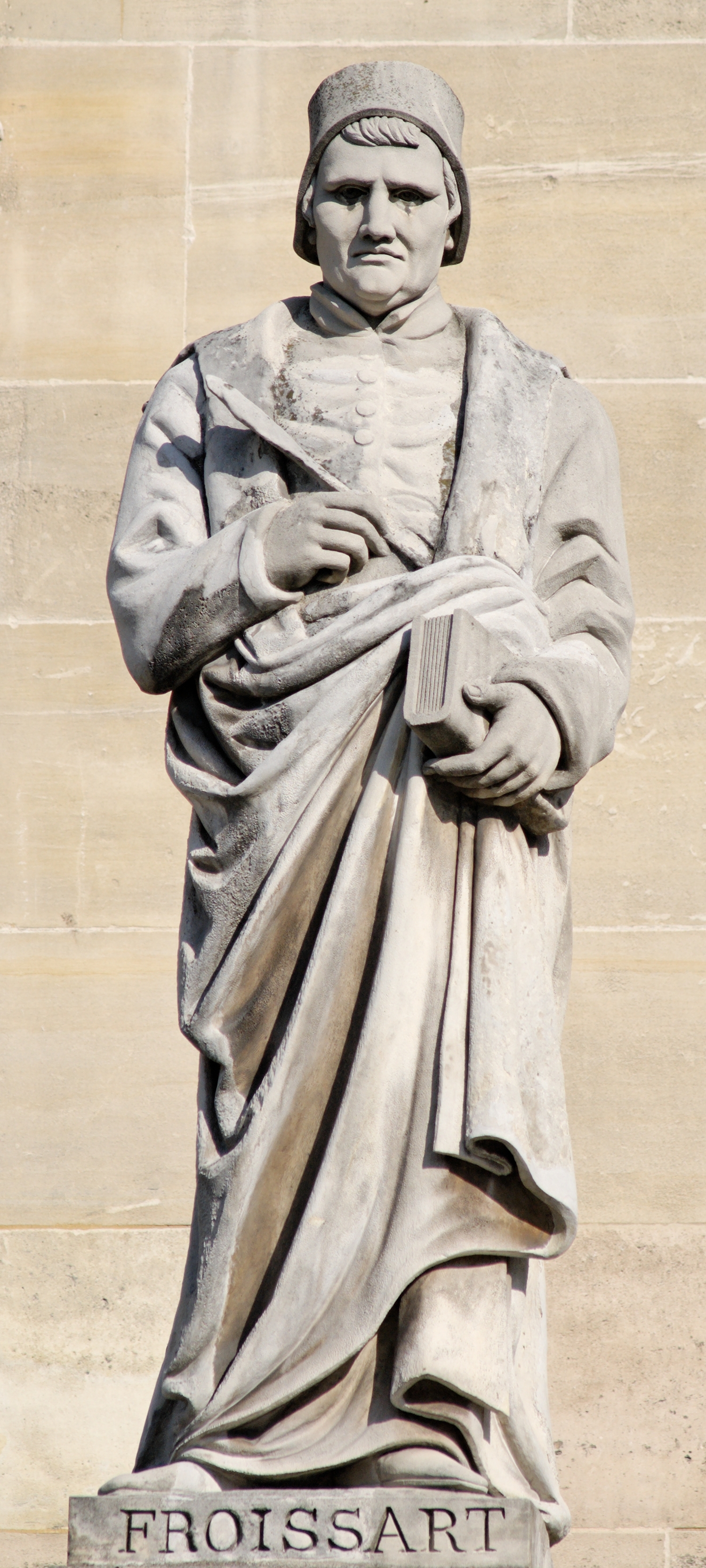
The chronicler and narrator from Valenciennes in Hainaut. He presents himself as the author documenting the great deeds of arms and wars between France and England.
The deposed king of England, father of Edward III. Weak ruler dominated by Hugh le Despenser, ultimately imprisoned and killed.
Queen of England, daughter of Philip IV of France. Leads successful rebellion against her husband Edward II to place her son on the throne.
Young king of England, crowned at age 16. Becomes a great warrior king and leads campaigns against Scotland.
About Chroniques De J. Froissart, Tome 01/13, 2ème Partie: 1307-1340 (depuis L'avénement D'édouard II Jusqu'au Siége De Tournay)
Chapter Summaries
- Prologue
- Froissart introduces his chronicle's purpose and discusses prowess as the supreme virtue, tracing its historical movement through different kingdoms from Babylon to England. He identifies himself as Jean Froissart of Valenciennes.
- 1-3
- Description of Edward II's family relationships and the succession crisis in France after Charles IV's death, establishing the background for future conflicts over the French crown.
- 4-5
- Details of how Hugh le Despenser the Younger dominates Edward II, leading to the execution of Thomas of Lancaster and other nobles, creating widespread hatred and fear.
Key Themes
- Chivalry and Prowess
- Froissart extensively discusses 'prowess' as the supreme knightly virtue, tracing its movement through different kingdoms and celebrating the deeds of valiant knights who achieve honor through martial excellence.
- Political Legitimacy
- The chronicle explores questions of rightful rule, examining the deposition of Edward II, the succession laws excluding women from the French throne, and the establishment of Edward III's authority.
- Loyalty and Betrayal
- The narrative reveals complex webs of loyalty, from Hugh le Despenser's manipulation of Edward II to Isabella's rebellion against her husband, and the shifting allegiances of nobles.
Characters
- Jean Froissart(protagonist)
- The chronicler and narrator from Valenciennes in Hainaut. He presents himself as the author documenting the great deeds of arms and wars between France and England.
- Edward II of England(major)
- The deposed king of England, father of Edward III. Weak ruler dominated by Hugh le Despenser, ultimately imprisoned and killed.
- Isabella of France(major)
- Queen of England, daughter of Philip IV of France. Leads successful rebellion against her husband Edward II to place her son on the throne.
- Edward III of England(major)
- Young king of England, crowned at age 16. Becomes a great warrior king and leads campaigns against Scotland.
- John of Hainaut(major)
- Noble knight from Hainaut, brother of Count William. Leads military expedition to help Isabella regain England, later serves Edward III.
- Hugh le Despenser the Younger(antagonist)
- Powerful favorite of Edward II who dominates the king and causes civil war. Executed by Isabella's forces.
Link to this book
Add a free, dofollow link to Lex on your blog, forum, syllabus, or reading list.

<a href="https://lex-books.com/book/chroniques-de-j-froissart-tome-01-13-2-me-partie-1307-1340-depuis-l-av-nement-d--d9c7efad-22f9-4b47-ae67-09c3d2a0e34c"><img src="https://lex-books.com/badges/read-on-lex.svg" alt="Read Chroniques De J. Froissart, Tome 01/13, 2ème Partie: 1307-1340 (depuis L'avénement D'édouard II Jusqu'au Siége De Tournay) by Jean Froissart free on Lex" width="160" height="40"></a>[](https://lex-books.com/book/chroniques-de-j-froissart-tome-01-13-2-me-partie-1307-1340-depuis-l-av-nement-d--d9c7efad-22f9-4b47-ae67-09c3d2a0e34c)[url=https://lex-books.com/book/chroniques-de-j-froissart-tome-01-13-2-me-partie-1307-1340-depuis-l-av-nement-d--d9c7efad-22f9-4b47-ae67-09c3d2a0e34c][img]https://lex-books.com/badges/read-on-lex.svg[/img][/url]Read Chroniques De J. Froissart, Tome 01/13, 2ème Partie: 1307-1340 (depuis L'avénement D'édouard II Jusqu'au Siége De Tournay) by Jean Froissart free on Lex: https://lex-books.com/book/chroniques-de-j-froissart-tome-01-13-2-me-partie-1307-1340-depuis-l-av-nement-d--d9c7efad-22f9-4b47-ae67-09c3d2a0e34cCite this book
Reading this edition for a paper or guide? Copy a citation.
Froissart, Jean. Chroniques De J. Froissart, Tome 01/13, 2ème Partie: 1307-1340 (depuis L'avénement D'édouard II Jusqu'au Siége De Tournay). Lex, lex-books.com/book/chroniques-de-j-froissart-tome-01-13-2-me-partie-1307-1340-depuis-l-av-nement-d--d9c7efad-22f9-4b47-ae67-09c3d2a0e34c.Froissart, J. (1824). Chroniques De J. Froissart, Tome 01/13, 2ème Partie: 1307-1340 (depuis L'avénement D'édouard II Jusqu'au Siége De Tournay). Lex. https://lex-books.com/book/chroniques-de-j-froissart-tome-01-13-2-me-partie-1307-1340-depuis-l-av-nement-d--d9c7efad-22f9-4b47-ae67-09c3d2a0e34cFroissart, Jean. Chroniques De J. Froissart, Tome 01/13, 2ème Partie: 1307-1340 (depuis L'avénement D'édouard II Jusqu'au Siége De Tournay). Lex. https://lex-books.com/book/chroniques-de-j-froissart-tome-01-13-2-me-partie-1307-1340-depuis-l-av-nement-d--d9c7efad-22f9-4b47-ae67-09c3d2a0e34c.