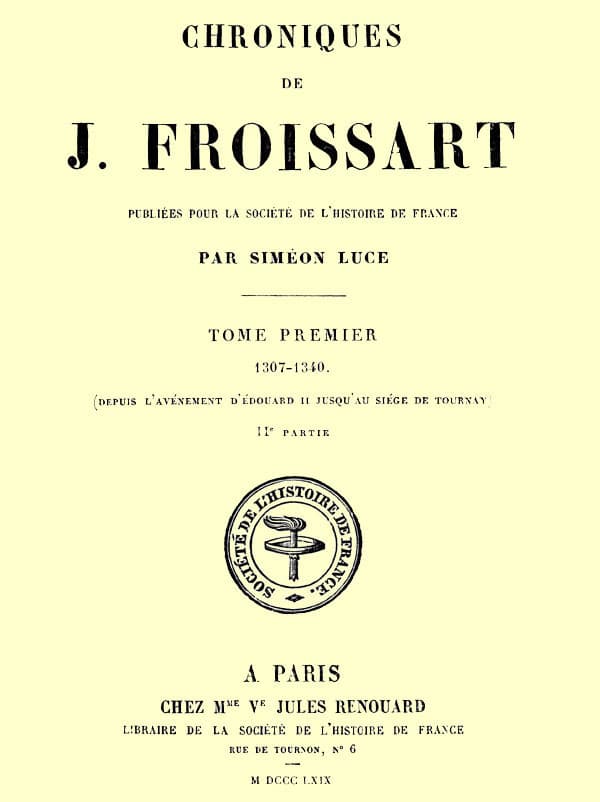
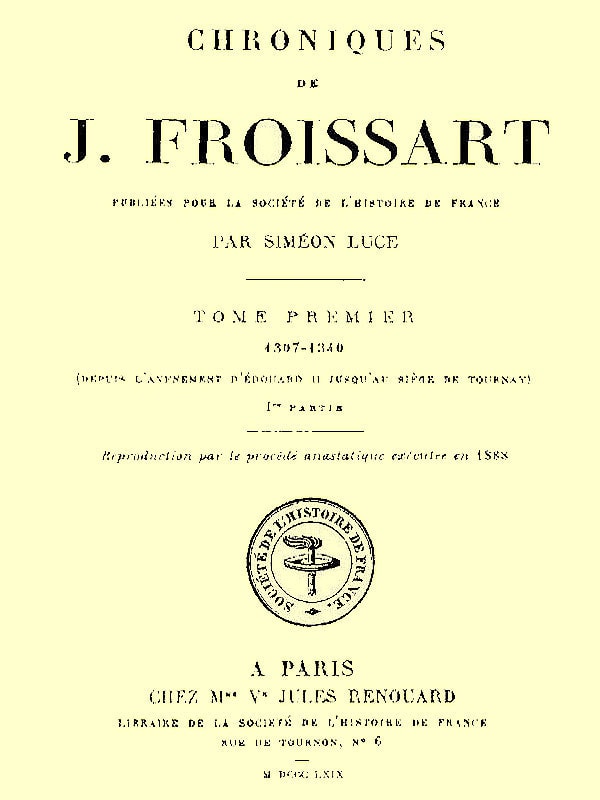
Chroniques De J. Froissart, Tome 01/13, 1re Partie: 1307-1340 (depuis L'avénement D'édouard II Jusqu'au Siége De Tournay)

Chroniques De J. Froissart, Tome 01/13, 1re Partie: 1307-1340 (depuis L'avénement D'édouard II Jusqu'au Siége De Tournay)
''Chroniques de J. Froissart, tome 01/13, 1re partie : 1307-1340'' by Siméon Luce is a historical account published in the late 19th century. This work encompasses the chronicles written by Jean Froissart, a significant chronicler of the 14th century, detailing the political and social turmoil of the time, particularly focusing on the Hundred Years' War and its surrounding events. Froissart’s narratives explore not only France but also England and other parts of Europe, diving into the lives of notable figures and families that shaped the era. The opening of this edition sets the stage for Froissart’s extensive work, emphasizing the historical, literary, and cultural importance of his chronicles. It introduces the structure of the text, touching upon the various manuscripts and editions that have survived, as well as the complexities of Froissart's writings, which span a crucial period of transition from the medieval to the modern era. Through meticulous explanations, the introduction outlines an early analysis of the first book, including its different redactions and manuscript family trees, suggesting a rich depth of content set to follow in the full chronicles.
Editions

X-Ray
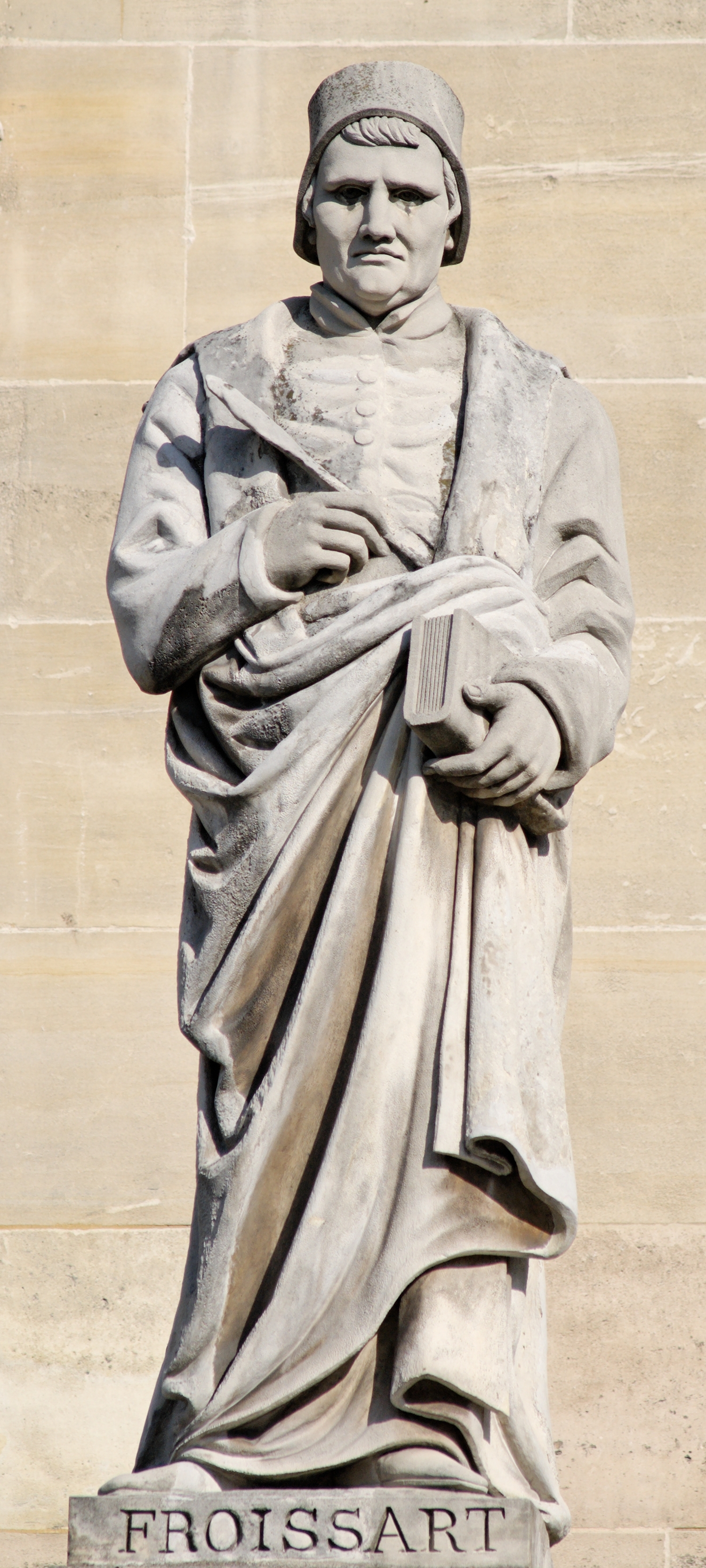
The chronicler and author, a priest from Valenciennes who served as clerk to Queen Philippe of Hainaut. He traveled extensively to gather historical information and wrote multiple versions of his Chronicles.
King of England who claimed the French throne, married to Philippe de Hainaut. Central figure in the early stages of the Hundred Years' War.
King of France (Philippe VI), first Valois king who ascended the throne in 1328, excluding Edward III's claim through his mother Isabelle.
Exiled French nobleman who fled to England and encouraged Edward III to claim the French throne. Brother-in-law to Philippe de Valois who banished him.
About Chroniques De J. Froissart, Tome 01/13, 1re Partie: 1307-1340 (depuis L'avénement D'édouard II Jusqu'au Siége De Tournay)
Chapter Summaries
- Prologue
- Froissart explains his methodology, acknowledging Jean le Bel as his primary source while asserting his own extensive research. He dedicates different versions to different patrons and emphasizes his commitment to recording the truth about chivalric deeds.
- I
- Overview of Edward II's troubled reign, his marriage to Isabelle of France, Scottish victories under Robert Bruce, and the growing influence of the Spenser favorites that would lead to civil war.
- II
- Queen Isabelle flees England with her son Edward, seeks refuge first in France then in Hainaut, where Jean de Hainaut agrees to help her return to England by force to depose her husband.
Key Themes
- Chivalric Honor and Prowess
- Froissart consistently celebrates knightly virtues, military prowess, and chivalric ideals as the highest human achievements. He judges individuals and nations by their adherence to these martial and courtly values.
- Feudal Loyalty and Betrayal
- The complex web of feudal obligations creates conflicts of loyalty, as seen in Edward III's homage to Philippe de Valois while claiming his throne, and the Duke of Brabant's duplicitous dealings with both kings.
- Economic and Political Pragmatism
- Despite the chivalric ideals, practical concerns drive many decisions, particularly visible in the Flemish revolt led by Jacques d'Arteveld, motivated by the wool trade with England.
Characters
- Jean Froissart(protagonist)
- The chronicler and author, a priest from Valenciennes who served as clerk to Queen Philippe of Hainaut. He traveled extensively to gather historical information and wrote multiple versions of his Chronicles.
- Édouard III(major)
- King of England who claimed the French throne, married to Philippe de Hainaut. Central figure in the early stages of the Hundred Years' War.
- Philippe de Valois(major)
- King of France (Philippe VI), first Valois king who ascended the throne in 1328, excluding Edward III's claim through his mother Isabelle.
- Robert d'Artois(major)
- Exiled French nobleman who fled to England and encouraged Edward III to claim the French throne. Brother-in-law to Philippe de Valois who banished him.
- Philippe de Hainaut(major)
- Queen of England, wife of Edward III, daughter of Guillaume Count of Hainaut. Froissart's former employer and protector.
- Jacques d'Arteveld(major)
- Flemish leader from Ghent who led the revolt against the Count of Flanders and allied with England for economic reasons.
Link to this book
Add a free, dofollow link to Lex on your blog, forum, syllabus, or reading list.

<a href="https://lex-books.com/book/chroniques-de-j-froissart-tome-01-13-1re-partie-1307-1340-depuis-l-av-nement-d-d-bd3a17f7-d10c-4a85-986b-bb082d9b3f5d"><img src="https://lex-books.com/badges/read-on-lex.svg" alt="Read Chroniques De J. Froissart, Tome 01/13, 1re Partie: 1307-1340 (depuis L'avénement D'édouard II Jusqu'au Siége De Tournay) by Jean Froissart free on Lex" width="160" height="40"></a>[](https://lex-books.com/book/chroniques-de-j-froissart-tome-01-13-1re-partie-1307-1340-depuis-l-av-nement-d-d-bd3a17f7-d10c-4a85-986b-bb082d9b3f5d)[url=https://lex-books.com/book/chroniques-de-j-froissart-tome-01-13-1re-partie-1307-1340-depuis-l-av-nement-d-d-bd3a17f7-d10c-4a85-986b-bb082d9b3f5d][img]https://lex-books.com/badges/read-on-lex.svg[/img][/url]Read Chroniques De J. Froissart, Tome 01/13, 1re Partie: 1307-1340 (depuis L'avénement D'édouard II Jusqu'au Siége De Tournay) by Jean Froissart free on Lex: https://lex-books.com/book/chroniques-de-j-froissart-tome-01-13-1re-partie-1307-1340-depuis-l-av-nement-d-d-bd3a17f7-d10c-4a85-986b-bb082d9b3f5dCite this book
Reading this edition for a paper or guide? Copy a citation.
Froissart, Jean. Chroniques De J. Froissart, Tome 01/13, 1re Partie: 1307-1340 (depuis L'avénement D'édouard II Jusqu'au Siége De Tournay). Lex, lex-books.com/book/chroniques-de-j-froissart-tome-01-13-1re-partie-1307-1340-depuis-l-av-nement-d-d-bd3a17f7-d10c-4a85-986b-bb082d9b3f5d.Froissart, J. (n.d.). Chroniques De J. Froissart, Tome 01/13, 1re Partie: 1307-1340 (depuis L'avénement D'édouard II Jusqu'au Siége De Tournay). Lex. https://lex-books.com/book/chroniques-de-j-froissart-tome-01-13-1re-partie-1307-1340-depuis-l-av-nement-d-d-bd3a17f7-d10c-4a85-986b-bb082d9b3f5dFroissart, Jean. Chroniques De J. Froissart, Tome 01/13, 1re Partie: 1307-1340 (depuis L'avénement D'édouard II Jusqu'au Siége De Tournay). Lex. https://lex-books.com/book/chroniques-de-j-froissart-tome-01-13-1re-partie-1307-1340-depuis-l-av-nement-d-d-bd3a17f7-d10c-4a85-986b-bb082d9b3f5d.