Characters and Events of Roman History
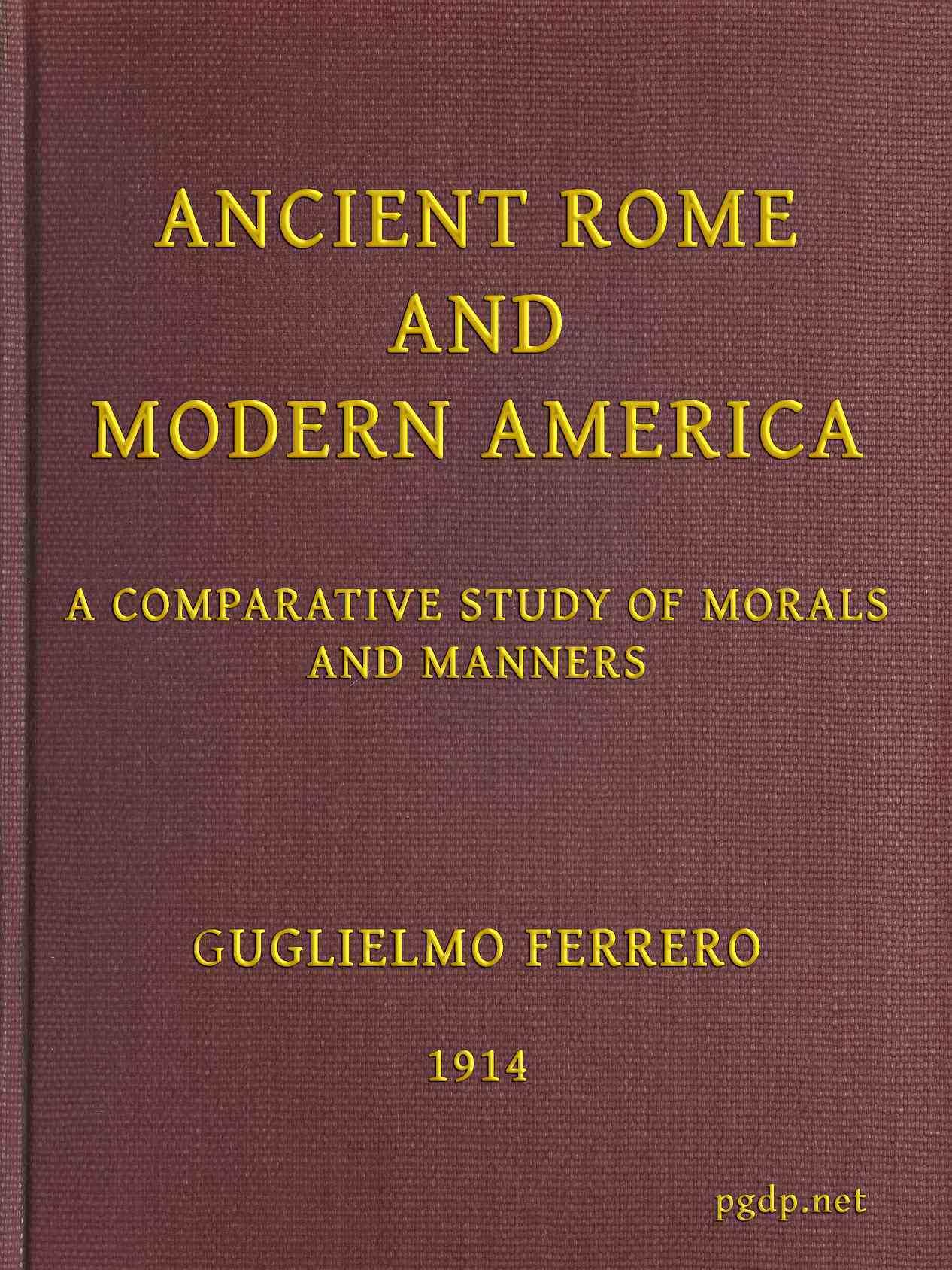
What made Rome fall? Not armies at the gates, but something quieter: the slow poisoning of its own traditions. This is the thesis that drives Guglielmo Ferrero's vivid lectures, delivered to American audiences in 1909 and collected here as a searching portrait of empire in decline. Ferrero was among Europe's most celebrated intellectuals, and his approach to Roman history refuses the dry cataloguing of battles and treaties. Instead, he traces the psychological and moral unraveling of a civilization, from Julius Caesar's bold grab for power through the spectacular self-destruction of Nero. Along the way, he offers a surprising chapter on wine's role in Roman life, and draws explicit parallels between Rome's corruption and the anxieties of his own modernity. This is history as diagnosis, not mere narration. For readers who want to understand how great powers rot from within, Ferrero remains startlingly prescient.
Editions
X-Ray
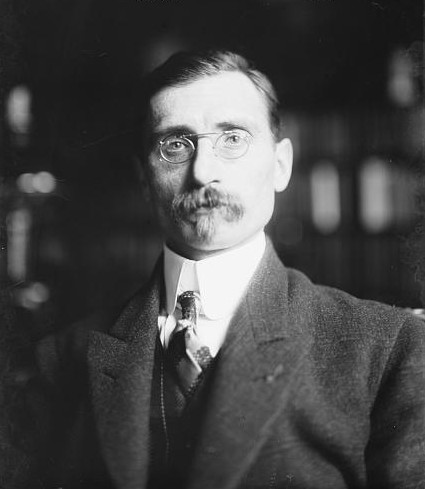
The author and historian who presents a critical and reinterpreted view of Roman history, emphasizing psychological and economic forces.
The translator of Guglielmo Ferrero's work, making his lectures accessible to an English-speaking audience.
The first Roman Emperor, portrayed as a pacifier and reorganizer who, through a policy of apparent inactivity, inadvertently fostered economic unity and preserved traditional Roman values.
A young emperor depicted as a debauched and criminal figure, yet also a victim of the contradictory forces of his time, symbolizing the triumph of Orientalism over Roman tradition.
About Characters and Events of Roman History
Chapter Summaries
- 1
- Ferrero introduces his central argument, reinterpreting ancient Roman laments about 'corruption' (luxury, ambition, avarice) as a universal psychological phenomenon of increasing wants and changing customs, which modern society calls 'progress.' He argues this force drives historical change, explaining Roman crises and demonstrating that Rome was poorer and simpler than often romanticized.
- 2
- Ferrero deconstructs the romantic legend of Antony and Cleopatra, asserting their relationship was primarily a political alliance. Antony sought Egypt's wealth for his Persian campaign, and Cleopatra aimed for Roman protection and a new Egyptian empire, with the 'love story' serving as Augustan propaganda to demonize Antony as a traitor seduced by Oriental depravity.
- 3
- This chapter argues that the Roman conquest and Romanization of Gaul were not part of a grand plan but rather an unforeseen outcome of internal Roman politics and accidental events. Gaul's later economic prosperity, recognized decades after its conquest, became crucial for balancing the Empire's East-West divide and sustaining Rome's metropolitan status.
Key Themes
- Corruption as Progress
- Ferrero's foundational thesis redefines ancient Roman 'corruption' (luxuria, ambitio, avaritia) not as moral decay but as a universal, psychological phenomenon: the natural increase of wants and changing customs across generations. He argues that this force, which moderns call 'progress,' is the fundamental driver of historical change, shaping political, social, and moral crises.
- Occident vs. Orient
- A recurring theme highlighting the struggle between the austere, military-focused traditions of the Roman West and the luxurious, intellectual, and individualistic influences of the Hellenized East. This conflict is shown to be a major force in shaping Roman policy, character development, and the eventual structure of the Empire, with figures like Antony and Cleopatra embodying this tension.
- The Role of Economic Forces in History
- Ferrero consistently emphasizes that economic phenomena, such as the accumulation of wealth, trade routes, agricultural development (e.g., wine and flax), and luxury industries, are crucial, often overlooked, drivers of historical events. He argues these forces frequently underpin political decisions and social transformations, demonstrating that history is not solely driven by great men or military conquests.
Characters
- Guglielmo Ferrero(protagonist)
- The author and historian who presents a critical and reinterpreted view of Roman history, emphasizing psychological and economic forces.
- Frances Lance Ferrero(supporting)
- The translator of Guglielmo Ferrero's work, making his lectures accessible to an English-speaking audience.
- Augustus(protagonist)
- The first Roman Emperor, portrayed as a pacifier and reorganizer who, through a policy of apparent inactivity, inadvertently fostered economic unity and preserved traditional Roman values.
- Nero(antagonist)
- A young emperor depicted as a debauched and criminal figure, yet also a victim of the contradictory forces of his time, symbolizing the triumph of Orientalism over Roman tradition.
- Cleopatra(antagonist)
- The Queen of Egypt, presented not as a romantic seductress but as a shrewd political operator who sought to establish a new Egyptian Empire with Antony's help.
- Antony(antagonist)
- A Roman triumvir and general, whose relationship with Cleopatra is reinterpreted as a political alliance driven by his ambition to conquer Persia and access Egyptian wealth.
Link to this book
Add a free, dofollow link to Lex on your blog, forum, syllabus, or reading list.

<a href="https://lex-books.com/book/characters-and-events-of-roman-history-155be363-74b8-4b8f-8d82-263fbb681eb2"><img src="https://lex-books.com/badges/read-on-lex.svg" alt="Read Characters and Events of Roman History by Guglielmo Ferrero free on Lex" width="160" height="40"></a>[](https://lex-books.com/book/characters-and-events-of-roman-history-155be363-74b8-4b8f-8d82-263fbb681eb2)[url=https://lex-books.com/book/characters-and-events-of-roman-history-155be363-74b8-4b8f-8d82-263fbb681eb2][img]https://lex-books.com/badges/read-on-lex.svg[/img][/url]Read Characters and Events of Roman History by Guglielmo Ferrero free on Lex: https://lex-books.com/book/characters-and-events-of-roman-history-155be363-74b8-4b8f-8d82-263fbb681eb2Cite this book
Reading this edition for a paper or guide? Copy a citation.
Ferrero, Guglielmo. Characters and Events of Roman History. Lex, lex-books.com/book/characters-and-events-of-roman-history-155be363-74b8-4b8f-8d82-263fbb681eb2.Ferrero, G. (n.d.). Characters and Events of Roman History. Lex. https://lex-books.com/book/characters-and-events-of-roman-history-155be363-74b8-4b8f-8d82-263fbb681eb2Ferrero, Guglielmo. Characters and Events of Roman History. Lex. https://lex-books.com/book/characters-and-events-of-roman-history-155be363-74b8-4b8f-8d82-263fbb681eb2.