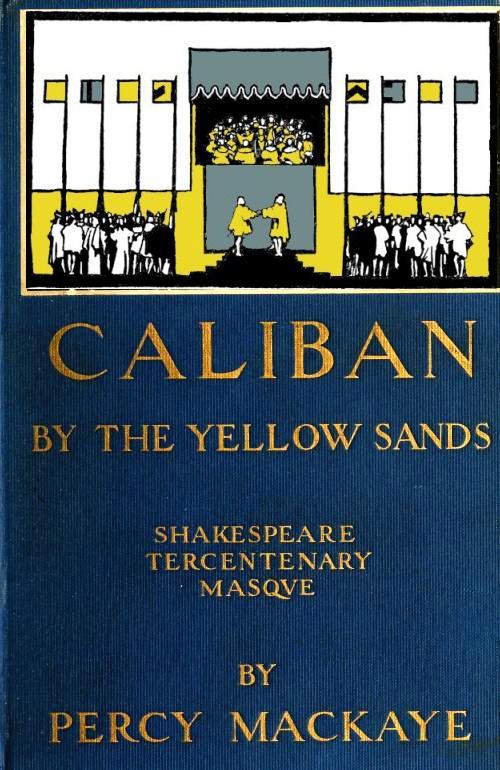
Caliban by the Yellow Sands: A Community Masque of the Art of the Theatre
1916
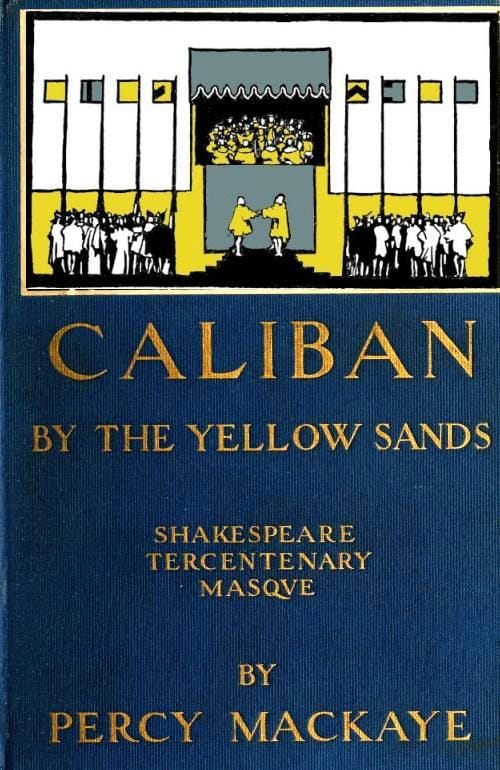
Caliban by the Yellow Sands: A Community Masque of the Art of the Theatre
1916
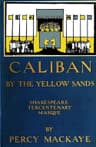
This community masque was Percy MacKaye's ambitious gift to American theater on the three-hundredth anniversary of Shakespeare's death. Rather than a conventional play, MacKaye created a theatrical ritual that transforms its audience into participants, weaving the raw energy of Caliban, the 'misshapen' son of the witch Sycorax, into a meditation on art's power to redeem what society rejects. The action opens in the cave of Setebos, where primitive gods and spirits clash with Ariel over the meaning of freedom, while Caliban himself wrestles with his dual nature: monstrous yet capable of beauty. The work oscillates between the grotesque and the transcendent, using Shakespeare's outlier as a symbol for all those imprisoned by circumstance yet dreaming of liberation. This is theater as communal catharsis, designed to be performed by and for a community rather than passively consumed. It asks what Shakespeare means to ordinary people, and answers that his legacy lives not in monuments but in the collective act of making theater together.
Editions
Link to this book
Add a free, dofollow link to Lex on your blog, forum, syllabus, or reading list.

<a href="https://lex-books.com/book/caliban-by-the-yellow-sands-a-community-masque-of-the-art-of-the-theatre-2d7cfb8a-dfcc-487a-84a2-5ca0033d6add"><img src="https://lex-books.com/badges/read-on-lex.svg" alt="Read Caliban by the Yellow Sands: A Community Masque of the Art of the Theatre by Percy MacKaye free on Lex" width="160" height="40"></a>[](https://lex-books.com/book/caliban-by-the-yellow-sands-a-community-masque-of-the-art-of-the-theatre-2d7cfb8a-dfcc-487a-84a2-5ca0033d6add)[url=https://lex-books.com/book/caliban-by-the-yellow-sands-a-community-masque-of-the-art-of-the-theatre-2d7cfb8a-dfcc-487a-84a2-5ca0033d6add][img]https://lex-books.com/badges/read-on-lex.svg[/img][/url]Read Caliban by the Yellow Sands: A Community Masque of the Art of the Theatre by Percy MacKaye free on Lex: https://lex-books.com/book/caliban-by-the-yellow-sands-a-community-masque-of-the-art-of-the-theatre-2d7cfb8a-dfcc-487a-84a2-5ca0033d6addCite this book
Reading this edition for a paper or guide? Copy a citation.
MacKaye, Percy. Caliban by the Yellow Sands: A Community Masque of the Art of the Theatre. Lex, lex-books.com/book/caliban-by-the-yellow-sands-a-community-masque-of-the-art-of-the-theatre-2d7cfb8a-dfcc-487a-84a2-5ca0033d6add.MacKaye, P. (1916). Caliban by the Yellow Sands: A Community Masque of the Art of the Theatre. Lex. https://lex-books.com/book/caliban-by-the-yellow-sands-a-community-masque-of-the-art-of-the-theatre-2d7cfb8a-dfcc-487a-84a2-5ca0033d6addMacKaye, Percy. Caliban by the Yellow Sands: A Community Masque of the Art of the Theatre. Lex. https://lex-books.com/book/caliban-by-the-yellow-sands-a-community-masque-of-the-art-of-the-theatre-2d7cfb8a-dfcc-487a-84a2-5ca0033d6add.