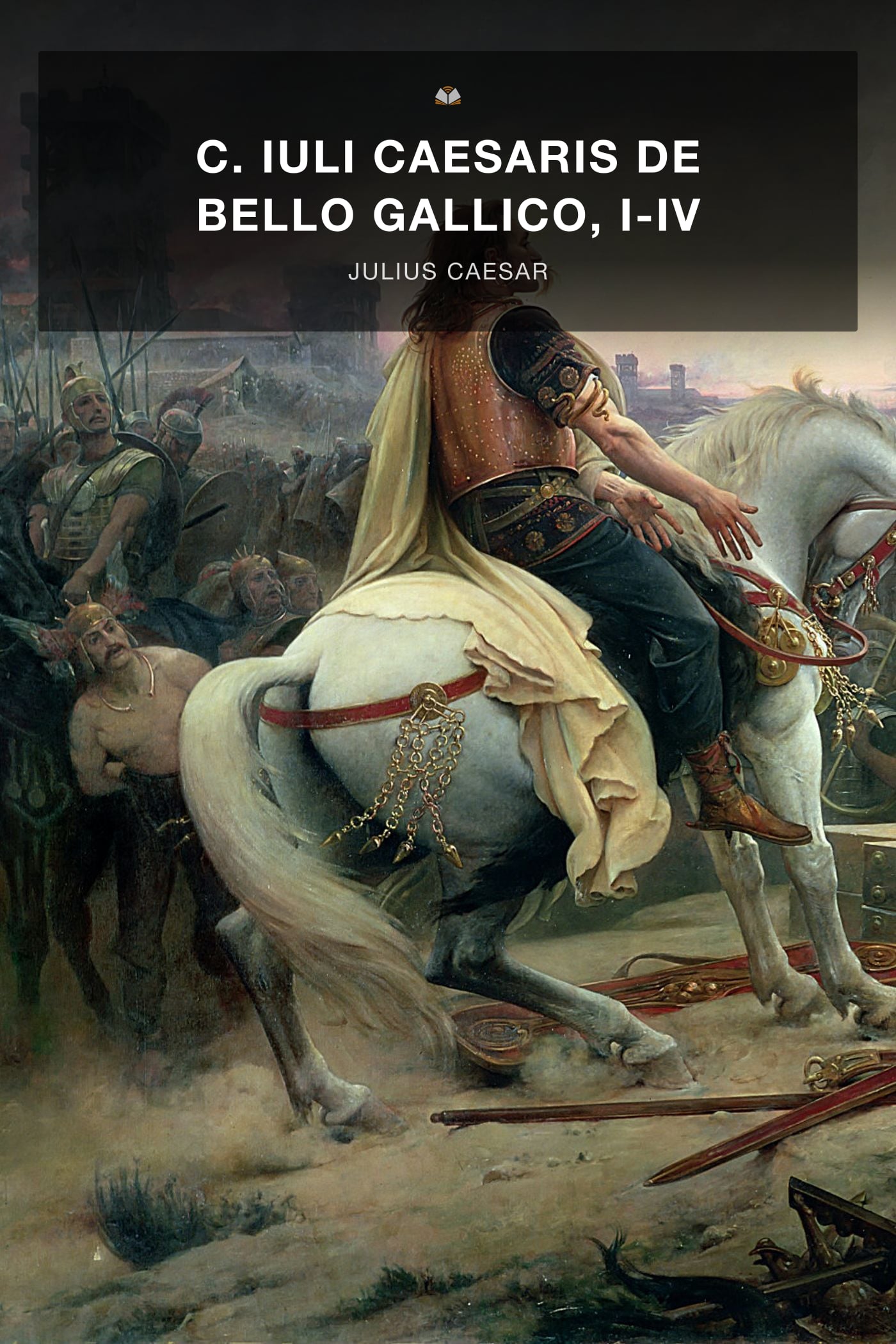
C. Iuli Caesaris De Bello Gallico, I-IV
1903
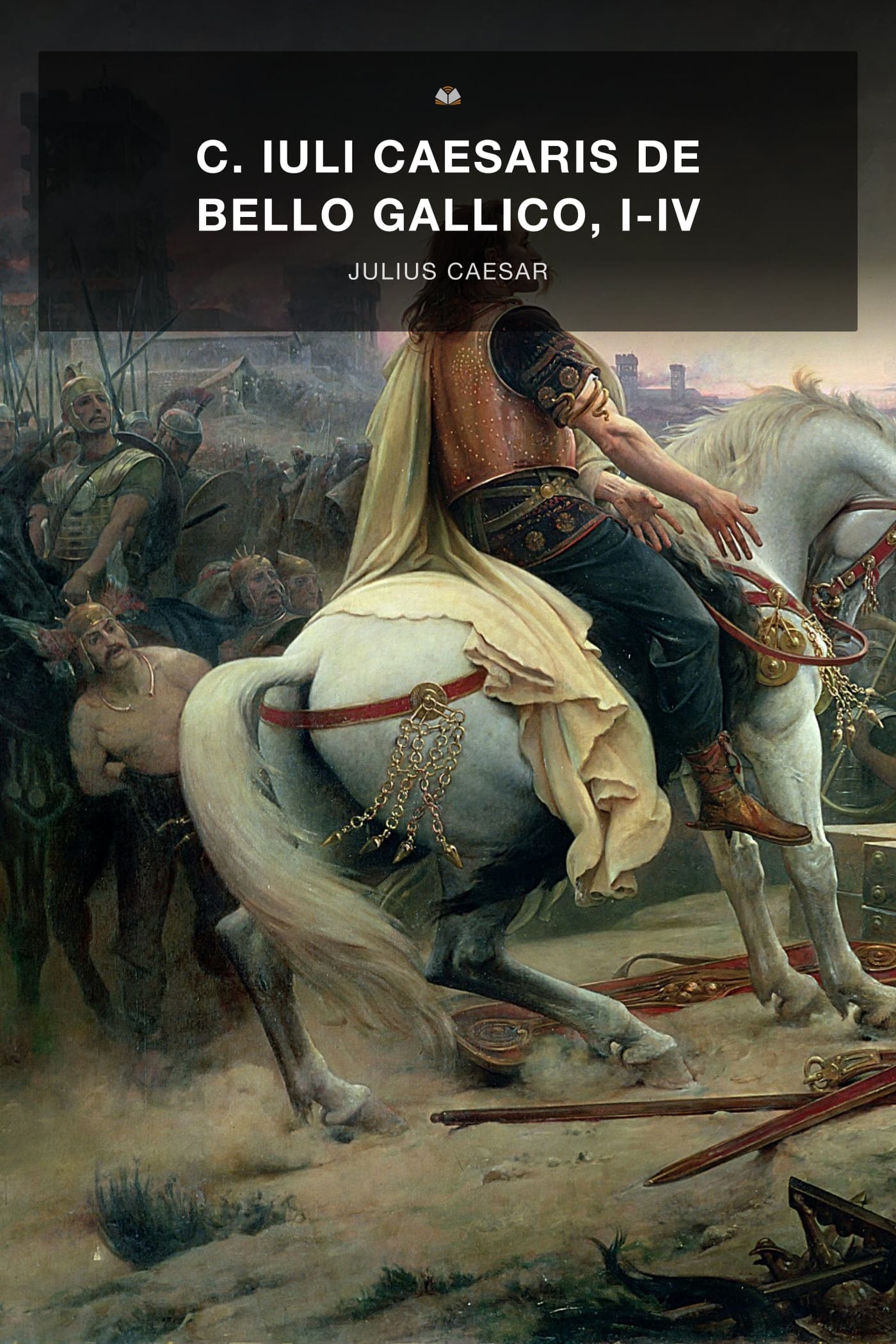
A historical account written in the first century BC. The text details the campaigns of Julius Caesar during the Gallic Wars, a series of military engagements aimed at subjugating the tribes of Gaul. The narrative provides insight into Roman military strategy, the cultural distinctions among the Gallic tribes, and Caesar's justifications for his military actions. The opening of the work introduces the geographical and political landscape of Gaul, dividing it into three distinct regions inhabited by different tribes, including the Belgae, the Aquitani, and the Celts (or Galli). It begins with an account of the Helvetii tribe, led by Orgetorix, who plots to expand their territory by marching through Gaul, leading to confrontations with Roman forces. Caesar describes the Helvetii's preparations for this ambitious migration and the subsequent military engagements that arise as they seek to navigate around Roman territories, revealing the underlying tensions between the tribes and the expanding power of Rome. The narrative sets the stage for the ensuing conflicts, emphasizing the strategic importance of alliances and military prowess in Caesar's campaigns.
Editions
X-Ray
Roman general and proconsul of Gaul, narrator of his own military campaigns. He presents himself as a decisive, strategic leader who brings Roman civilization to barbarian lands.
Wealthy and ambitious Helvetian nobleman who initiates the conspiracy to migrate and conquer Gaul. His death early in the narrative sets the Helvetian migration in motion.
Germanic king who had conquered Sequani territory and threatens Roman interests in Gaul. Caesar's primary opponent in Book I, representing barbarian aggression against Roman order.
Pro-Roman Aeduan leader and druid who serves as Caesar's primary Gallic ally. He represents the possibility of peaceful cooperation between Romans and Gauls.
About C. Iuli Caesaris De Bello Gallico, I-IV
Chapter Summaries
- I.1-29
- Caesar describes the geography of Gaul and the conspiracy of Orgetorix to lead the Helvetii in conquering all of Gaul. After Orgetorix's death, the Helvetii burn their towns and begin their migration, seeking passage through Roman territory.
- I.30-54
- After defeating the Helvetii, Caesar confronts the Germanic king Ariovistus who has conquered Sequani territory. Following failed negotiations, Caesar defeats Ariovistus in battle and drives the Germans back across the Rhine.
- II.1-15
- The Belgian tribes form a coalition against Rome, fearing Caesar's growing power. Caesar marches north and defeats the Belgae through a combination of direct assault and strategic maneuvering.
Key Themes
- Civilization vs. Barbarism
- Caesar consistently portrays Romans as bringing order, law, and civilization to barbarian lands. The Gauls and Germans are depicted as fierce but ultimately inferior to Roman discipline and organization.
- Imperial Destiny
- The narrative presents Roman expansion as inevitable and beneficial. Caesar frames his conquests as defensive actions that ultimately serve the greater good of bringing Roman peace and order to chaotic tribal societies.
- Leadership and Command
- Caesar demonstrates the qualities of effective military and political leadership through decisive action, strategic thinking, and the ability to inspire loyalty among both Romans and allied Gauls.
Characters
- Julius Caesar(protagonist)
- Roman general and proconsul of Gaul, narrator of his own military campaigns. He presents himself as a decisive, strategic leader who brings Roman civilization to barbarian lands.
- Orgetorix(antagonist)
- Wealthy and ambitious Helvetian nobleman who initiates the conspiracy to migrate and conquer Gaul. His death early in the narrative sets the Helvetian migration in motion.
- Ariovistus(antagonist)
- Germanic king who had conquered Sequani territory and threatens Roman interests in Gaul. Caesar's primary opponent in Book I, representing barbarian aggression against Roman order.
- Diviciacus(major)
- Pro-Roman Aeduan leader and druid who serves as Caesar's primary Gallic ally. He represents the possibility of peaceful cooperation between Romans and Gauls.
- Dumnorix(major)
- Anti-Roman Aeduan leader and brother of Diviciacus. He secretly opposes Caesar while publicly maintaining neutrality, representing Gallic resistance to Roman rule.
- Titus Labienus(major)
- Caesar's most trusted legate and military commander. He leads independent operations and serves as Caesar's primary lieutenant throughout the campaigns.
Link to this book
Add a free, dofollow link to Lex on your blog, forum, syllabus, or reading list.

<a href="https://lex-books.com/book/c-iuli-caesaris-de-bello-gallico-i-iv-8deae246-fa5a-4a79-95c2-3bc1c1f44c8d"><img src="https://lex-books.com/badges/read-on-lex.svg" alt="Read C. Iuli Caesaris De Bello Gallico, I-IV by Julius Caesar free on Lex" width="160" height="40"></a>[](https://lex-books.com/book/c-iuli-caesaris-de-bello-gallico-i-iv-8deae246-fa5a-4a79-95c2-3bc1c1f44c8d)[url=https://lex-books.com/book/c-iuli-caesaris-de-bello-gallico-i-iv-8deae246-fa5a-4a79-95c2-3bc1c1f44c8d][img]https://lex-books.com/badges/read-on-lex.svg[/img][/url]Read C. Iuli Caesaris De Bello Gallico, I-IV by Julius Caesar free on Lex: https://lex-books.com/book/c-iuli-caesaris-de-bello-gallico-i-iv-8deae246-fa5a-4a79-95c2-3bc1c1f44c8dCite this book
Reading this edition for a paper or guide? Copy a citation.
Caesar, Julius. C. Iuli Caesaris De Bello Gallico, I-IV. Lex, lex-books.com/book/c-iuli-caesaris-de-bello-gallico-i-iv-8deae246-fa5a-4a79-95c2-3bc1c1f44c8d.Caesar, J. (1903). C. Iuli Caesaris De Bello Gallico, I-IV. Lex. https://lex-books.com/book/c-iuli-caesaris-de-bello-gallico-i-iv-8deae246-fa5a-4a79-95c2-3bc1c1f44c8dCaesar, Julius. C. Iuli Caesaris De Bello Gallico, I-IV. Lex. https://lex-books.com/book/c-iuli-caesaris-de-bello-gallico-i-iv-8deae246-fa5a-4a79-95c2-3bc1c1f44c8d.