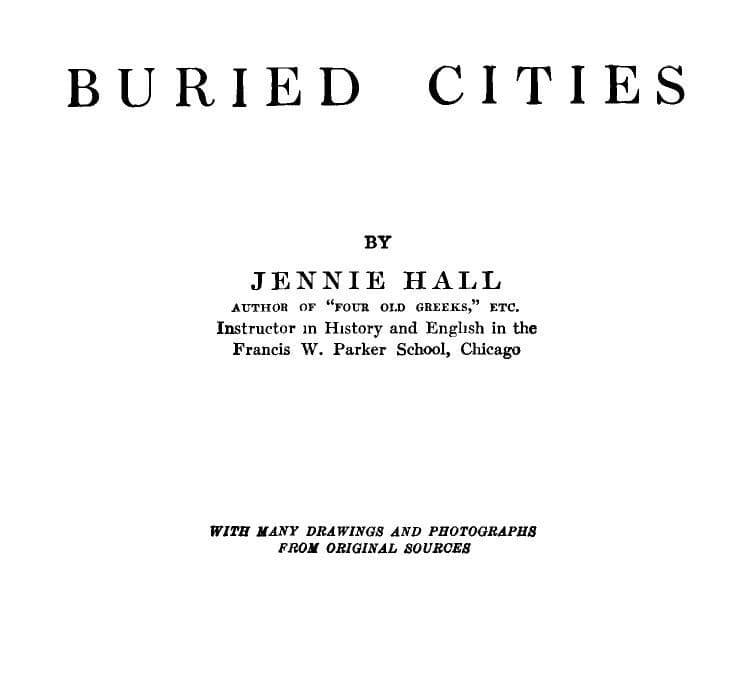
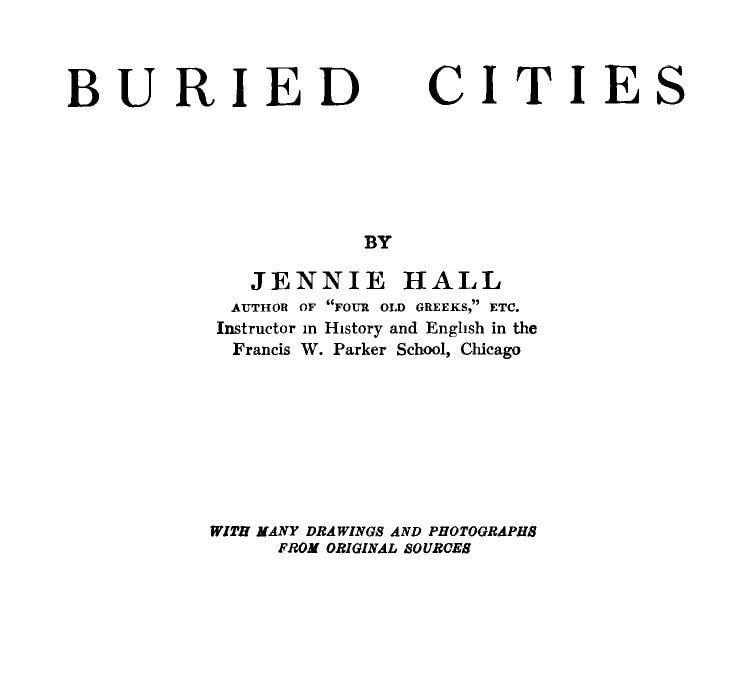
Buried Cities: Pompeii, Olympia, Mycenae (complete)
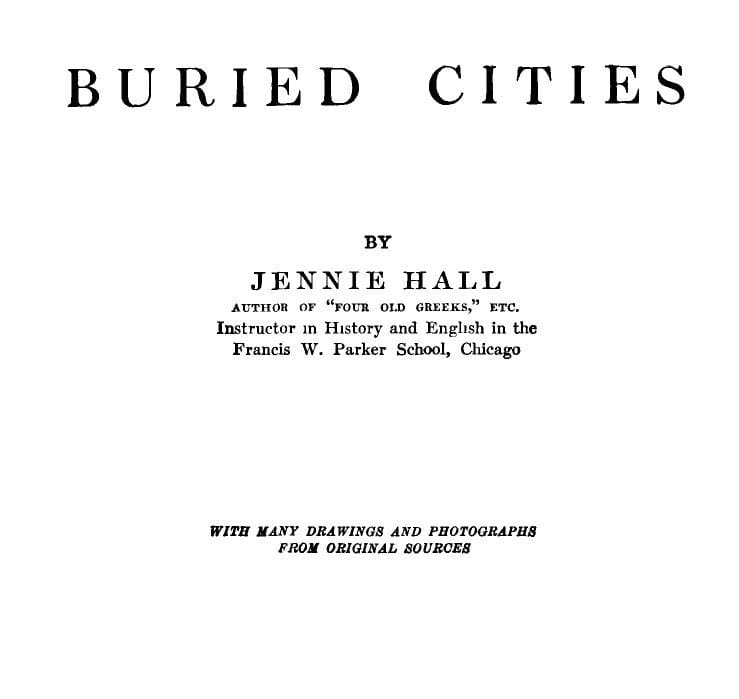
What if you could walk through streets where people walked two thousand years ago? What if the very moment of destruction was captured, frozen, waiting to be found? Hall's book begins with Ariston, a Greek slave and artist working on a mural in a Roman household in Pompeii, when Mount Vesuvius erupts in AD 79. The sky turns black. The ground shakes. And in one terrible afternoon, an entire city is buried beneath volcanic ash, preserving everything from painted walls to final footprints, from broken pottery to the shapes of bodies frozen in their last moments. But Pompeii is only the beginning. The narrative travels to Olympia, where ancient athletes once competed beneath statues of gods, and Mycenae, the legendary stronghold of Agamemnon, swallowed by time and legend. Written for young readers with a sense of wonder, this book captures the thrill of archaeology not as dusty work but as detective work with the highest stakes: recovering voices from the dead, restoring worlds erased.
Editions

X-Ray
A young Greek slave and artist from Athens who was captured by pirates and sold to a Roman master in Pompeii. He is skilled in painting and dreams of freedom and returning home.
A wealthy Roman master who owns Ariston. He is kind-hearted despite his stern appearance and ultimately frees Ariston for his heroic actions.
Tetreius's young, sickly son who is saved by Ariston during the eruption of Vesuvius. He represents innocence and the bond between master and slave.
A lame Greek boy who cannot compete in athletics but finds his calling as a poet. He is the younger brother of Olympic champion Creon.
About Buried Cities: Pompeii, Olympia, Mycenae (complete)
Chapter Summaries
- 1
- Ariston, a Greek slave and artist, paints murals in his Roman master's house in Pompeii when Vesuvius erupts. He saves his master's sick son Caius and carries him to safety, ultimately earning his freedom.
- 2
- A detailed account of Vesuvius's volcanic activity throughout history, describing its eruptions, the geological processes involved, and eyewitness accounts of its terrible beauty and destructive power.
- 3
- The excavation and rediscovery of Pompeii, describing the archaeological work that uncovered the buried city and what visitors can see today, including houses, shops, and preserved artifacts.
Key Themes
- Art and Beauty as Eternal Values
- Throughout the book, artistic creation transcends temporal destruction. Ariston's paintings, Olympic sculptures, and Mycenaean treasures survive to inspire future generations, suggesting that human creativity outlasts empires.
- Freedom and Human Dignity
- The contrast between slavery and freedom runs through all three stories, from Ariston's liberation to the Olympic ideals of excellence, showing that true nobility comes from character rather than social status.
- The Power of Natural Forces
- Vesuvius serves as a reminder of nature's overwhelming power over human civilization. The volcano both destroys and preserves, burying cities that become archaeological treasures for future discovery.
Characters
- Ariston(protagonist)
- A young Greek slave and artist from Athens who was captured by pirates and sold to a Roman master in Pompeii. He is skilled in painting and dreams of freedom and returning home.
- Tetreius(major)
- A wealthy Roman master who owns Ariston. He is kind-hearted despite his stern appearance and ultimately frees Ariston for his heroic actions.
- Caius(major)
- Tetreius's young, sickly son who is saved by Ariston during the eruption of Vesuvius. He represents innocence and the bond between master and slave.
- Charmides(protagonist)
- A lame Greek boy who cannot compete in athletics but finds his calling as a poet. He is the younger brother of Olympic champion Creon.
- Creon(major)
- Charmides' older brother, a skilled athlete who wins Olympic crowns in running and pentathlon. He represents physical excellence and Greek athletic ideals.
- Menon(major)
- Father of Charmides and Creon, a former Olympic winner himself. He is proud of his sons and represents the Greek tradition of athletic excellence.
Link to this book
Add a free, dofollow link to Lex on your blog, forum, syllabus, or reading list.

<a href="https://lex-books.com/book/buried-cities-pompeii-olympia-mycenae-complete-6cea2239-c007-4a67-bf86-62d5b795b0c4"><img src="https://lex-books.com/badges/read-on-lex.svg" alt="Read Buried Cities: Pompeii, Olympia, Mycenae (complete) by Jennie Hall free on Lex" width="160" height="40"></a>[](https://lex-books.com/book/buried-cities-pompeii-olympia-mycenae-complete-6cea2239-c007-4a67-bf86-62d5b795b0c4)[url=https://lex-books.com/book/buried-cities-pompeii-olympia-mycenae-complete-6cea2239-c007-4a67-bf86-62d5b795b0c4][img]https://lex-books.com/badges/read-on-lex.svg[/img][/url]Read Buried Cities: Pompeii, Olympia, Mycenae (complete) by Jennie Hall free on Lex: https://lex-books.com/book/buried-cities-pompeii-olympia-mycenae-complete-6cea2239-c007-4a67-bf86-62d5b795b0c4Cite this book
Reading this edition for a paper or guide? Copy a citation.
Hall, Jennie. Buried Cities: Pompeii, Olympia, Mycenae (complete). Lex, lex-books.com/book/buried-cities-pompeii-olympia-mycenae-complete-6cea2239-c007-4a67-bf86-62d5b795b0c4.Hall, J. (n.d.). Buried Cities: Pompeii, Olympia, Mycenae (complete). Lex. https://lex-books.com/book/buried-cities-pompeii-olympia-mycenae-complete-6cea2239-c007-4a67-bf86-62d5b795b0c4Hall, Jennie. Buried Cities: Pompeii, Olympia, Mycenae (complete). Lex. https://lex-books.com/book/buried-cities-pompeii-olympia-mycenae-complete-6cea2239-c007-4a67-bf86-62d5b795b0c4.