Biographia Literaria
1817
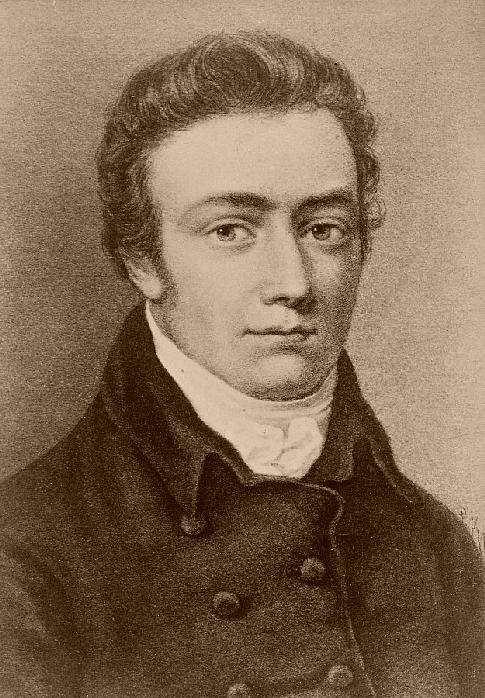
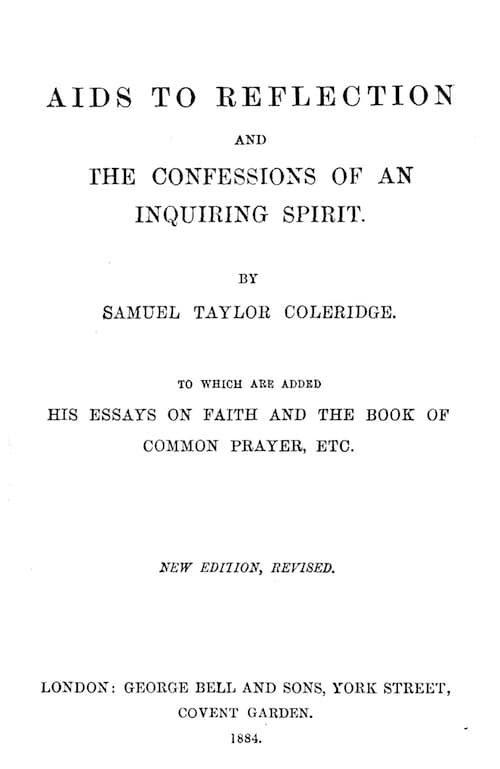
Coleridge's Biographia Literaria is not merely a memoir. It is an act of intellectual reckoning: a sprawling, combustible attempt to understand what poetry is, what imagination does, and why some words burn while others merely illuminate. Written after two decades of philosophical obsession, this 1817 masterpiece bends autobiography into philosophy, attacking the problem of how human minds shape experience into art. Here Coleridge works through Kant, Hartley, and Schelling, adapts their insights for English literature, and coins the term 'esemplastic' to describe imagination's power to unify. He also settles scores with Wordsworth, whose poetic theory he admired but whose execution he quietly challenged. The result is a book that is erratic, magnificent, and occasionally maddening in equal measure. It remains the most ambitious attempt by any English poet to systematize his own creative consciousness.
Editions
X-Ray
“The primary Imagination I hold to be the living Power and prime Agent of all human Perception, and as a repetition in the finite mind of the eternal act of creation in the infinite I Am.””
— Samuel Taylor Coleridge
“The reader should be carried forward, not merely or chiefly by the mechanical impulse of curiosity, or by a restless desire to arrive at the final solution; but by the pleasurable activity of mind excited by the attractions of the journey itself.””
— Samuel Taylor Coleridge
“Praises of the unworthy are felt by ardent minds as robberies of the deserving.””
— Samuel Taylor Coleridge
“And aye, beside her stalks her amarous knight!Still on his thighs their wonted brogues are worn,And thro' those brogues, still tatter'd and betorn,His hindward charms glean an unearthly white,Ah! thus thro' broken clouds at night's high NoonPeeps in fair fragments forth the full-orb'd harvest-moon!””
— Samuel Taylor Coleridge
“Every other science presupposes intelligence as already existing and complete: the philosopher contemplates it in its growth, and as it were represents its history to the mind from its birth to its maturity.””
— Samuel Taylor Coleridge
“personally.””
— Samuel Taylor Coleridge
“El lenguaje es el arsenal de la mente humana: contiene al mismo tiempo los trofeos de su pasado y las armas de sus futuras conquistas.””
— Samuel Taylor Coleridge
Link to this book
Add a free, dofollow link to Lex on your blog, forum, syllabus, or reading list.

<a href="https://lex-books.com/book/biographia-literaria-563e532b-3696-44c9-b50c-dcfc94929ae1"><img src="https://lex-books.com/badges/read-on-lex.svg" alt="Read Biographia Literaria by Samuel Taylor Coleridge free on Lex" width="160" height="40"></a>[](https://lex-books.com/book/biographia-literaria-563e532b-3696-44c9-b50c-dcfc94929ae1)[url=https://lex-books.com/book/biographia-literaria-563e532b-3696-44c9-b50c-dcfc94929ae1][img]https://lex-books.com/badges/read-on-lex.svg[/img][/url]Read Biographia Literaria by Samuel Taylor Coleridge free on Lex: https://lex-books.com/book/biographia-literaria-563e532b-3696-44c9-b50c-dcfc94929ae1Cite this book
Reading this edition for a paper or guide? Copy a citation.
Coleridge, Samuel Taylor. Biographia Literaria. Lex, lex-books.com/book/biographia-literaria-563e532b-3696-44c9-b50c-dcfc94929ae1.Coleridge, S. T. (1817). Biographia Literaria. Lex. https://lex-books.com/book/biographia-literaria-563e532b-3696-44c9-b50c-dcfc94929ae1Coleridge, Samuel Taylor. Biographia Literaria. Lex. https://lex-books.com/book/biographia-literaria-563e532b-3696-44c9-b50c-dcfc94929ae1.