Berkshire
1911
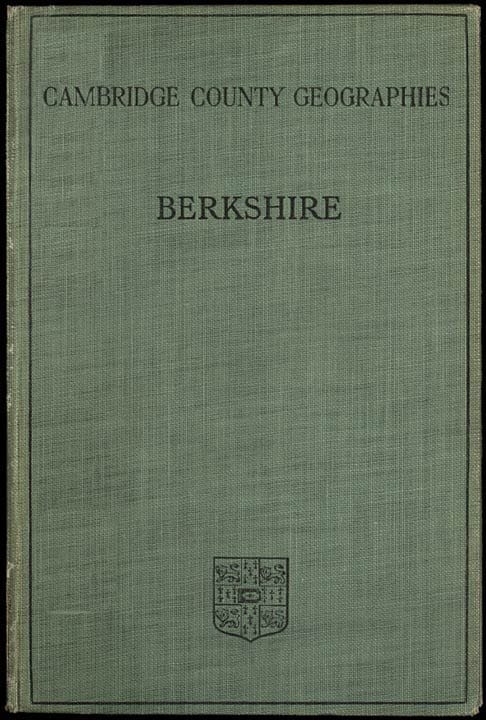
Berkshire
1911
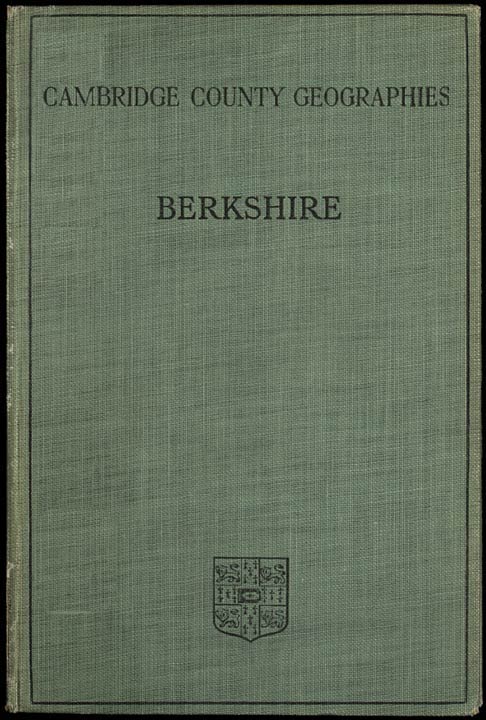
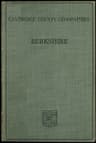
Published in 1911, 'Berkshire' by Horace Woollaston Monckton is a geographical account detailing the natural features, geological formations, and historical significance of Berkshire, England. The book explores the region's development from the Saxon era through various historical epochs, including Roman and Norman influences. Notably, it discusses the origins of county boundaries in England and the cultural aspects of Berkshire, making it a valuable resource for those interested in the area's geography and history.
Editions
X-Ray
The author and geographer who serves as the primary narrator and guide through Berkshire's geography, history, and culture. He presents himself as an expert scholar with credentials F.L.S., F.G.S.
Born at Wantage in 849, he is presented as Berkshire's most famous historical figure. The great Saxon king who defeated the Danes and is commemorated with a statue in Wantage market place.
Norman king who built Windsor Castle and established Norman rule in Berkshire. His conquest fundamentally changed the county's architecture and administration.
Tudor monarch who dissolved the monasteries, fundamentally changing Berkshire's religious landscape. He is buried at Windsor and had significant impact on the county's religious houses.
About Berkshire
Chapter Summaries
- 1
- Monckton explains the origins of English county divisions, contrasting them with American states. He traces Berkshire's establishment as a county to around 836 AD under King Egbert, and discusses the etymology of 'county' and 'shire.'
- 2
- Describes Berkshire as an inland agricultural county with excellent railway connections centered on Reading. The county is divided into three natural regions: the Vale of White Horse, the chalk downs, and the forest country.
- 3
- Details Berkshire's dimensions (41 miles east-west), area (462,208 acres), and complex boundaries largely following the Thames. Discusses various administrative boundary changes and the county's relationship to neighboring regions.
Key Themes
- Historical Continuity
- Monckton emphasizes how Berkshire has maintained its essential character through Saxon, Norman, and modern periods. The county's boundaries, established over 1100 years ago, and its agricultural foundation demonstrate remarkable continuity despite political upheavals.
- Geographic Determinism
- The book shows how Berkshire's three natural divisions - the Vale of White Horse, the chalk downs, and the forest country - have shaped settlement patterns, agriculture, and human development throughout history.
- Royal Connection
- Windsor Castle's role as a royal residence for nearly a millennium has profoundly influenced Berkshire's development, from architecture to social structure, making it unique among English counties.
Characters
- H. W. Monckton(protagonist)
- The author and geographer who serves as the primary narrator and guide through Berkshire's geography, history, and culture. He presents himself as an expert scholar with credentials F.L.S., F.G.S.
- King Alfred the Great(major)
- Born at Wantage in 849, he is presented as Berkshire's most famous historical figure. The great Saxon king who defeated the Danes and is commemorated with a statue in Wantage market place.
- William the Conqueror(major)
- Norman king who built Windsor Castle and established Norman rule in Berkshire. His conquest fundamentally changed the county's architecture and administration.
- Henry VIII(major)
- Tudor monarch who dissolved the monasteries, fundamentally changing Berkshire's religious landscape. He is buried at Windsor and had significant impact on the county's religious houses.
- Archbishop Laud(major)
- Born at Reading in 1573, son of a clothier. He became Archbishop of Canterbury and established charitable foundations in Berkshire that still exist.
- Alexander Pope(major)
- The famous poet whose father owned property at Binfield, where Pope lived during his early years. He wrote 'Windsor Forest' about the local area.
Link to this book
Add a free, dofollow link to Lex on your blog, forum, syllabus, or reading list.

<a href="https://lex-books.com/book/berkshire-c585828e-8bb5-4928-9d16-4b4aa777a8bb"><img src="https://lex-books.com/badges/read-on-lex.svg" alt="Read Berkshire by Horace Woollaston Monckton free on Lex" width="160" height="40"></a>[](https://lex-books.com/book/berkshire-c585828e-8bb5-4928-9d16-4b4aa777a8bb)[url=https://lex-books.com/book/berkshire-c585828e-8bb5-4928-9d16-4b4aa777a8bb][img]https://lex-books.com/badges/read-on-lex.svg[/img][/url]Read Berkshire by Horace Woollaston Monckton free on Lex: https://lex-books.com/book/berkshire-c585828e-8bb5-4928-9d16-4b4aa777a8bbCite this book
Reading this edition for a paper or guide? Copy a citation.
Monckton, Horace Woollaston. Berkshire. Lex, lex-books.com/book/berkshire-c585828e-8bb5-4928-9d16-4b4aa777a8bb.Monckton, H. W. (1911). Berkshire. Lex. https://lex-books.com/book/berkshire-c585828e-8bb5-4928-9d16-4b4aa777a8bbMonckton, Horace Woollaston. Berkshire. Lex. https://lex-books.com/book/berkshire-c585828e-8bb5-4928-9d16-4b4aa777a8bb.