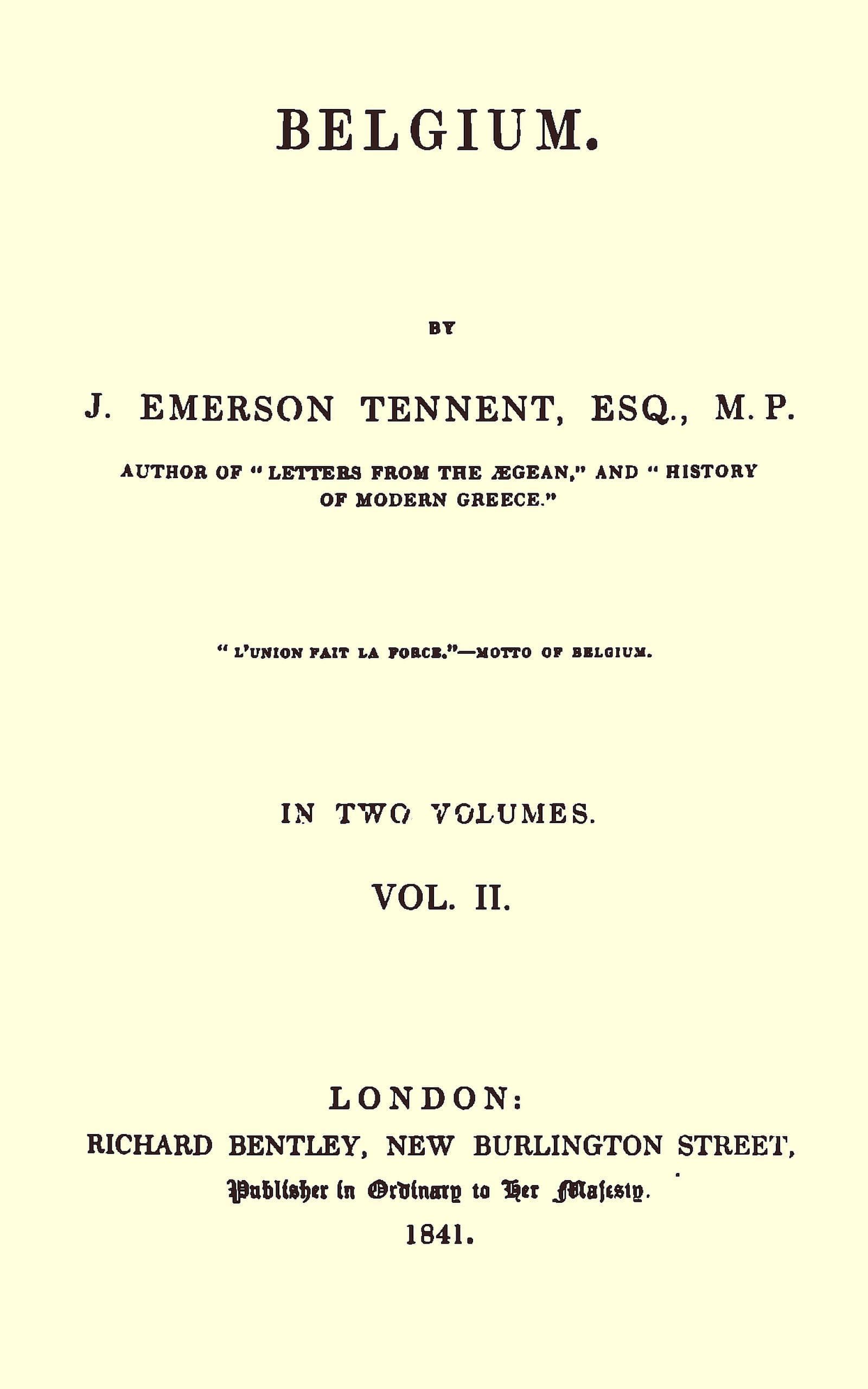
Belgium, Vol. 1 (of 2)
1974
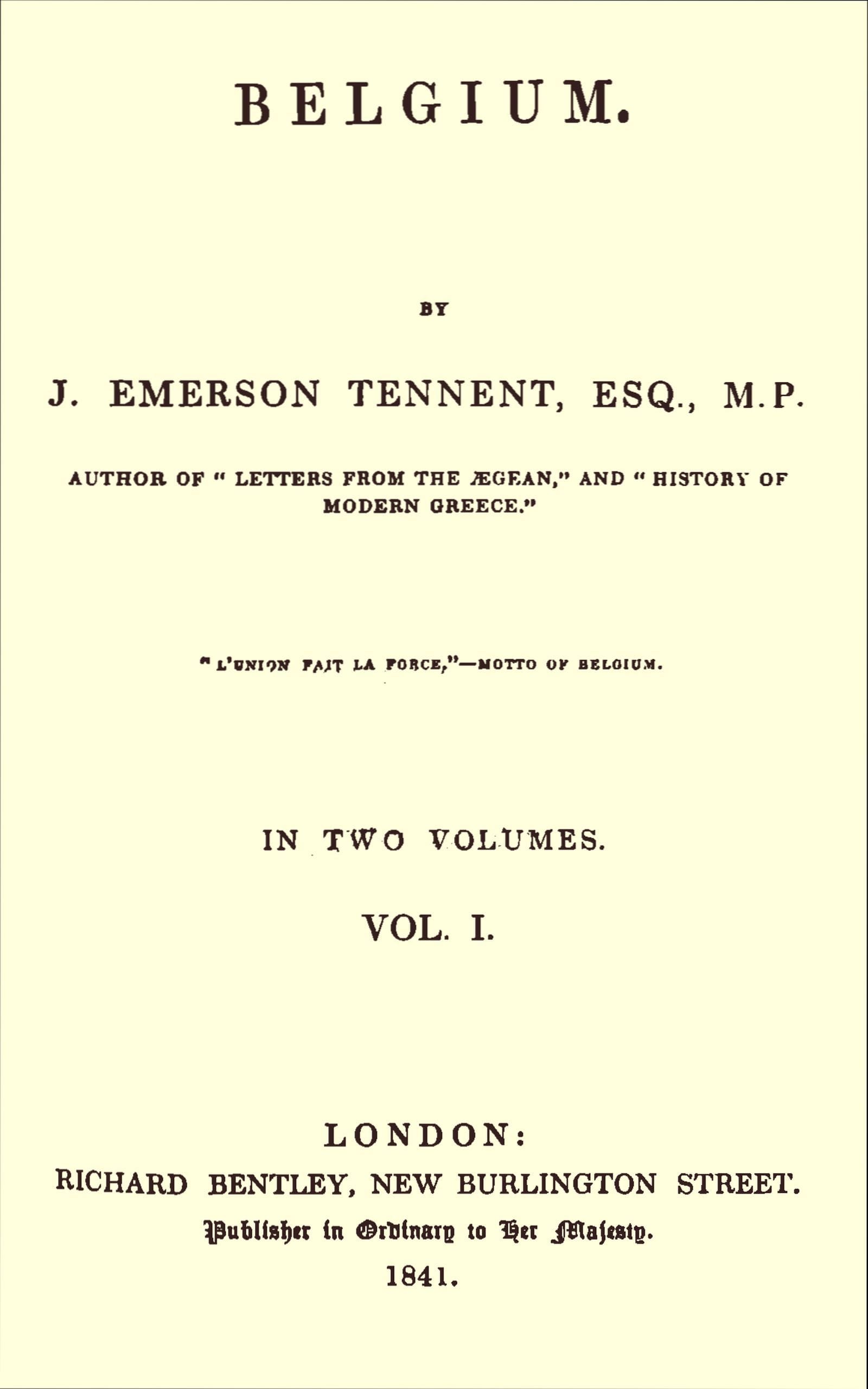
Sir James Emerson Tennent arrives in Ostend in the 1830s, shortly after Belgium has wrenched itself from Dutch control, and proceeds to catalogue a nation caught between memory and ambition. His account crackles with the confident opinions of a man who has seen empires rise and fall: he finds Ostend rather ugly, is enchanted by Bruges in its decline (those silent belfries, those empty merchant houses), and dissects the new Belgian state with the eye of a politician who understands that independence is only the beginning of a nation's troubles. The real magic here is Tennent's melancholy awareness that he is witnessing a country mourning its lost commercial supremacy while trying to build something new. He writes with evident affection for the place, but also with the sharp didactic impulse of a Victorian sage certain that Belgium's story contains lessons for Ireland and every other subordinate nation dreaming of self-rule. Part acute political observation, part haunted travelogue through medieval streets, this is a document that understands how nations are haunted by what they once were.
Editions
Link to this book
Add a free, dofollow link to Lex on your blog, forum, syllabus, or reading list.

<a href="https://lex-books.com/book/belgium-vol-1-of-2-2f01bd25-ba1c-4a41-8659-b5f76b352d8a"><img src="https://lex-books.com/badges/read-on-lex.svg" alt="Read Belgium, Vol. 1 (of 2) by James Emerson, Sir Tennent free on Lex" width="160" height="40"></a>[](https://lex-books.com/book/belgium-vol-1-of-2-2f01bd25-ba1c-4a41-8659-b5f76b352d8a)[url=https://lex-books.com/book/belgium-vol-1-of-2-2f01bd25-ba1c-4a41-8659-b5f76b352d8a][img]https://lex-books.com/badges/read-on-lex.svg[/img][/url]Read Belgium, Vol. 1 (of 2) by James Emerson, Sir Tennent free on Lex: https://lex-books.com/book/belgium-vol-1-of-2-2f01bd25-ba1c-4a41-8659-b5f76b352d8aCite this book
Reading this edition for a paper or guide? Copy a citation.
James Emerson, Sir Tennent. Belgium, Vol. 1 (of 2). Lex, lex-books.com/book/belgium-vol-1-of-2-2f01bd25-ba1c-4a41-8659-b5f76b352d8a.James Emerson, S. T. (1974). Belgium, Vol. 1 (of 2). Lex. https://lex-books.com/book/belgium-vol-1-of-2-2f01bd25-ba1c-4a41-8659-b5f76b352d8aJames Emerson, Sir Tennent. Belgium, Vol. 1 (of 2). Lex. https://lex-books.com/book/belgium-vol-1-of-2-2f01bd25-ba1c-4a41-8659-b5f76b352d8a.