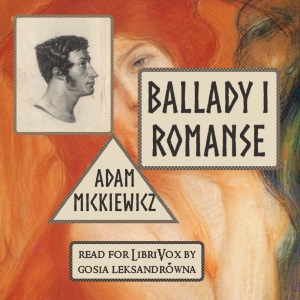
Ballady i Romanse
In 1822, a young poet in Wilno bent the arc of Polish literature. Adam Mickiewicz's Ballady i Romanse didn't just introduce Romanticism to Poland, it detonated it. These eight poems and four folk tales crackle with the energy of a culture reclaiming its soul. Drawing from Lithuanian and Polish folklore, Mickiewicz populates his verses with rusałki (water spirits), changelings, and vengeful ghosts, not as quaint decorations, but as forces that bend fate, punish betrayal, and haunt the living. The collection moves from the devastating title poem (a dialogue between a man and his dead beloved's spirit) to the grimly comic "Szczepan, the Idiot," where a peasant's simple faith breaks a demonic curse. This is poetry where nature itself seems to speak, where every stream and forest holds ancient power, and where human emotion, love, grief, guilt, defiance, reaches operatic intensity. The ballad form, with its simple storytelling rhythm, makes these supernatural tales feel ancient and immediate at once. For readers of folklore, Romantic poetry, or anyone seeking the roots of Polish cultural identity, this collection remains essential: raw, haunted, and utterly alive.
X-Ray






![Birds and Nature, Vol. 12 No. 1 [June 1902]illustrated by Color Photography](/_next/image?url=https%3A%2F%2Fd3b2n8gj62qnwr.cloudfront.net%2FCOVERS%2Fgutenberg_covers75k%2Febook-47881.png&w=3840&q=75)