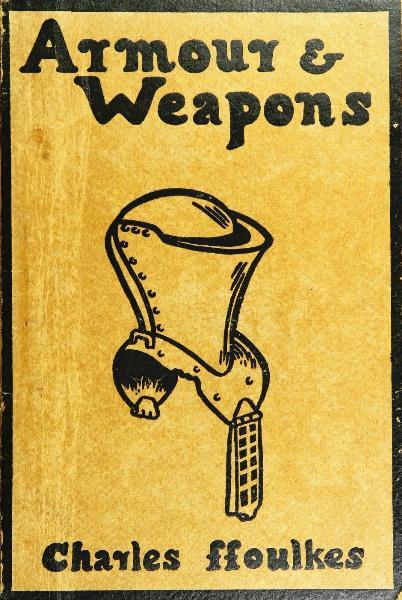
Armour & Weapons
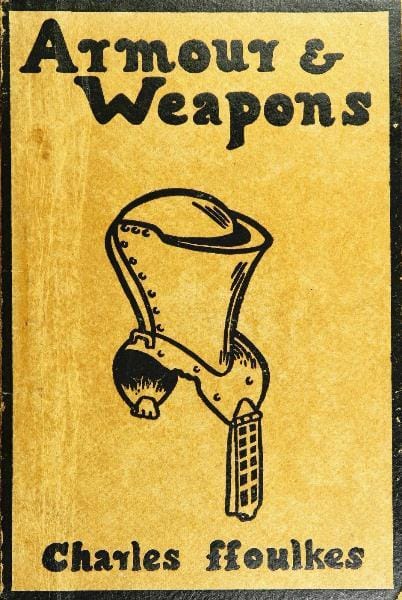
Armour & Weapons
For centuries, Hollywood has lied to us about medieval armor. It's too heavy, too clumsy, too impractical, or so we've been told. But the truth, as this classic reveals, is far more fascinating. Charles John Ffoulkes was an actual arms and armor curator, and in these pages he dismantles centuries of misunderstanding with precision and passion. From the chain mail of the Norman Conquest to the elaborate plate armor of the Renaissance, he traces not just the evolution of protection but the brilliant craftsmanship of the armorers who created it. Drawing on surviving examples, contemporary images, and historical accounts, the book explains how armor actually worked, how it was worn, and how weapons evolved to counter it. Whether you're a history buff, a fantasy enthusiast tired of inaccurate films, or simply curious about the real technology of medieval warfare, this book rewires how you see the knight in shining armor. Viscount Dillon's preface sets the tone: this is "really correct information" from an era when knowing your armor could mean the difference between life and death.
Editions
X-Ray
The author and lecturer who compiled this handbook on European defensive armour and weapons. He delivered lectures at Oxford University in 1909 and sought to create an accessible guide to armour development.
Curator of the Tower Armouries and preface writer. A leading expert whose research and assistance were invaluable to the work.
Pioneer author of works on ancient armour, frequently referenced but whose theories are often corrected by later research. His collection was dispersed across European museums.
Expert on helms and helmets whose numerous notes and research are essential to the field. Provides authoritative corrections to earlier theories.
About Armour & Weapons
Chapter Summaries
- Preface
- Dillon explains the need for an accessible handbook on armour and weapons, noting that existing works are too large or expensive for many students. He praises Ffoulkes' effort to condense vast information into a practical guide.
- Introduction
- Ffoulkes establishes armour study as uniquely complete since it has definite boundaries, unlike living subjects. He emphasizes the importance of visualizing historical characters accurately and understanding the 'realistic view' of history through material culture.
- 1
- Covers the Norman Conquest period when iron armour became dominant. Describes various types of mail including scale, trellice, ringed, and chain varieties, along with the hauberk, coif, and early helmets like the nasal helm and barrel helm.
Key Themes
- Evolution and Adaptation
- The book traces how armour constantly evolved in response to new weapons and tactics. From mail to plate, each innovation was driven by the need to counter increasingly effective offensive capabilities.
- Craftsmanship and Artistry
- Ffoulkes emphasizes armour as the pinnacle of medieval craftsmanship, where function and beauty were perfectly united. The work celebrates the technical mastery of armourers who created both protective and aesthetically pleasing equipment.
- Social Class and Warfare
- Armour reflected social hierarchies, with elaborate suits for nobility contrasting with simpler defenses for common soldiers. The expense and complexity of armour reinforced class distinctions in medieval society.
Characters
- Charles John Ffoulkes(protagonist)
- The author and lecturer who compiled this handbook on European defensive armour and weapons. He delivered lectures at Oxford University in 1909 and sought to create an accessible guide to armour development.
- Viscount Dillon(major)
- Curator of the Tower Armouries and preface writer. A leading expert whose research and assistance were invaluable to the work.
- Sir Samuel Meyrick(major)
- Pioneer author of works on ancient armour, frequently referenced but whose theories are often corrected by later research. His collection was dispersed across European museums.
- Baron de Cosson(major)
- Expert on helms and helmets whose numerous notes and research are essential to the field. Provides authoritative corrections to earlier theories.
- The Black Prince(minor)
- Historical figure whose armour and effigy at Canterbury serve as important examples of 14th century equipment.
Link to this book
Add a free, dofollow link to Lex on your blog, forum, syllabus, or reading list.

<a href="https://lex-books.com/book/armour-weapons-9ef45ddc-1512-4f67-9e6e-18e2f4b01fff"><img src="https://lex-books.com/badges/read-on-lex.svg" alt="Read Armour & Weapons by Charles John Ffoulkes free on Lex" width="160" height="40"></a>[](https://lex-books.com/book/armour-weapons-9ef45ddc-1512-4f67-9e6e-18e2f4b01fff)[url=https://lex-books.com/book/armour-weapons-9ef45ddc-1512-4f67-9e6e-18e2f4b01fff][img]https://lex-books.com/badges/read-on-lex.svg[/img][/url]Read Armour & Weapons by Charles John Ffoulkes free on Lex: https://lex-books.com/book/armour-weapons-9ef45ddc-1512-4f67-9e6e-18e2f4b01fffCite this book
Reading this edition for a paper or guide? Copy a citation.
Ffoulkes, Charles John. Armour & Weapons. Lex, lex-books.com/book/armour-weapons-9ef45ddc-1512-4f67-9e6e-18e2f4b01fff.Ffoulkes, C. J. (n.d.). Armour & Weapons. Lex. https://lex-books.com/book/armour-weapons-9ef45ddc-1512-4f67-9e6e-18e2f4b01fffFfoulkes, Charles John. Armour & Weapons. Lex. https://lex-books.com/book/armour-weapons-9ef45ddc-1512-4f67-9e6e-18e2f4b01fff.