Aristotle
1919
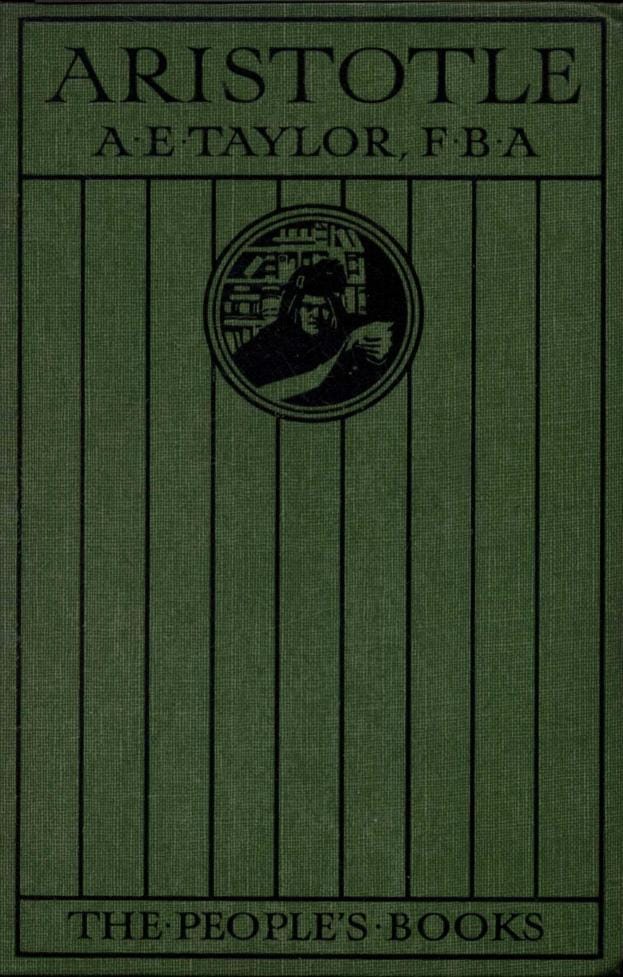
This 1919 scholarly work examines the life and intellectual legacy of Aristotle, the ancient Greek philosopher whose ideas shaped the entire trajectory of Western thought. The text traces Aristotle's journey from his birth in Stagira to his formative years at Plato's Academy in Athens, where he absorbed the great philosopher's teachings before eventually breaking from them. It details his remarkable role as tutor to the young Alexander the Great and his later establishment of the Lyceum in Athens, where he built the great library that enabled his prolific output across philosophy, science, linguistics, politics, and psychology. The author illuminates how Aristotle's systematic approach to categorizing knowledge established the foundations for empirical inquiry that would eventually become modern science. What emerges is a portrait of a mind that synthesized the philosophies before him into something entirely new, creating frameworks that would dominate intellectual life for over two millennia. The work demonstrates why Aristotle's name remains one of the few from antiquity recognized universally, his ideas so fundamental that they became the bedrock upon which medieval scholasticism, Renaissance thought, and Enlightenment science were built.
Editions
X-Ray
“I bet you could sometimes find all the mysteries of the universe in someone's hand.””
— Unknown
“Words were different when they lived inside of you.””
— Unknown
“I got to thinking that poems were like people. Some people you got right off the bat. Some people you just didn't get--and never would get.””
— Unknown
“Another secret of the universe: Sometimes pain was like a storm that came out of nowhere. The clearest summer could end in a downpour. Could end in lightning and thunder.””
— Unknown
“The summer sun was not meant for boys like me. Boys like me belonged to the rain.””
— Unknown
“To be careful with people and with words was a rare and beautiful thing.””
— Unknown
“Maybe we just lived between hurting and healing.””
— Unknown
“I wanted to tell them that I'd never had a friend, not ever, not a real one. Until Dante. I wanted to tell them that I never knew that people like Dante existed in the world, people who looked at the stars, and knew the mysteries of water, and knew enough to know that birds belonged to the heavens and weren't meant to be shot down from their graceful flights by mean and stupid boys. I wanted to tell them that he had changed my life and that I would never be the same, not ever. And that somehow it felt like it was Dante who had saved my life and not the other way around. I wanted to tell them that he was the first human being aside from my mother who had ever made me want to talk about the things that scared me. I wanted to tell them so many things and yet I didn't have the words. So I just stupidly repeated myself. "Dante's my friend.””
— Unknown
“We all fight our own private wars.””
— Unknown
Link to this book
Add a free, dofollow link to Lex on your blog, forum, syllabus, or reading list.

<a href="https://lex-books.com/book/aristotle-6081efc4-b8a7-4004-9f0d-a915ac655d3b"><img src="https://lex-books.com/badges/read-on-lex.svg" alt="Read Aristotle by Unknown free on Lex" width="160" height="40"></a>[](https://lex-books.com/book/aristotle-6081efc4-b8a7-4004-9f0d-a915ac655d3b)[url=https://lex-books.com/book/aristotle-6081efc4-b8a7-4004-9f0d-a915ac655d3b][img]https://lex-books.com/badges/read-on-lex.svg[/img][/url]Read Aristotle by Unknown free on Lex: https://lex-books.com/book/aristotle-6081efc4-b8a7-4004-9f0d-a915ac655d3bCite this book
Reading this edition for a paper or guide? Copy a citation.
Unknown. Aristotle. Lex, lex-books.com/book/aristotle-6081efc4-b8a7-4004-9f0d-a915ac655d3b.Unknown (1919). Aristotle. Lex. https://lex-books.com/book/aristotle-6081efc4-b8a7-4004-9f0d-a915ac655d3bUnknown. Aristotle. Lex. https://lex-books.com/book/aristotle-6081efc4-b8a7-4004-9f0d-a915ac655d3b.