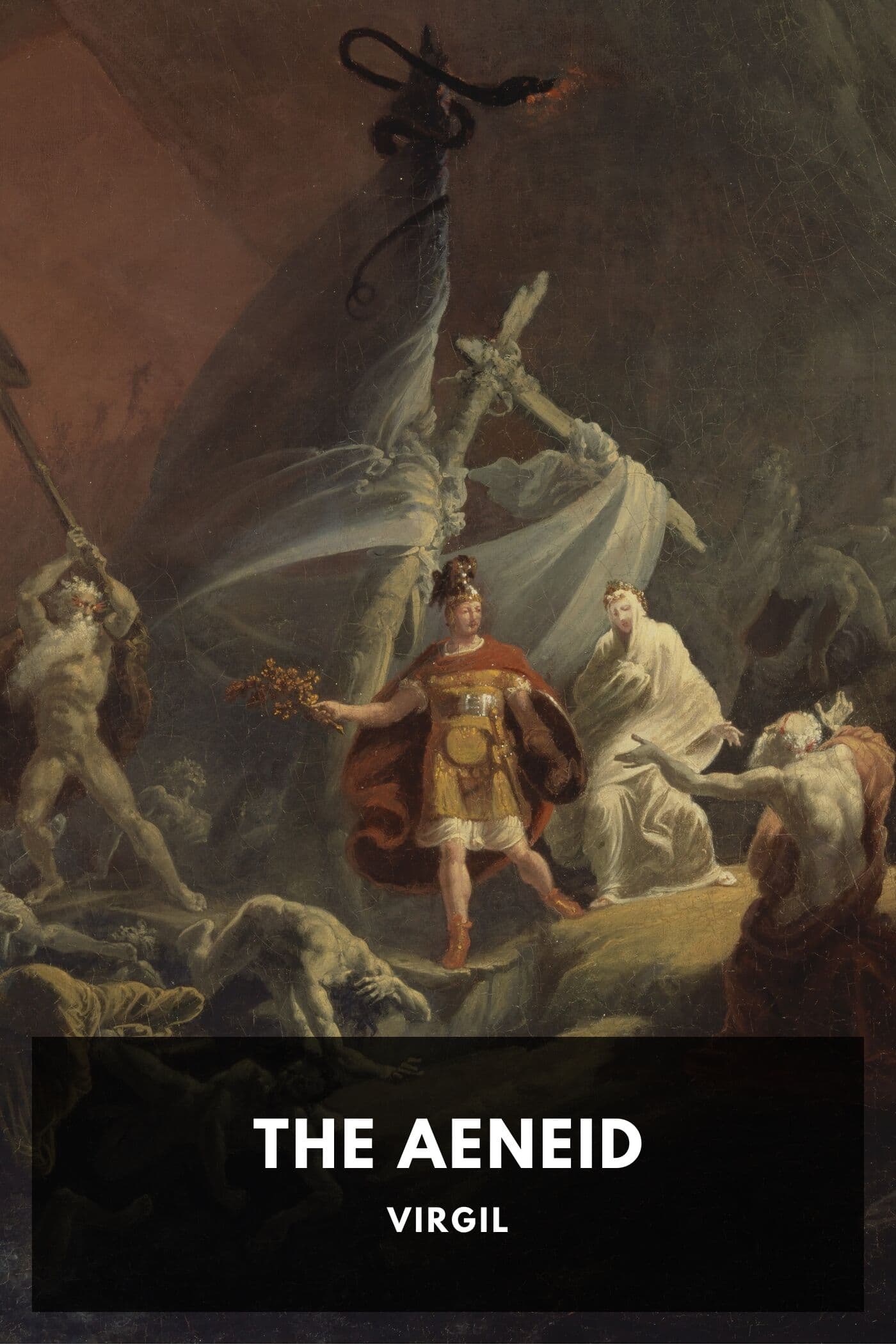
Aeneid of Virgil (Version 2)
The Aeneid is the story Rome told itself about who it was and why it mattered. Written by Virgil at the height of Augustan Rome, it traces the journey of Aeneas, an exiled Trojan warrior, as he flees the burning ruins of Troy and sails across the Mediterranean to fulfill his destiny: to found a civilization that will one day rule the world. He carries his father on his back and his gods in his heart, driven by a sense of duty so absolute it costs him everything personal. The poem's first half follows his wanderings through the Mediterranean, culminating in the haunting love affair with Carthaginian Queen Dido, who kills herself when he leaves, a scene of devastating emotional restraint. The second half depicts the brutal war in Italy, where Aeneas transforms from refugee to conqueror, his piety hardening into something resembling ruthlessness as he battles toward his fate. Virgil wrote to glorify Augustus's new empire, but the poem resists simple propaganda. Aeneas is glorious and troubling, a man who abandons a woman who loves him because he believes history demands it. Two thousand years later, we still inhabit the world this poem created: the values of duty, the weight of fate, the idea that individual lives exist to serve something larger. It is the root text of Western civilization's longest obsession, the question of what we owe our species' grand narratives.
X-Ray