A Short Method of Prayer
1685
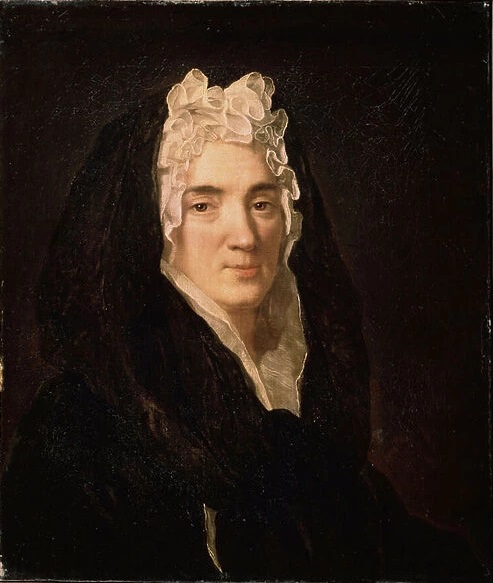
Madame Guyon wrote this guide from a prison cell in 17th-century France. That single fact reveals everything about the spiritual fire she lit. A Short Method of Prayer distills decades of mystical experience into something radical: prayer isn't about words or effort. It's about surrender. Guyon maps the stages of prayer from ordinary petition all the way to what she calls the prayer of simplicity - a state of pure presence where the soul rests in God without needing to ask for anything. She writes about suffering not as punishment but as purification. She insists that inner silence matters more than technique. What emerges is a spirituality stripped to its bones: direct, intimate, utterly unconcerned with religious performance. This book shaped the Quietist controversy, influenced Fenelon, and reached countless seekers who found traditional approaches hollow. It endures because it offers something rare: a practical path to actual union with the divine, not just belief about it. For anyone who has ever felt that prayer should be more than asking, this 300-year-old text still answers.
Editions
X-Ray
“Prayer is nothing else but the application of the heart to God, and the interior exercise of love.””
— Jeanne Marie Bouvier de la Motte Guyon
“To pastors and teachersCompose catechisms particularly to teach prayer, not by reasoning nor by method, for the simple are incapable thereof; but to teach the prayer of the heart, not of the understanding; the prayer of God's Spirit, not of man's invention.Alas! By wanting them to pray in elaborate forms . . . you create their chief obstacles. The children have been led astray from the best of fathers, by your endeavouring to teach them too refined, too polished a language . . . A father is much better pleased with an address which love and respect in the child throws into disorder, because he knows it proceeds from the heart, than by a formal and barren harangue, though ever so elaborate in the composition. The simple and undisguised emotions of filial love are infinitely more expressive than all language and all reasoning.””
— Jeanne Marie Bouvier de la Motte Guyon
“Some persons, when they hear of the prayer of silence, falsely imagine that the soul remains stupid, dead, and inactive. But unquestionably, it acteth therein more nobly and more extensively than it had ever done before; for God himself is the mover, and the soul now acteth by the agency of His spirit.””
— Jeanne Marie Bouvier de la Motte Guyon
“Now when the soul by its efforts to abandon outward objects and gather itself inwards, is brought into the influence of the central tendency, without any other exertion, it falls gradually by the weight of Divine Love into its proper centre; and the more passive and tranquil it remains, and the freer from self-motion and self-exertion, the more rapidly it advances, because the energy of the central attractive virtue is unobstructed and has full liberty for action.All our care and attention should, therefore, be to acquire inward recollection: nor let us be discouraged by the pains and difficulties we encounter in this exercise, which will soon be recompensed on the part of our God by such abundant supplies of grace as will render the exercise perfectly easy, provided we be faithful in meekly withdrawing our hearts from outward distractions and occupations, and returning to our centre with affections full of tenderness and serenity. When at any time the passions are turbulent, a gentle retreat inwards into a Present God easily deadens and pacifies them; and any other way of contending with them rather irritates than appeases them.””
— Jeanne Marie Bouvier de la Motte Guyon
“Whatever truth you have chosen, read only a small portion of it, endeavouring to taste and digest it, to extract the essence and substance thereof, and proceed no farther while any savour or relish remains in the passage: when this subsides, pick up your book again and proceed as before, seldom reading more than half a page at a time, for it is not the quantity that is read, but the manner of reading, that yields us profit.””
— Jeanne Marie Bouvier de la Motte Guyon
“We should accept indiscriminately all His dispensations, whether obscurity or illumination, fruitfulness or barrenness, weakness or strength, sweetness or bitterness, temptations, distractions, pain, weariness, or doubtings; and none of all these should, for one moment retard our course.””
— Jeanne Marie Bouvier de la Motte Guyon
“the direct and principal exercise should be the sense of the presence of God, we must most faithfully recall the senses when they wander.””
— Jeanne Marie Bouvier de la Motte Guyon
“There are two means by which we may be led into the higher forms of prayer. One is Meditation, the other is Meditative Reading.””
— Jeanne Marie Bouvier de la Motte Guyon
“This prayer is not mental, but of the heart. It is not a prayer of thought alone, because the mind of man is so limited, that while it is occupied with one thing it cannot be thinking of another. But it is the PRAYER OF THE HEART, which cannot be interrupted by the occupations of the mind. Nothing can interrupt the prayer of the heart but unruly affections; and when once we have tasted of the love of God, it is impossible to find our delight in anything but Himself.””
— Jeanne Marie Bouvier de la Motte Guyon
Link to this book
Add a free, dofollow link to Lex on your blog, forum, syllabus, or reading list.

<a href="https://lex-books.com/book/a-short-method-of-prayer-991699dd-a1f9-4b70-97f5-fb3dbb8876ab"><img src="https://lex-books.com/badges/read-on-lex.svg" alt="Read A Short Method of Prayer by Jeanne Marie Bouvier de la Motte Guyon free on Lex" width="160" height="40"></a>[](https://lex-books.com/book/a-short-method-of-prayer-991699dd-a1f9-4b70-97f5-fb3dbb8876ab)[url=https://lex-books.com/book/a-short-method-of-prayer-991699dd-a1f9-4b70-97f5-fb3dbb8876ab][img]https://lex-books.com/badges/read-on-lex.svg[/img][/url]Read A Short Method of Prayer by Jeanne Marie Bouvier de la Motte Guyon free on Lex: https://lex-books.com/book/a-short-method-of-prayer-991699dd-a1f9-4b70-97f5-fb3dbb8876abCite this book
Reading this edition for a paper or guide? Copy a citation.
Guyon, Jeanne Marie Bouvier de la Motte. A Short Method of Prayer. Lex, lex-books.com/book/a-short-method-of-prayer-991699dd-a1f9-4b70-97f5-fb3dbb8876ab.Guyon, J. M. B. D. L. M. (1685). A Short Method of Prayer. Lex. https://lex-books.com/book/a-short-method-of-prayer-991699dd-a1f9-4b70-97f5-fb3dbb8876abGuyon, Jeanne Marie Bouvier de la Motte. A Short Method of Prayer. Lex. https://lex-books.com/book/a-short-method-of-prayer-991699dd-a1f9-4b70-97f5-fb3dbb8876ab.