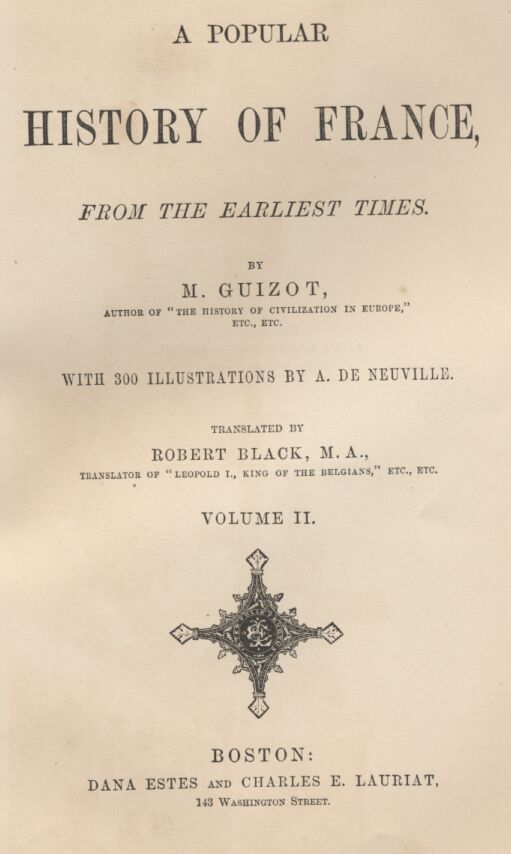
A Popular History of France from the Earliest Times, Volume 2
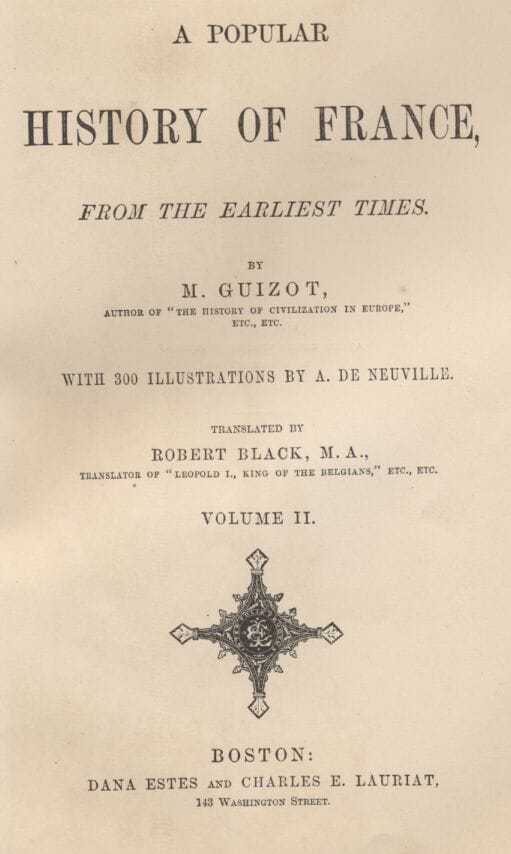
A Popular History of France from the Earliest Times, Volume 2
Translated by Robert, 1830? Black
This is history as the Victorians understood it: grand, moral, and driven by the clash of civilizations. François Guizot, the eminent French historian and statesman, turns his considerable intellect to the age of the Crusades, when French knights marched east to reclaim the Holy Land and found instead a world that would shatter their certainties. The narrative captures the ferocious optimism of the First Crusade's capture of Jerusalem in 1099, the legendary exploits of Godfrey de Bouillon and Richard Coeur de Lion, and the eventual reckoning with Saladin's resurgent forces. But Guizot is not merely recounting battles; he traces the slow forging of the French monarchy and the fragile institutions that would one day become the French state. Written in 1854, this volume carries the weight of mid-nineteenth-century French liberal historiography, concerned not just with what happened but what it meant for the national soul. For readers who want to understand how the age of chivalry really felt, and how the French imagined their medieval ancestors, Guizot remains a compelling guide.
Editions

X-Ray
King of France who significantly expanded the kingdom and strengthened royal authority. Known for his political wisdom, military victories, and moderate governance.
The most Christian king of France, known for his piety, justice, and two crusades. Canonized as a saint for his virtue and devotion.
Powerful regent during Louis IX's minority and later regency. Skilled politician who defended royal authority against rebellious vassals.
King of England and legendary crusader, known for his military prowess but reckless nature. Rival and sometime ally of Philip Augustus.
About A Popular History of France from the Earliest Times, Volume 2
Chapter Summaries
- XVII
- Chronicles the failure of successive crusades from the Second Crusade through St. Louis's expeditions, showing how the initial success at Jerusalem gave way to repeated defeats and the ultimate loss of Christian territories in the East.
- XVIII
- Analyzes the development of French royal authority from Hugh Capet through Philip the Handsome, examining how successive kings built centralized power while dealing with feudal vassals, foreign enemies, and internal challenges.
- XIX
- Describes the rise of urban communities and their struggle for self-governance, showing how towns gained privileges and political influence while contributing to royal power against feudal lords.
Key Themes
- The Evolution of Kingship
- The transformation of French monarchy from feudal overlordship to centralized royal authority, showing how successive kings built institutional power while balancing various competing interests.
- Religious Faith and Political Power
- The complex relationship between Christian devotion and temporal authority, exemplified by the Crusades and conflicts between Church and State, showing both the nobility and dangers of religious zeal in politics.
- The Price of Absolute Power
- How the concentration of power in individual rulers, whether kings or popes, leads to both great achievements and terrible abuses, as seen in the reigns of Philip the Handsome and Boniface VIII.
Characters
- Philip Augustus(protagonist)
- King of France who significantly expanded the kingdom and strengthened royal authority. Known for his political wisdom, military victories, and moderate governance.
- St. Louis (Louis IX)(protagonist)
- The most Christian king of France, known for his piety, justice, and two crusades. Canonized as a saint for his virtue and devotion.
- Queen Blanche of Castille(major)
- Powerful regent during Louis IX's minority and later regency. Skilled politician who defended royal authority against rebellious vassals.
- Richard Coeur de Lion(major)
- King of England and legendary crusader, known for his military prowess but reckless nature. Rival and sometime ally of Philip Augustus.
- Saladin(major)
- Sultan of Egypt and Syria, the most formidable Muslim leader during the Crusades. Respected even by his Christian enemies for his nobility and military skill.
- Suger(major)
- Abbot of St. Denis and chief advisor to Louis VI and Louis VII. Wise statesman who opposed the Second Crusade and governed France during Louis VII's absence.
Link to this book
Add a free, dofollow link to Lex on your blog, forum, syllabus, or reading list.

<a href="https://lex-books.com/book/a-popular-history-of-france-from-the-earliest-times-volume-2-61562119-61cf-4c7f-ae5d-245f94cb74a5"><img src="https://lex-books.com/badges/read-on-lex.svg" alt="Read A Popular History of France from the Earliest Times, Volume 2 by François Guizot free on Lex" width="160" height="40"></a>[](https://lex-books.com/book/a-popular-history-of-france-from-the-earliest-times-volume-2-61562119-61cf-4c7f-ae5d-245f94cb74a5)[url=https://lex-books.com/book/a-popular-history-of-france-from-the-earliest-times-volume-2-61562119-61cf-4c7f-ae5d-245f94cb74a5][img]https://lex-books.com/badges/read-on-lex.svg[/img][/url]Read A Popular History of France from the Earliest Times, Volume 2 by François Guizot free on Lex: https://lex-books.com/book/a-popular-history-of-france-from-the-earliest-times-volume-2-61562119-61cf-4c7f-ae5d-245f94cb74a5Cite this book
Reading this edition for a paper or guide? Copy a citation.
Guizot, François. A Popular History of France from the Earliest Times, Volume 2. Lex, lex-books.com/book/a-popular-history-of-france-from-the-earliest-times-volume-2-61562119-61cf-4c7f-ae5d-245f94cb74a5.Guizot, F. (n.d.). A Popular History of France from the Earliest Times, Volume 2. Lex. https://lex-books.com/book/a-popular-history-of-france-from-the-earliest-times-volume-2-61562119-61cf-4c7f-ae5d-245f94cb74a5Guizot, François. A Popular History of France from the Earliest Times, Volume 2. Lex. https://lex-books.com/book/a-popular-history-of-france-from-the-earliest-times-volume-2-61562119-61cf-4c7f-ae5d-245f94cb74a5.