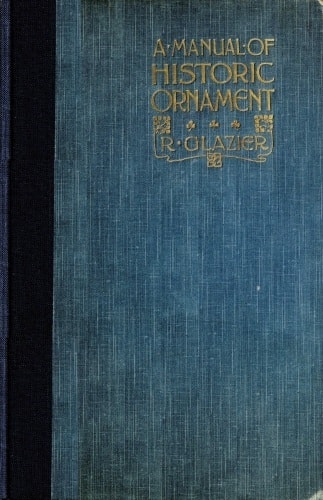
A Manual of Historic Ornamenttreating Upon the Evolution, Tradition, and Development of Architecture and Other Applied Arts. Prepared for the Use of Students and Craftsmen
1899
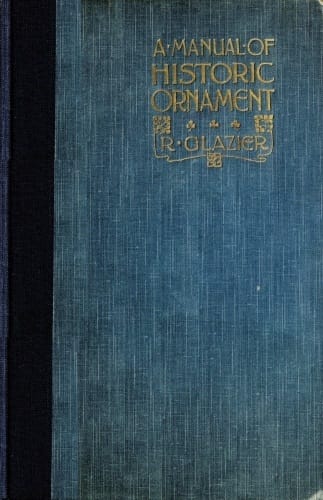
A Manual of Historic Ornamenttreating Upon the Evolution, Tradition, and Development of Architecture and Other Applied Arts. Prepared for the Use of Students and Craftsmen
1899
A scholarly reference work on the evolution and development of architectural ornamentation and other applied arts, written in the late 19th century. This manual is intended for both students and craftsmen, providing an elementary understanding of architecture and historical ornamentation while emphasizing the beauty and significance of ancient and medieval art forms. It likely serves as an important resource for anyone interested in the aesthetic traditions that have shaped architectural design through the ages. The opening of the manual outlines its primary objectives, which include fostering an appreciation of ancient civilizations' artistic contributions, educating readers on the characteristics of various ornamental styles, and encouraging a deeper understanding of the industrial arts. Glazier explains that the manual features a wide variety of illustrations that represent typical examples of different styles and periods, facilitating a visual understanding of the subject matter. The initial sections focus on regions such as Oceania, Egypt, Assyria, and Greece, highlighting their unique artistic expressions and the intricate relationship of ornamentation with culture and society.
Editions

X-Ray
The author of this comprehensive manual on historic ornament. Associate of the Royal Institute of British Architects and Head Master of the Municipal School of Art, Manchester.
The intended audience for this educational manual. They are positioned as learners seeking to understand the evolution and application of historic ornament.
About A Manual of Historic Ornamenttreating Upon the Evolution, Tradition, and Development of Architecture and Other Applied Arts. Prepared for the Use of Students and Craftsmen
Chapter Summaries
- Preface
- Glazier outlines his three-fold purpose: providing elementary knowledge, awakening appreciation for ancient art, and directing attention to the beauty and vitality of historic industrial arts.
- 1
- Explores the ornamental art of Pacific Island peoples, remarkable for developing a complete style independently, based on abstract forms derived from the human figure.
- 2
- Covers Egyptian ornamental traditions from 4400 B.C. to 340 B.C., including the symbolic use of the lotus, papyrus, and palm in architectural decoration.
Key Themes
- Evolution and Continuity of Artistic Tradition
- The book traces how ornamental styles develop and persist across cultures and centuries, showing the interconnected nature of artistic expression throughout history.
- Cultural Exchange and Influence
- Glazier demonstrates how ornamental styles spread through trade, conquest, and cultural contact, creating hybrid forms that reflect the meeting of different civilizations.
- Symbolism and Meaning in Art
- The work explores how ornamental forms carry religious, cultural, and social significance, serving as visual languages that communicate beliefs and values.
Characters
- Richard Glazier(protagonist)
- The author of this comprehensive manual on historic ornament. Associate of the Royal Institute of British Architects and Head Master of the Municipal School of Art, Manchester.
- Students and Craftsmen(major)
- The intended audience for this educational manual. They are positioned as learners seeking to understand the evolution and application of historic ornament.
Link to this book
Add a free, dofollow link to Lex on your blog, forum, syllabus, or reading list.

<a href="https://lex-books.com/book/a-manual-of-historic-ornamenttreating-upon-the-evolution-tradition-and-developme-564119ab-72df-49a2-b4d1-7d3a5244836e"><img src="https://lex-books.com/badges/read-on-lex.svg" alt="Read A Manual of Historic Ornamenttreating Upon the Evolution, Tradition, and Development of Architecture and Other Applied Arts. Prepared for the Use of Students and Craftsmen by Richard Glazier free on Lex" width="160" height="40"></a>[](https://lex-books.com/book/a-manual-of-historic-ornamenttreating-upon-the-evolution-tradition-and-developme-564119ab-72df-49a2-b4d1-7d3a5244836e)[url=https://lex-books.com/book/a-manual-of-historic-ornamenttreating-upon-the-evolution-tradition-and-developme-564119ab-72df-49a2-b4d1-7d3a5244836e][img]https://lex-books.com/badges/read-on-lex.svg[/img][/url]Read A Manual of Historic Ornamenttreating Upon the Evolution, Tradition, and Development of Architecture and Other Applied Arts. Prepared for the Use of Students and Craftsmen by Richard Glazier free on Lex: https://lex-books.com/book/a-manual-of-historic-ornamenttreating-upon-the-evolution-tradition-and-developme-564119ab-72df-49a2-b4d1-7d3a5244836eCite this book
Reading this edition for a paper or guide? Copy a citation.
Glazier, Richard. A Manual of Historic Ornamenttreating Upon the Evolution, Tradition, and Development of Architecture and Other Applied Arts. Prepared for the Use of Students and Craftsmen. Lex, lex-books.com/book/a-manual-of-historic-ornamenttreating-upon-the-evolution-tradition-and-developme-564119ab-72df-49a2-b4d1-7d3a5244836e.Glazier, R. (1899). A Manual of Historic Ornamenttreating Upon the Evolution, Tradition, and Development of Architecture and Other Applied Arts. Prepared for the Use of Students and Craftsmen. Lex. https://lex-books.com/book/a-manual-of-historic-ornamenttreating-upon-the-evolution-tradition-and-developme-564119ab-72df-49a2-b4d1-7d3a5244836eGlazier, Richard. A Manual of Historic Ornamenttreating Upon the Evolution, Tradition, and Development of Architecture and Other Applied Arts. Prepared for the Use of Students and Craftsmen. Lex. https://lex-books.com/book/a-manual-of-historic-ornamenttreating-upon-the-evolution-tradition-and-developme-564119ab-72df-49a2-b4d1-7d3a5244836e.