A Finnish Grammar
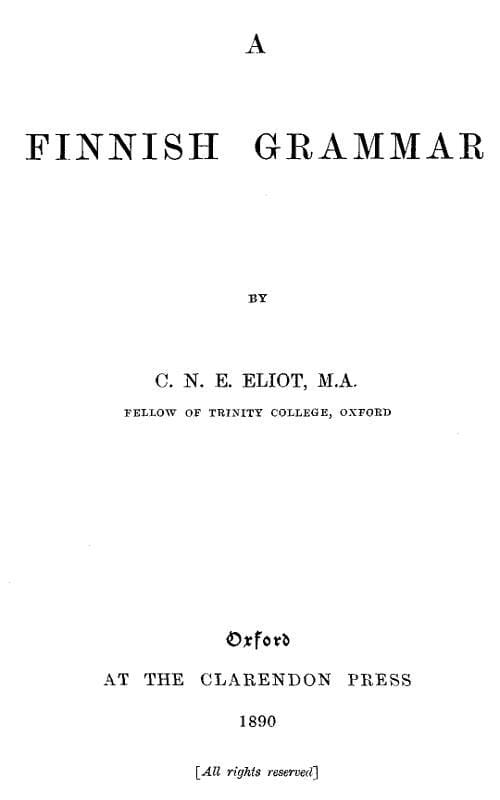
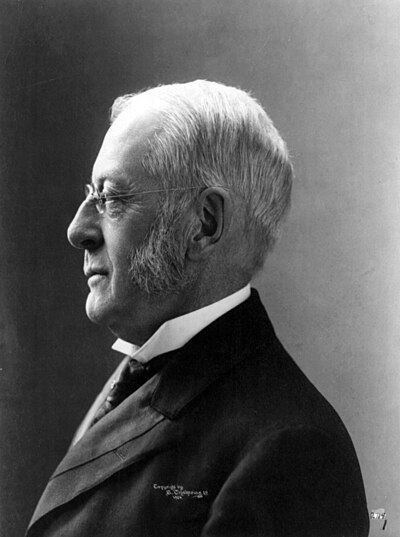
Finnish defies easy classification. As a Uralic language unrelated to its Indo-European neighbors, it presents learners with vowel harmony, agglutinative structure, and a phonetics system unlike anything in Western Europe. Charles Eliot's late 19th-century grammar stands as one of the earliest serious attempts to render this linguistic puzzle accessible to English speakers, and its historical significance is considerable: before digital resources and modern textbooks, this was among the few bridges between Anglophone scholars and the Finnish language. This comprehensive grammar moves through Finnish's grammatical structures and phonetic systems with scholarly precision. Eliot treats Finnish not as a curiosity but as a system worthy of rigorous analysis, mapping its noun cases, verb conjugations, and sound patterns with the care of a linguist who recognizes both the difficulty and the elegance of what he's documenting. For anyone studying Finnish today, the book offers a fascinating window into how the language was once understood and taught beyond Finland's borders. This work remains valuable for linguists, historical language enthusiasts, and serious Finnish learners who want to understand the intellectual tradition behind learning this remarkable language.
Editions
Link to this book
Add a free, dofollow link to Lex on your blog, forum, syllabus, or reading list.

<a href="https://lex-books.com/book/a-finnish-grammar-ac5a9fff-db68-4647-be79-d2fa999fc474"><img src="https://lex-books.com/badges/read-on-lex.svg" alt="Read A Finnish Grammar by Charles Eliot free on Lex" width="160" height="40"></a>[](https://lex-books.com/book/a-finnish-grammar-ac5a9fff-db68-4647-be79-d2fa999fc474)[url=https://lex-books.com/book/a-finnish-grammar-ac5a9fff-db68-4647-be79-d2fa999fc474][img]https://lex-books.com/badges/read-on-lex.svg[/img][/url]Read A Finnish Grammar by Charles Eliot free on Lex: https://lex-books.com/book/a-finnish-grammar-ac5a9fff-db68-4647-be79-d2fa999fc474Cite this book
Reading this edition for a paper or guide? Copy a citation.
Eliot, Charles. A Finnish Grammar. Lex, lex-books.com/book/a-finnish-grammar-ac5a9fff-db68-4647-be79-d2fa999fc474.Eliot, C. (n.d.). A Finnish Grammar. Lex. https://lex-books.com/book/a-finnish-grammar-ac5a9fff-db68-4647-be79-d2fa999fc474Eliot, Charles. A Finnish Grammar. Lex. https://lex-books.com/book/a-finnish-grammar-ac5a9fff-db68-4647-be79-d2fa999fc474.