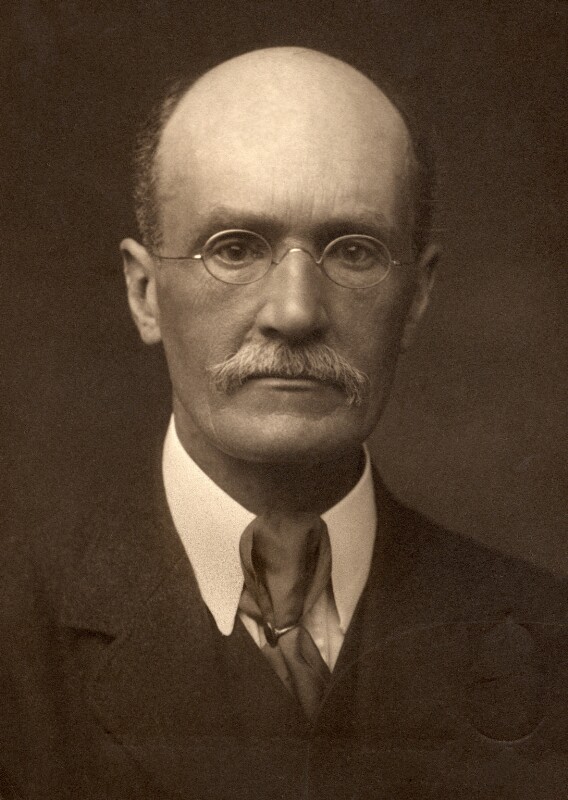
Ιστορία Της Αρχαίας Ελληνικής Λογοτεχνίας
1897
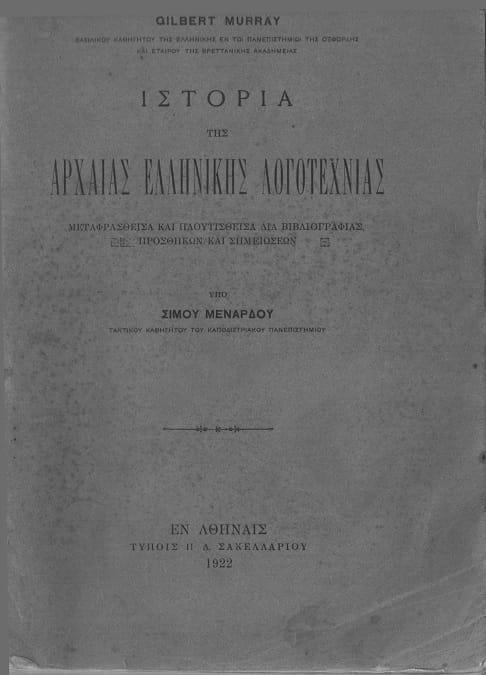
Gilbert Murray, among the most influential classical scholars of the early twentieth century, crafted this landmark survey of Greek literature when the field was still young and the ancient texts held fresh mysteries. Rather than offering a mere catalog of authors and dates, Murray situates the great works within their turbulent historical moment: the birth of democracy in Athens, the crucible of the Persian Wars, the cultural flowering and eventual political decline that shaped how poets, philosophers, and dramatists understood their world. The book moves from the epic foundations of Homer through the revolutionary tragedies of Aeschylus, Sophocles, and Euripides, onto the philosophical dialogues and the later literature that carried classical traditions eastward. What distinguishes this volume is Murray's insistence that to understand Greek literature is to understand the Greeks themselves: their ambitions, their fears, their private sorrows and public triumphs. Originally published in 1897, it remains a gateway for readers seeking to encounter antiquity not as a museum of finished monuments, but as a living conversation between brilliant minds grappling with the eternal questions of human existence.
Editions
X-Ray
“Things of a day! what are we and what not? A dream of a shaddow is man; yet when some god-given splendor falls, a glory of light comes over him and his life is sweet(Pindar)””
— Gilbert Murray
Link to this book
Add a free, dofollow link to Lex on your blog, forum, syllabus, or reading list.

<a href="https://lex-books.com/book/-ad052c58-636c-4844-a163-dd23ab6a536b"><img src="https://lex-books.com/badges/read-on-lex.svg" alt="Read Ιστορία Της Αρχαίας Ελληνικής Λογοτεχνίας by Gilbert Murray free on Lex" width="160" height="40"></a>[](https://lex-books.com/book/-ad052c58-636c-4844-a163-dd23ab6a536b)[url=https://lex-books.com/book/-ad052c58-636c-4844-a163-dd23ab6a536b][img]https://lex-books.com/badges/read-on-lex.svg[/img][/url]Read Ιστορία Της Αρχαίας Ελληνικής Λογοτεχνίας by Gilbert Murray free on Lex: https://lex-books.com/book/-ad052c58-636c-4844-a163-dd23ab6a536bCite this book
Reading this edition for a paper or guide? Copy a citation.
Murray, Gilbert. Ιστορία Της Αρχαίας Ελληνικής Λογοτεχνίας. Lex, lex-books.com/book/-ad052c58-636c-4844-a163-dd23ab6a536b.Murray, G. (1897). Ιστορία Της Αρχαίας Ελληνικής Λογοτεχνίας. Lex. https://lex-books.com/book/-ad052c58-636c-4844-a163-dd23ab6a536bMurray, Gilbert. Ιστορία Της Αρχαίας Ελληνικής Λογοτεχνίας. Lex. https://lex-books.com/book/-ad052c58-636c-4844-a163-dd23ab6a536b.