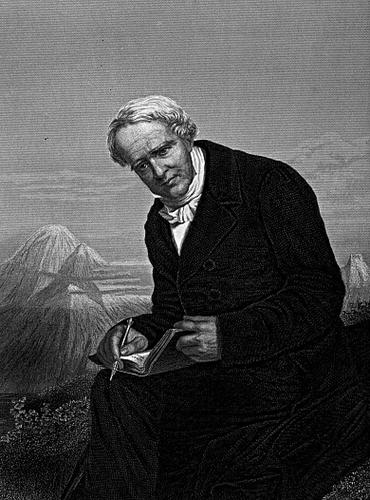
Humboldt, Wilhelm, Freiherr von, 1767-1835
Wilhelm von Humboldt was a German philosopher, linguist, government functionary, and founder of the Humboldt University of Berlin. Born into a prominent family, he was educated at the University of Göttingen, where he developed a keen interest in languages and philosophy. Humboldt's work in linguistics is particularly notable for his theory of language as a living, dynamic process, which emphasized the connection between language and thought. His ideas laid the groundwork for modern linguistic theory and influenced a wide range of disciplines, including anthropology and cognitive science. In addition to his linguistic contributions, Humboldt was a significant figure in the field of education. He believed in the importance of a holistic education that nurtured both the intellect and the character of individuals. His educational reforms in Prussia emphasized the need for a well-rounded curriculum that included the humanities, sciences, and physical education. Humboldt's vision for education and his advocacy for the autonomy of universities had a lasting impact on the structure of higher education in Germany and beyond. His legacy endures through the institutions he helped establish and the ideas he championed, which continue to inform contemporary discussions on language, education, and philosophy.
Books from the author

Link to this page
Add a free, dofollow link to Lex on your blog, forum, syllabus, or reading list.

<a href="https://lex-books.com/author/wilhelm-humboldt"><img src="https://lex-books.com/badges/read-on-lex.svg" alt="Humboldt, Wilhelm, Freiherr von, 1767-1835 on Lex" width="160" height="40"></a>[](https://lex-books.com/author/wilhelm-humboldt)[url=https://lex-books.com/author/wilhelm-humboldt][img]https://lex-books.com/badges/read-on-lex.svg[/img][/url]Humboldt, Wilhelm, Freiherr von, 1767-1835 on Lex: https://lex-books.com/author/wilhelm-humboldt