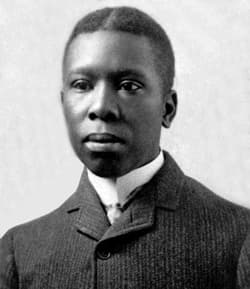
Paul Laurence Dunbar
Paul Laurence Dunbar was an influential American poet, novelist, and short story writer who emerged in the late 19th and early 20th centuries. Born in Dayton, Ohio, to formerly enslaved parents, Dunbar began his literary journey at a young age, publishing his first poems at just 16. His work gained significant recognition after being championed by prominent editor William Dean Howells, marking him as one of the first African-American writers to achieve international acclaim. Dunbar's literary contributions were diverse, encompassing poetry, short stories, and novels, but he is perhaps best known for his use of 'Negro dialect' in his poetry, which captured the complexities of African American life during his time. Notable works include his celebrated poem collection 'Lyrics of a Lowly Life' and the groundbreaking musical comedy 'In Dahomey,' which was the first all-African-American musical to be produced on Broadway. Despite his early success, Dunbar faced personal struggles, including a battle with tuberculosis, which ultimately claimed his life at the age of 33. His legacy is significant, as he is recognized as the first important African American sonnet writer and a pioneer in the representation of African American culture in literature. In recent decades, scholars have increasingly revisited his body of work, appreciating not only his dialect poetry but also his contributions in conventional English, solidifying his place in American literary history as a voice of resilience and creativity.
Famous Quotes
View all 3 quotes“We wear the mask that grins and lies, It hides our cheeks and shades our eyes,— This debt we pay to human guile; With torn and bleeding hearts we smile”
“We wear the mask that grins and lies, It hides our cheeks and shades our eyes,- - This debt we pay to human guile; With torn and bleeding hearts we smile And mouth with myriad subtleties. Why should the world be otherwise, In counting all our tears and sighs? Nay, let them only see thus, while We wear the mask. We smile, but, O great Christ, our cries To thee from tortured souls arise. We sing, but oh the clay is vile Beneath our feet, and long the mile; But let the world dream otherwise, We wear the mask!”
“I know why the caged bird sings, ah me, When his wing is bruised and his bosom sore,- When he beats his bars and would be free; It is not a carol of joy or glee, But a prayer that he sends from his heart's deep core, But a plea, that upward to Heaven he flings- I know why the caged bird sings!”
Books from the author



Link to this page
Add a free, dofollow link to Lex on your blog, forum, syllabus, or reading list.

<a href="https://lex-books.com/author/paul-laurence-dunbar"><img src="https://lex-books.com/badges/read-on-lex.svg" alt="Paul Laurence Dunbar on Lex" width="160" height="40"></a>[](https://lex-books.com/author/paul-laurence-dunbar)[url=https://lex-books.com/author/paul-laurence-dunbar][img]https://lex-books.com/badges/read-on-lex.svg[/img][/url]Paul Laurence Dunbar on Lex: https://lex-books.com/author/paul-laurence-dunbar