Maurice Nicoll
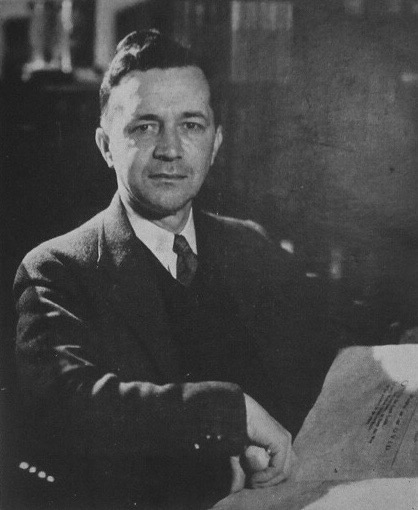
Henry Maurice Dunlop Nicoll was a Scottish neurologist and psychiatrist who became a prominent figure in the realm of esoteric teachings through his association with the Fourth Way philosophy. He is best known for his extensive work, 'Psychological Commentaries on the Teaching of Gurdjieff and Ouspensky,' a five-volume series that encapsulated over 500 talks delivered to his study groups in London from 1941 until his death in 1953. These commentaries not only reflect his deep understanding of Gurdjieff and Ouspensky's teachings but also serve as a bridge between psychological concepts and spiritual development, making complex ideas accessible to a broader audience. Nicoll's contributions to psychology and spirituality were significant, as he integrated his medical knowledge with esoteric principles, providing a unique perspective on self-awareness and personal growth. His teachings emphasized the importance of inner work and the development of consciousness, influencing many who sought to understand the human psyche in a spiritual context. Nicoll's legacy endures through his writings and the impact he had on the Fourth Way movement, as well as his role in shaping the dialogue between psychology and spirituality in the 20th century.
Famous Quotes
View all 3 quotes“You will remember that every psychological or inner state finds some outer representation via the moving centre—that is, it is represented in some particular muscular movements or contractions, etc. You may have noticed that a state of worry is often reflected by a contracted wrinkling of the forehead or a twisting of the hands. States of joy never have this representation. Negative states, states of worry, or fear, or anxiety, or depression, represent themselves in the muscles by contraction, flexion, being bowed down, etc. (and often, also, by weakness in the muscles), whereas opposite emotional states are reflected into the moving centre as expansion, as standing upright, as extension of the limbs, relaxing of tension, and usually by a feeling of strength. To stop worry, people who worry and thereby frown too much or pucker up and corrugate their foreheads, clench their fists, almost cease breathing, etc., should begin here—by relaxing the muscles expressing the emotional state, and freeing the breath. Relaxing in general has behind it, esoterically speaking, the idea of preventing negative states. Negative states are less able to come when a person is in a state of relaxation. That is why it is said so often that it is necessary to practise relaxing every day, by passing the attention over the body and deliberately relaxing all tense muscles.”
“Remember that you cannot work on yourself unless you begin to wonder why you say what you say and do what you do and behave as you behave and feel what you feel and think what you think. To take yourself for granted, to imagine you are always right, to ascribe to yourself all that you do ascribe to yourself—all that form of sheer imagination will prevent you from seeing what esotericism means, what the Gospels mean, and what you mean.”
“Man must realize his mechanicalness before he can change... Work is a question of increasing one's consciousness, not imitating virtues like monkeys.”
Books from the author

Link to this page
Add a free, dofollow link to Lex on your blog, forum, syllabus, or reading list.

<a href="https://lex-books.com/author/maurice-nicoll"><img src="https://lex-books.com/badges/read-on-lex.svg" alt="Maurice Nicoll on Lex" width="160" height="40"></a>[](https://lex-books.com/author/maurice-nicoll)[url=https://lex-books.com/author/maurice-nicoll][img]https://lex-books.com/badges/read-on-lex.svg[/img][/url]Maurice Nicoll on Lex: https://lex-books.com/author/maurice-nicoll