Jan Hus
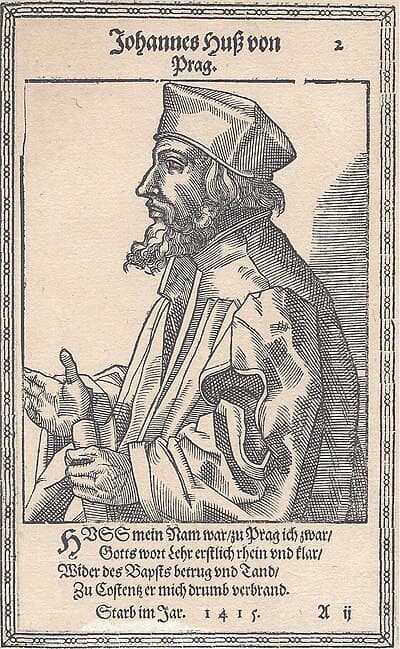
Jan Hus was a Czech theologian, philosopher, and reformer whose ideas significantly influenced the Protestant Reformation. Born in the late 14th century, he became a prominent figure at Charles University in Prague, where he advocated for church reform and criticized the moral failings of the clergy. His teachings, which emphasized the authority of the Bible over church tradition, attracted a substantial following and laid the groundwork for later reformers like Martin Luther. Hus is best known for his work 'De ecclesia' ('On the Church'), where he argued for the necessity of a reformed church that aligned more closely with the teachings of Christ. His opposition to the sale of indulgences and the corruption within the Catholic Church led to his excommunication and eventual execution at the Council of Constance in 1415. Despite his death, Hus's ideas continued to inspire the Hussite movement in Bohemia and contributed to the broader currents of religious reform across Europe, marking him as a pivotal figure in the history of Christianity and the development of modern thought.
Famous Quotes
View all 7 quotes“Blessed also be God Almighty, who ordains that His militant church shall have such life that, when a pope is dead, she is not on that account without a head or dead! Because not upon the pope but upon the head, Christ, does her life depend.””
“Blessed also be the Lord, the one living head of the church, who preserves her so effectually in unity that, even now, while there are three so-called papal heads, she remains the one spouse of the Lord Jesus Christ!””
“Further, it is evident that if pope or other superior command the priest not to preach, who is disposed to do so (as has been said), or the rich not to give alms, the inferior ought not to obey. Wherefore, depending on this command of the Lord, I have not obeyed Pope Alexander's command in regard to not preaching and hence will humbly bear excommunication,1 confident that I will secure to myself the benediction of my God.””