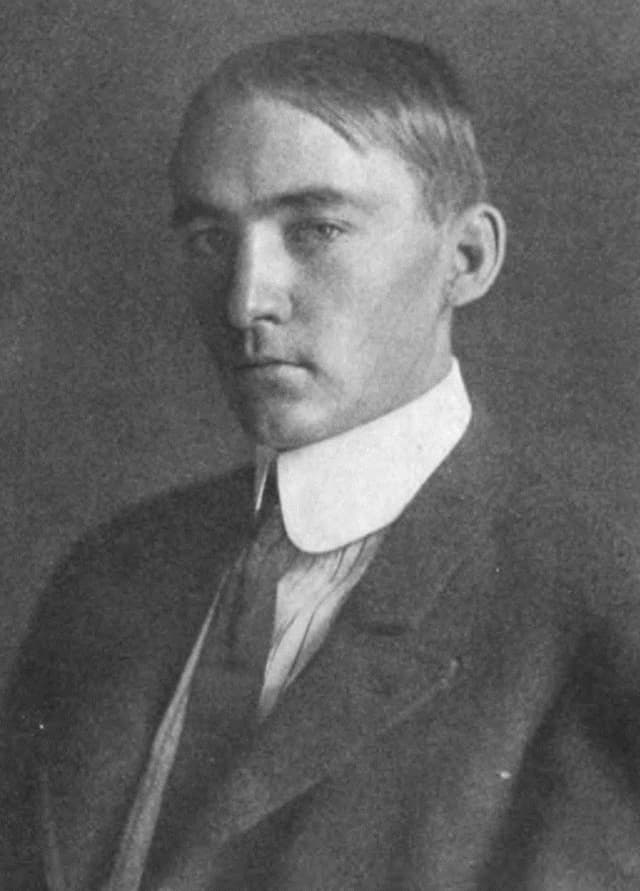
Gouverneur Morris
Gouverneur Morris was a prominent American statesman and a key Founding Father, best known for his role in drafting the United States Constitution. Born into a wealthy landowning family in New York City, he received a legal education at King's College and quickly became involved in politics. Morris was a delegate at the Constitutional Convention of 1787, where he not only advocated for a strong central government but also penned the Preamble to the Constitution, earning him the title 'Penman of the Constitution.' His vision extended beyond mere governance; he was a vocal opponent of slavery, emphasizing the importance of a unified national identity over state allegiance at a time when many Americans identified primarily with their individual states. After the Constitution's ratification, Morris served as the Minister Plenipotentiary to France, where he expressed his disapproval of the French Revolution and the execution of figures like Marie Antoinette. Returning to the U.S. in 1798, he was elected to the Senate as a Federalist but lost his seat in 1803. His later contributions included overseeing the Erie Canal's construction and participating in the development of New York City's street grid. Morris's legacy is marked by his commitment to a strong federal government and his early advocacy for civil rights, making him a significant figure in the shaping of American political thought and infrastructure.
Famous Quotes
View all 3 quotes“We the People of the United States, in Order to form a more perfect Union, establish Justice, insure domestic Tranquility, provide for the common defence, promote the general Welfare, and secure the Blessings of Liberty to ourselves and our Posterity, do ordain and establish this Constitution for the United States of America.”
“They (the French) have taken genius instead of reason for their guide, adopted experiment instead of experience, and wander in the dark because they prefer lightning to light.”
“[On the eve of the French Revolution:] It is impossible to imagine a more disorderly Assembly. They neither reason, examine, nor discuss. They clap those whom they approve and hiss those whom they disapprove. . . . Everything almost is elective, and consequently no one obeys. It is an anarchy beyond conception, and they will be obliged to take back their chains for some time to come at least. And so much for that licentious spirit which they dignify with the name of "Love of Liberty." Their Literati, whose heads are turned by romantic notions picked up in books, and who are too lofty to look down upon that kind of man which really exists, and too wise to heed the dictates of common-sense and experience, have turned the heads of their countrymen, and they have run-a-muck at a Don Quixote constitution such as you are blessed with in Pennsylvania. I need say no more. You will judge of the effects of such a constitution upon people supremely depraved.”
Books from the author
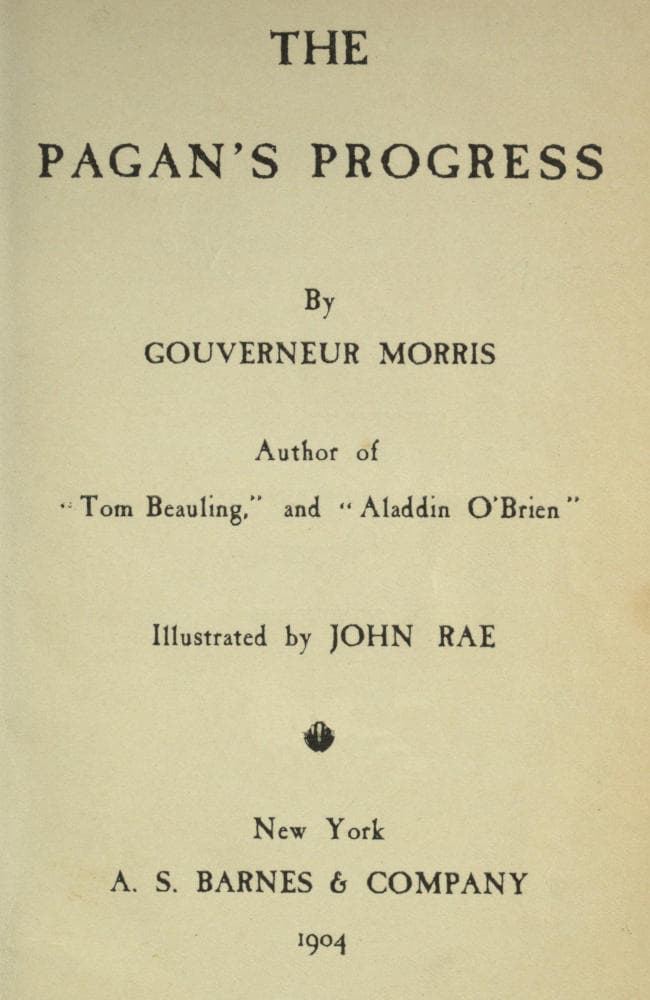


Link to this page
Add a free, dofollow link to Lex on your blog, forum, syllabus, or reading list.

<a href="https://lex-books.com/author/gouverneur-morris"><img src="https://lex-books.com/badges/read-on-lex.svg" alt="Gouverneur Morris on Lex" width="160" height="40"></a>[](https://lex-books.com/author/gouverneur-morris)[url=https://lex-books.com/author/gouverneur-morris][img]https://lex-books.com/badges/read-on-lex.svg[/img][/url]Gouverneur Morris on Lex: https://lex-books.com/author/gouverneur-morris