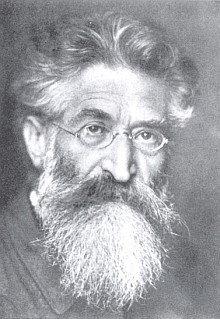
Fritz Mauthner
Fritz Mauthner was an influential Austrian philosopher, playwright, and critic, best known for his work in the fields of language and epistemology. Born in 1849 in Prague, Mauthner initially pursued a career in journalism and literature, contributing to various publications and gaining recognition for his sharp wit and critical insights. His most notable work, 'Critique of Language' (1901), delves into the relationship between language and thought, arguing that language shapes our understanding of reality. Mauthner's exploration of linguistic philosophy positioned him as a precursor to later 20th-century thinkers, including the likes of Ludwig Wittgenstein and Martin Heidegger. Mauthner's writings often reflected his skepticism towards the ability of language to convey absolute truth, which resonated with the intellectual currents of his time. His philosophical inquiries extended beyond language, touching on themes of culture, society, and the nature of knowledge itself. Despite facing criticism and controversy for his views, Mauthner's work laid the groundwork for future discussions in philosophy and linguistics. His legacy endures as a significant figure in the development of modern thought, particularly in the realms of language theory and critical philosophy.
Famous Quotes
View all 1 quotes“du heute statt meiner die jüngeren Brüder, weise du ihnen die beiden Pfade, das vierfache Wissen, die acht Anschauungen und die vierundsechzig Befreiungen.«””
Books from the author

Link to this page
Add a free, dofollow link to Lex on your blog, forum, syllabus, or reading list.

<a href="https://lex-books.com/author/fritz-mauthner"><img src="https://lex-books.com/badges/read-on-lex.svg" alt="Fritz Mauthner on Lex" width="160" height="40"></a>[](https://lex-books.com/author/fritz-mauthner)[url=https://lex-books.com/author/fritz-mauthner][img]https://lex-books.com/badges/read-on-lex.svg[/img][/url]Fritz Mauthner on Lex: https://lex-books.com/author/fritz-mauthner