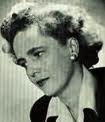
Elizabeth Enright
Elizabeth Enright was an influential American author and illustrator, renowned for her contributions to children's literature. She gained significant recognition for her Newbery Medal-winning novel, Thimble Summer, published in 1938, which showcased her ability to capture the essence of childhood adventures and the beauty of nature. Enright's literary prowess extended beyond this accolade; her novel Gone-Away Lake, a Newbery runner-up in 1957, further solidified her reputation as a master storyteller. Additionally, she created the beloved Melendy quartet, a series that spanned from 1941 to 1951, which explored the lives and adventures of a family of children in a way that resonated deeply with young readers and their families alike. Beyond her work in children's fiction, Enright was also a skilled writer of short stories for adults, earning multiple O. Henry Awards for her contributions. Her stories and articles appeared in various popular magazines, showcasing her versatility as a writer. Enright's ability to weave intricate narratives and her keen understanding of human emotions made her a significant figure in American literature, particularly in the realm of children's books. Her works continue to be celebrated for their charm and insight, influencing generations of readers and writers alike.
Famous Quotes
View all 3 quotes“Grownups! Everyone remembers them. How strange and even sad it is that we never became what they were: beings noble, infallible, and free. We never became them . One of the things we discover as we live is that we never become anything different from what we are. We are no less ourselves at forty than we were at four, and because of this we know grownups as Grownups only once in life: during our own childhood. We never meet them in our lives again, and we will miss them always.”
“Now isn't that nice!' said the old lady. 'If cousins are the right kind, they're best of all: kinder than sisters and brothers, and closer than friends.”
“He couldn't stop smelling the air in great, deep, loud sniffs. It was so delicious. It smelled of water, and mud, and maple trees, and autumn.”
Audiobooks from the author




Link to this page
Add a free, dofollow link to Lex on your blog, forum, syllabus, or reading list.

<a href="https://lex-books.com/author/elizabeth-enright"><img src="https://lex-books.com/badges/read-on-lex.svg" alt="Elizabeth Enright on Lex" width="160" height="40"></a>[](https://lex-books.com/author/elizabeth-enright)[url=https://lex-books.com/author/elizabeth-enright][img]https://lex-books.com/badges/read-on-lex.svg[/img][/url]Elizabeth Enright on Lex: https://lex-books.com/author/elizabeth-enright