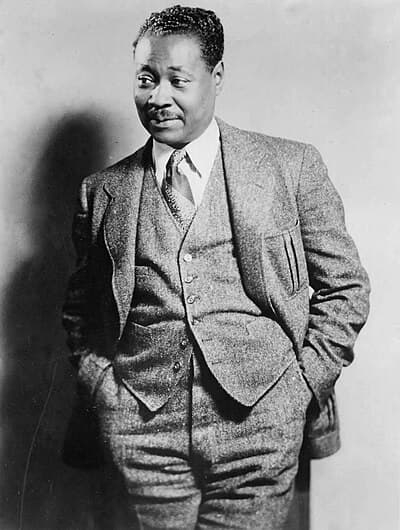
Claude McKay
Claude McKay was a Jamaican-American writer and poet who emerged as a pivotal figure in the Harlem Renaissance, a cultural movement that celebrated African American artistic expression. Born in Jamaica, he moved to the United States to pursue higher education, where he was inspired by W. E. B. Du Bois's 'The Souls of Black Folk,' which ignited his passion for political activism. In 1914, he settled in New York City, and by 1919, he had penned 'If We Must Die,' a powerful sonnet that responded to the racial violence and injustices faced by Black Americans in the wake of World War I. This work became one of his most celebrated pieces and a rallying cry for civil rights. Throughout his career, McKay authored several notable novels, including 'Home to Harlem,' which won the Harmon Gold Award for Literature, and 'Banjo,' both of which explored themes of identity, race, and the immigrant experience. His later works, such as 'Amiable With Big Teeth' and 'Romance in Marseille,' further showcased his literary versatility and commitment to social issues. McKay's contributions to literature not only enriched the Harlem Renaissance but also laid the groundwork for future generations of writers, making him a significant figure in American literary history.
Famous Quotes
View all 3 quotes“If a man is not faithful to his own individuality, he cannot be loyal to anything.”
“If We Must Die If we must die, let it not be like hogs Hunted and penned in an inglorious spot, While round us bark the mad and hungry dogs, Making their mock at our accursèd lot. If we must die, O let us nobly die, So that our precious blood may not be shed In vain; then even the monsters we defy Shall be constrained to honor us though dead! O kinsmen! we must meet the common foe! Though far outnumbered let us show us brave, And for their thousand blows deal one death-blow! What though before us lies the open grave? Like men we'll face the murderous, cowardly pack, Pressed to the wall, dying, but fighting back!”
“I plucked my soul out of its secret place, And held it to the mirror of my eye, To see it like a star against the sky, A twitching body quivering in space, A spark of passion shining on my face. And I explored it to determine why This awful key to my infinity Conspires to rob me of sweet joy and grace. And if the sign may not be fully read, If I can comprehend but not control, I need not gloom my days with futile dread, Because I see a part and not the whole. Contemplating the strange, I’m comforted By this narcotic thought: I know my soul.”
Books from the author




Link to this page
Add a free, dofollow link to Lex on your blog, forum, syllabus, or reading list.

<a href="https://lex-books.com/author/claude-mckay"><img src="https://lex-books.com/badges/read-on-lex.svg" alt="Claude McKay on Lex" width="160" height="40"></a>[](https://lex-books.com/author/claude-mckay)[url=https://lex-books.com/author/claude-mckay][img]https://lex-books.com/badges/read-on-lex.svg[/img][/url]Claude McKay on Lex: https://lex-books.com/author/claude-mckay