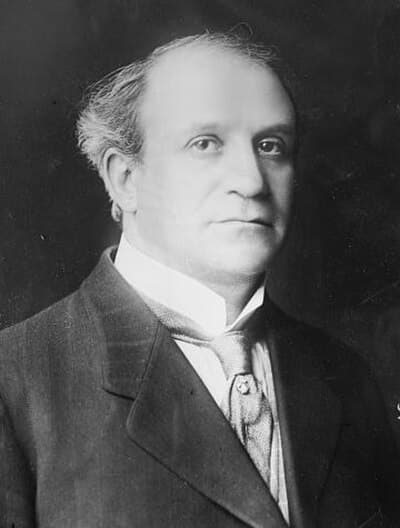
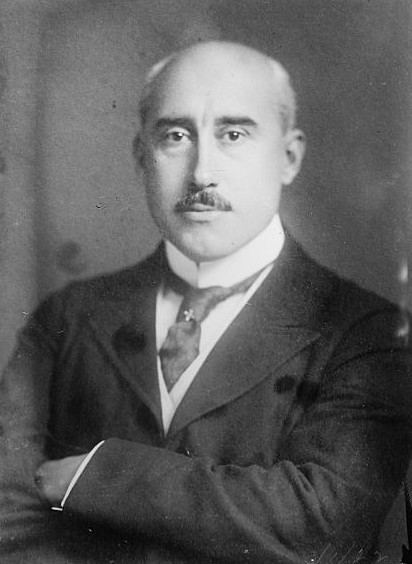
Charles Klein
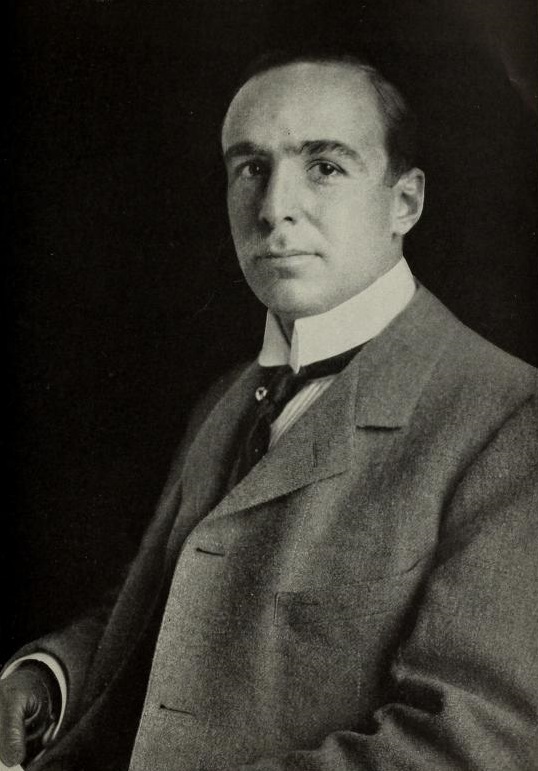
Charles Klein was an influential English-born playwright and actor who made a significant impact on American theater after emigrating to the United States in 1883. Settling in New York City, he initially pursued a career in acting before turning to writing around 1890. Klein quickly gained recognition for his work, collaborating with prominent producer Charles Frohman and contributing to notable productions such as the libretto for John Philip Sousa's operetta, El Capitan, in 1896. His oeuvre primarily consisted of melodramas and dramatic plays, which were well-received during the early 20th century, showcasing his ability to capture the complexities of human emotion and societal issues. Klein's legacy is marked not only by his contributions to the stage but also by his familial connections to the arts, as he was part of a talented family that included composer Manuel Klein and actor Alfred Klein. Tragically, his life was cut short when he drowned in the sinking of the RMS Lusitania in 1915, an event that underscored the fragility of life and the impact of global events on individual artists. Despite his untimely death, Klein's works continue to be remembered for their dramatic depth and cultural significance in the evolution of American theater.
Famous Quotes
View all 5 quotes“By this point in history”
“My first objection to this stance is that being nonjudgmental is internally contradictory and an impossibility. Return to the extreme cases: If you refuse to accept that there are any objective differences, expressible as continua from negative to positive, between the nude painted on black velvet and Titian’s Venus of Urbino, between a Harlequin romance and Pride and Prejudice, between How Much Is That Doggy in the Window and Eine Kleine Nachtmusik, you are not standing above the fray, refusing to be judgmental. It is a judgment on the grandest of all scales to say that How Much Is That Doggy in the Window is, in terms of its quality as a musical composition, indiscriminable from Eine Kleine Nachtmusik. And if you really believe it, you have also made a sweeping judgment about the capacity of the human mind to assess information. The impossibility of being nonjudgmental does not go away as the differences in quality become smaller. The nature of the judgments merely changes. When we are comparing Venus of Urbino with a Rembrandt self-portrait, we immediately understand that no objective dimension enables us to say that one work is better than the other. But there remain dimensions on which the two paintings differ, and those dimensions lend themselves to comparisons in which one work may be found superior to the other. One may choose to examine those differences or not, but one does not have the option of saying that no differences exist.””
“Die kleine Welt, in der das Leben von Kindern stattfindet, unabhängig davon, wer sie aufzieht, wird nichts so deutlich wahrgenommen und so deutlich gespürt wie Ungerechtigkeit. Die Ungerechtigkeit, die dem Kind widerfährt, mag nur eine Kleinigkeit sein, doch das Kind ist klein und seine Welt ist klein und sein Schaukelpferd ist im Verhältnis gesehen kaum kleiner als ein großes starkknochiges Jagdpferd.””
Books from the author




Link to this page
Add a free, dofollow link to Lex on your blog, forum, syllabus, or reading list.

<a href="https://lex-books.com/author/charles-klein"><img src="https://lex-books.com/badges/read-on-lex.svg" alt="Charles Klein on Lex" width="160" height="40"></a>[](https://lex-books.com/author/charles-klein)[url=https://lex-books.com/author/charles-klein][img]https://lex-books.com/badges/read-on-lex.svg[/img][/url]Charles Klein on Lex: https://lex-books.com/author/charles-klein