
Charles Bigg
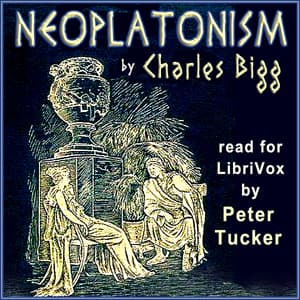
Charles Bigg was a British theologian and scholar, renowned for his contributions to the study of Neoplatonism and its impact on early Christian thought. His most significant work, 'Neoplatonism,' delves into the philosophical system that emerged in the 3rd century AD, exploring its key figures such as Plotinus and its influence on later philosophical and theological developments. Bigg's scholarship was characterized by a rigorous analysis of ancient texts and a deep understanding of the historical context in which Neoplatonism flourished. In addition to his academic pursuits, Bigg was also involved in the broader discourse on the relationship between philosophy and religion. His insights into the synthesis of Platonic thought with Christian doctrine provided a framework for understanding the complexities of early Christian philosophy. Through his writings, Bigg not only illuminated the intricacies of Neoplatonism but also contributed to the ongoing dialogue about the intersections of faith and reason, leaving a lasting impact on the fields of theology and philosophy. His work continues to be referenced by scholars interested in the evolution of philosophical thought and its implications for religious belief.
Famous Quotes
View all 2 quotes“It is easy to be moderate and cool. It is easy to be ignorant and passionate. But to be wise and yet extravagant, to measure all and yet venture all, this is not easy.””
“Oh, it’s perfectly safe to handle if somebody else has triggered the curse and you took it from their still-smoking body.” Eve paused. “Or if they sold it to you.” “You bought it, didn’t you?” Imp walked towards her. “Didn’t you?” “I think so. I may have screwed up that side of things,” Eve admitted. “It’s unclear.” “What’s unclear?” “It was up for auction: obvs, right? But it’s not clear that the person auctioning the location of the manuscript actually owned what they were selling, that’s the thing. Also, ancient death spells and intellectual property law don’t always play nice together. I, uh, my boss has a standard procedure he has me follow in cases of handling blackmail and extortion. We pay the ransom, then once we’ve destroyed the threat I repossess the payment from the blackmailer’s bank account. Via a Transnistrian mafiya underwriter”
Audiobooks from the author

Link to this page
Add a free, dofollow link to Lex on your blog, forum, syllabus, or reading list.

<a href="https://lex-books.com/author/charles-bigg"><img src="https://lex-books.com/badges/read-on-lex.svg" alt="Charles Bigg on Lex" width="160" height="40"></a>[](https://lex-books.com/author/charles-bigg)[url=https://lex-books.com/author/charles-bigg][img]https://lex-books.com/badges/read-on-lex.svg[/img][/url]Charles Bigg on Lex: https://lex-books.com/author/charles-bigg