
C. Remigius Fresenius
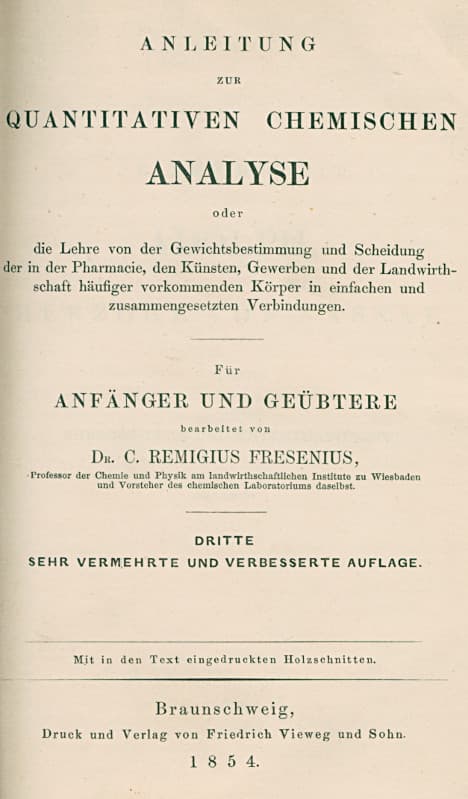
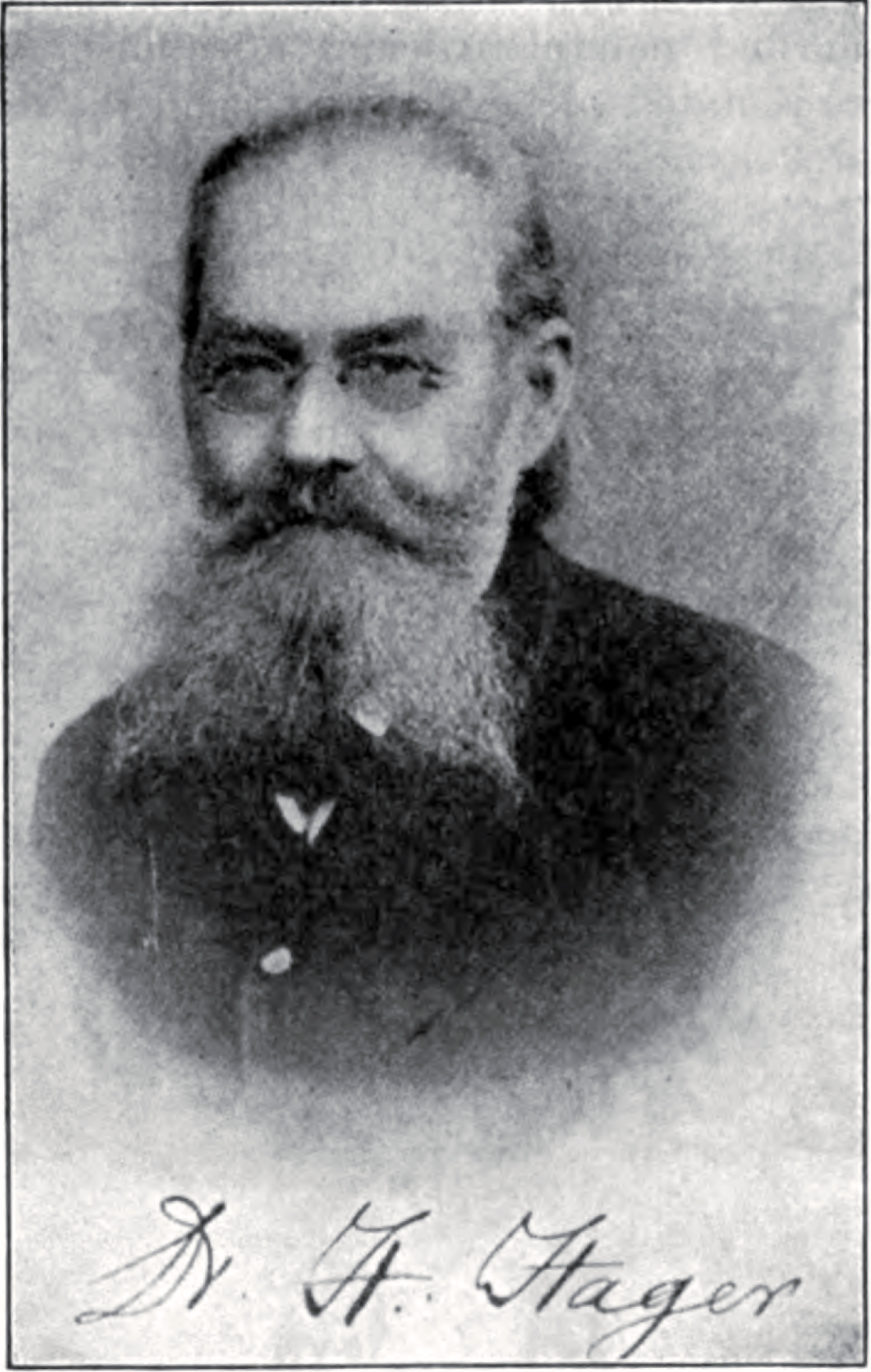
Carl Remigius Fresenius was a prominent German chemist recognized for his pioneering contributions to analytical chemistry. Born in 1818, he dedicated his career to advancing the field, particularly through his work on qualitative and quantitative analysis. Fresenius authored several influential texts, including 'Die chemische Analyse' and 'Lehrbuch der analytischen Chemie', which became essential references for chemists and students alike. His meticulous methodologies and systematic approaches laid the groundwork for modern analytical techniques. Fresenius's legacy is marked by his commitment to education and the dissemination of chemical knowledge. He founded the first analytical chemistry laboratory in Germany, which served as a model for future institutions. His work not only influenced contemporaries but also set standards that would guide future generations of chemists. Through his extensive publications and teaching, Fresenius significantly shaped the landscape of analytical chemistry, earning a lasting place in the annals of scientific history.
Books from the author






Link to this page
Add a free, dofollow link to Lex on your blog, forum, syllabus, or reading list.

<a href="https://lex-books.com/author/c-remigius-fresenius"><img src="https://lex-books.com/badges/read-on-lex.svg" alt="C. Remigius Fresenius on Lex" width="160" height="40"></a>[](https://lex-books.com/author/c-remigius-fresenius)[url=https://lex-books.com/author/c-remigius-fresenius][img]https://lex-books.com/badges/read-on-lex.svg[/img][/url]C. Remigius Fresenius on Lex: https://lex-books.com/author/c-remigius-fresenius