Arthur Marshall
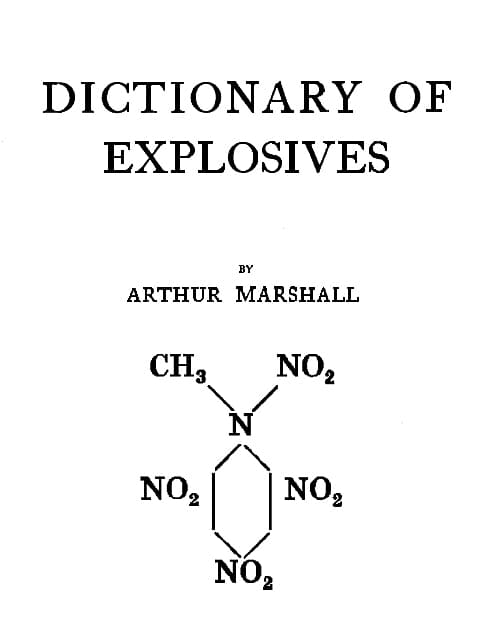
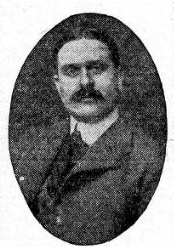
Arthur Marshall was an English author and expert in the field of explosives, best known for his seminal work, the 'Dictionary of Explosives.' Born in 1873, Marshall's career spanned several decades during which he contributed significantly to the understanding and terminology of explosives, a subject of great importance in both military and industrial contexts. His dictionary served as a crucial reference for professionals in various fields, including engineering and safety, and it reflected the complexities and advancements in explosive technology during the early to mid-20th century. Marshall's work is notable not just for its comprehensive nature but also for its role in standardizing the language surrounding explosives, which was essential for effective communication and safety protocols in a rapidly evolving industry. His contributions helped lay the groundwork for future studies and innovations in the field, solidifying his legacy as a key figure in the literature of explosives. Through his writings, Marshall provided invaluable insights that continue to inform contemporary practices in explosives and safety management.
Famous Quotes
View all 3 quotes“Cricket was a manly game. Manly masters spoke of the 'discipline of the hard ball'. Schools preferred manly games. Games were only manly if it was possible while playing them to be killed or drowned or at the very least badly maimed. Cricket could be splendidly dangerous. Tennis was not manly, and if a boy had asked permission to spend the afternoon playing croquet he would have been instantly punished for his 'general attitude'. Athletics were admitted into the charmed lethal circle as a boy could, with a little ingenuity, get impaled during the pole-vault or be decapitated by a discus and did a manly death. Fives were thought to be rather tame until one boy ran his head into a stone buttress and got concussion and another fainted dead away from heat and fatigue. Then everybody cheered up about fives.”
“But cricket did have one supreme advantage over football. it could be stopped by rain. Every morning at prayers, devout cricket-haters put up a plea for a downpour. As we were in England, our prayers were quite frequently answered, but nothing, nothing but the death of the headmaster could stop football. We could hardly pray for the headmaster, a nice man, to die. In rain, sleet, hail and lightining, shivering and shuddering and soaked to the skin, we battled on. Even in dense fog we kept at it, a shining example to Dartmoor working parties. But cricket was another matter, cricket was a more sensitve affair altogether and if, as I fear, there is cricket in heaven, there will also, please God, be rain.”
“Victorians such as my grandmother always assumed, along with dreary old Isaac Watts who left us in 1748 and not one moment too soon, that Satan finds some mischief for idle hands to do.”
Books from the author


Link to this page
Add a free, dofollow link to Lex on your blog, forum, syllabus, or reading list.

<a href="https://lex-books.com/author/arthur-marshall"><img src="https://lex-books.com/badges/read-on-lex.svg" alt="Arthur Marshall on Lex" width="160" height="40"></a>[](https://lex-books.com/author/arthur-marshall)[url=https://lex-books.com/author/arthur-marshall][img]https://lex-books.com/badges/read-on-lex.svg[/img][/url]Arthur Marshall on Lex: https://lex-books.com/author/arthur-marshall