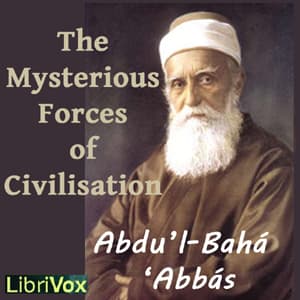
Abdu’l-Bahá ‘Abbás
Abdu’l-Bahá ‘Abbás was a prominent figure in the Bahá'í Faith, known for his role as the appointed successor of Bahá'u'lláh, the founder of the religion. Born in 1844 in Tehran, Persia, he was the son of Bahá'u'lláh and played a crucial role in the development and spread of the Bahá'í teachings. Abdu’l-Bahá was a key figure during a time of persecution for Bahá'ís, advocating for peace, unity, and social justice. His travels to the West, particularly to Europe and North America, helped to introduce the principles of the Bahá'í Faith to a broader audience, emphasizing themes of global unity and the oneness of humanity. His notable works include "The Secret of Divine Civilization," which addresses social and economic issues, and "Some Answered Questions," a compilation of his responses to inquiries about the Bahá'í teachings. Abdu’l-Bahá's teachings emphasized the importance of education, the equality of men and women, and the need for a universal language. His legacy continues to influence Bahá'í communities and interfaith dialogue worldwide, as he is remembered for his commitment to fostering understanding and cooperation among diverse cultures and religions.
Audiobooks from the author





Link to this page
Add a free, dofollow link to Lex on your blog, forum, syllabus, or reading list.

<a href="https://lex-books.com/author/abdul-bah-abbs"><img src="https://lex-books.com/badges/read-on-lex.svg" alt="Abdu’l-Bahá ‘Abbás on Lex" width="160" height="40"></a>[](https://lex-books.com/author/abdul-bah-abbs)[url=https://lex-books.com/author/abdul-bah-abbs][img]https://lex-books.com/badges/read-on-lex.svg[/img][/url]Abdu’l-Bahá ‘Abbás on Lex: https://lex-books.com/author/abdul-bah-abbs