“When first we met we did not guess that Love would prove so hard a master.””
Quotes by Robert Seymour
“But then, she wonders,just what kind of man would ever give her the courage to marry at all- to overcome that dreadful fear of death that seemed always to accompany the very thought of love? It was illogical, idiotic and childish. And yet the child was with her always; and always she would be afraid unless someone could place a light down there inside that dark and chilly heart of hers and chase all the ghosts away - the ghosts of Katherine Howard, of Jane Seymour and, not least, that of her own poor mother. They accompanied her always, those spirits - especially at this kind of time, a time of being alone, of being feminine and reflective. They would all gather round to whisper in her ear and warn her - so that even as she looks up once more into her mirror she almost expects to see them there, ranged behind her shoulders, their faces full of concern and anxiety. Never trust them - never trust the men, for they will betray you always the moment you surrender to them!””
Virgin and the Crab - Sketches, Fables and Mysteries from the Early Life of John Dee and Elizabeth Tudor
“El misil antimisil Patriot, del que se hizo tanta publicidad, según dijo la Oficina General de Contabilidad, destruyó sólo el 40 por ciento de los misiles Scud que tenían como objetivo Israel y el 70 por ciento de los que dispararon contra Arabia Saudí. De hecho, tal como revelaría Seymour Hersh,11 esa bendición para el periodismo, la fuerza aérea israelí afirmó en un informe que «no hay pruebas claras de ninguna interceptación realizada con éxito» de un Scud iraquí gracias a un Patriot sobre Israel.””
La gran guerra por la civilización: La conquista de Oriente Próximo
“It has also been tempting to interpret fascism by its social composition. The sociologist Seymour Martin Lipset systematized in 1963 the widely held view that fascism is an expression of lower-middle-class resentments. In Lipset’s formulation, fascism is an “extremism of the center” based on the rage of once-independent shopkeepers, artisans, peasants, and other members of the “old” middle classes now squeezed between better organized industrial workers and big businessmen, and losing out in rapid social and economic change. Recent empirical research, however, casts doubt on the localization of fascist recruitment in any one social stratum. It shows the multiplicity of fascism’s social supports and its relative success in creating a composite movement that cut across all classes. His eyes glued on the early stages, Lipset also overlooked the establishment’s role in the fascist acquisition and exercise of power.The notorious instability of fascist membership further undermines any simple interpretation by social composition. Party rosters altered rapidly before power, as successive waves of heterogeneous malcontents responded to the parties’ changing fortunes and messages. After power, membership “bandwagoned” to include just about everyone who wanted to enjoy the fruits of fascist success”
The Anatomy of Fascism
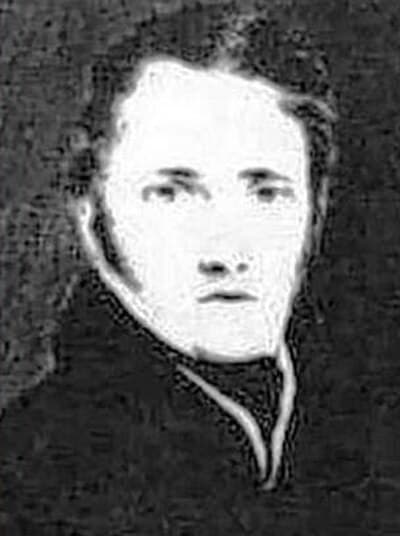 Robert Seymour
 was an English illustrator and caricaturist, best known for his work in the early 19th century. He gained prominence for his illustrations in the popular serialized fiction of his time,...