“Many people today acquiesce in the widespread myth, devised in the late 19th century, of an epic battle between ‘scientists’ and ‘religionists’. Despite de unfortunate fact that some members of both parties perpetuate the myth by their actions today, this ‘conflict’ model has been rejected by every modern historian of science; it does not portray the historical situation. During the 16th and 17th centuries and during the Middle Ages, there was not a camp of ‘scientists’ struggling to break free of the repression of ‘religionists’; such separate camps simply did not exist as such. Popular tales of repression and conflict are at best oversimplified or exaggerated, and at worst folkloristic fabrications. Rather, the investigators of nature were themselves religious people, and many ecclesiastics were themselves investigators of nature. The connection between theological and scientific study rested in part upon the idea of the Two Books. Enunciated by St. Augustine and other early Christian writers, the concept states that God reveals Himself to human beings in two different ways – by inspiring the sacred writers to pen the Book of Scripture, and by creating the world, the Book of Nature. The world around us, no less than the Bible, is a divine message intended to be read; the perceptive reader can learn much about the Creator by studying the creation. This idea, deeply ingrained in orthodox Christianity, means that the study of the world can itself be a religious act. Robert Boyle, for example, considered his scientific inquiries to be a type of religious devotion (and thus particularly appropriate to do on Sundays) that heightens the natural philosopher’s knowledge and awareness of God through the contemplation of His creation. He described the natural philosopher as a ‘priest of nature’ whose duty it was to expound and interpret the messages written in the Book of Nature, and to gather together and give voice to all creation’s silent praise of its Creator.””
Quotes by Robert Means Lawrence
“I did not tell the police my true reason for being there. I did not mention Amy Breslyn. Not yet, not then, but everything might have been different if I had. Meryl Lawrence had told me little about Amy Breslyn, but now those facts seemed to have a new and dangerous meaning. I promised Meryl Lawrence to keep Amy’s secrets mine, so I kept them. And many, I still keep. We passed the black Suburban with its silent, flashing lights. The people on the sidewalk were gripped by the sight of it like mice entranced by a snake. I was gripped, too. The words on the Suburban explained why we were being evacuated. BOMB SQUAD. To””
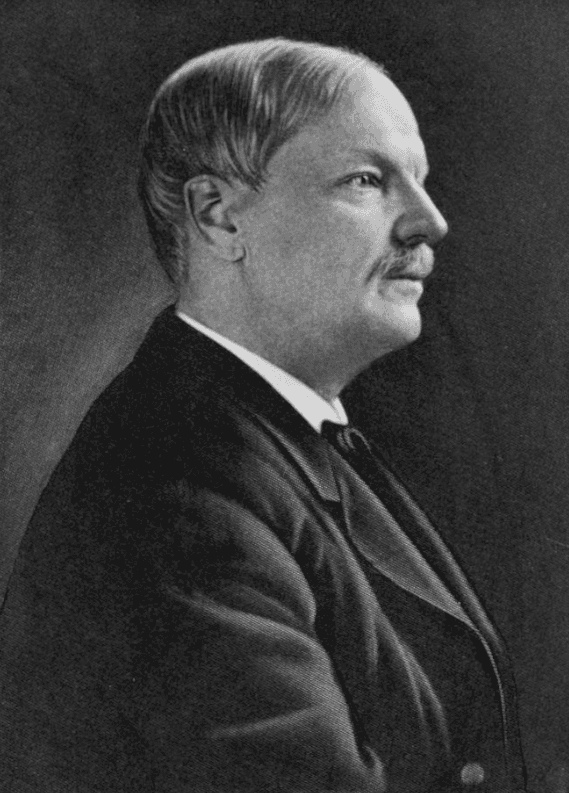 Robert Means Lawrence
Robert Means Lawrence was an American physician and writer known for his contributions to both medicine and literature. Born in 1847, he pursued a career in medicine, earning respect for his work in t...